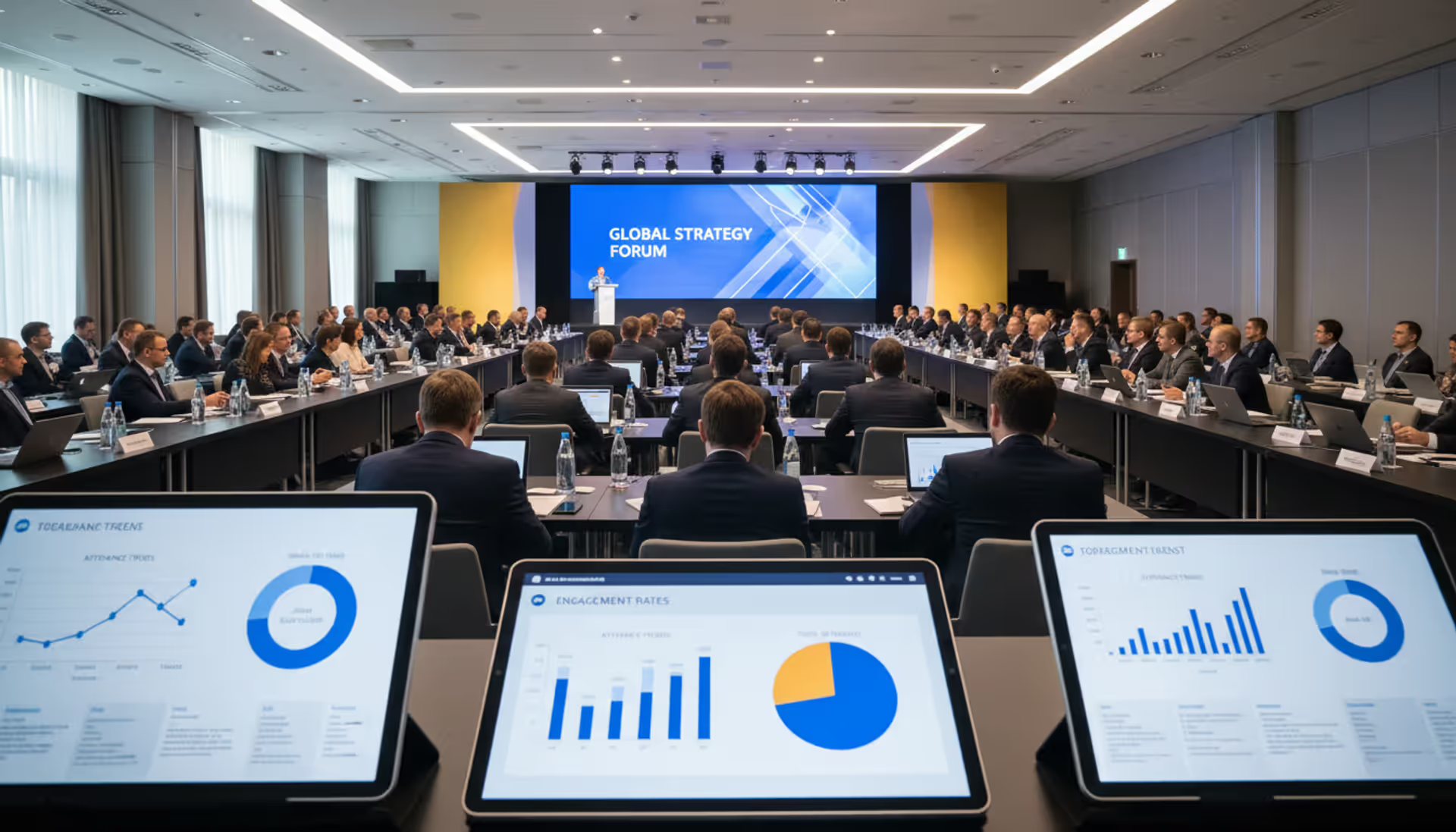
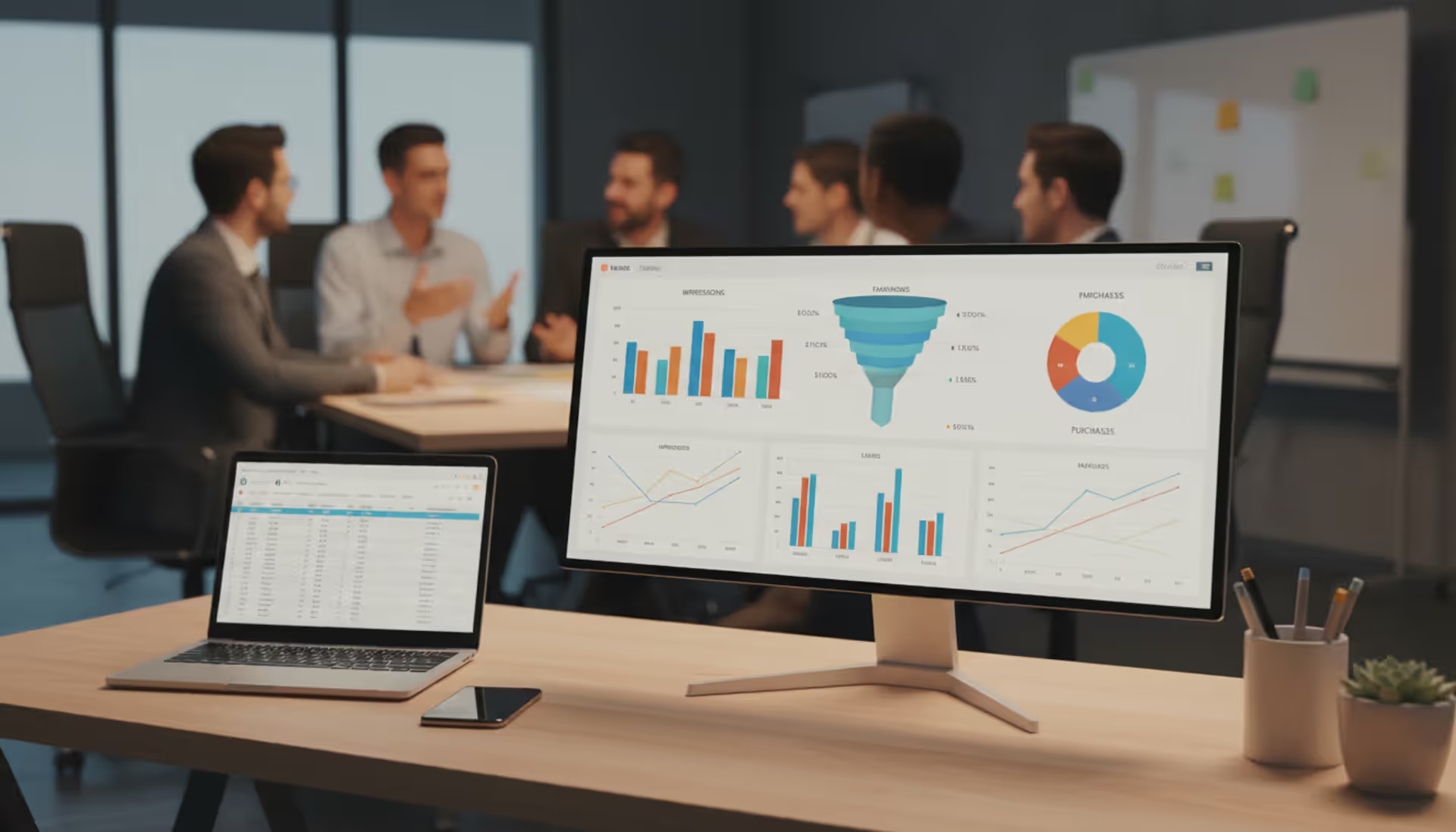
Here's what usually happens: companies dump six figures into a conference, hope for the best, then wait to see what sticks. The lucky ones spend the next quarter following up with qualified prospects. The rest end up with 500 branded stress balls gathering dust in storage and a vague sense they should've just run more LinkedIn ads.
The difference? Commitment level. Someone who clears their calendar for your half-day workshop isn't passively scrolling past content. They've negotiated with their manager, rearranged meetings, maybe canceled other plans. Six months later, they'll still recognize your company name when it crosses their desk.
This guide covers the practical stuff—how to set goals that mean something, get actual humans through the door, and figure out whether your investment paid off.
What Is Event Marketing and Why It Matters
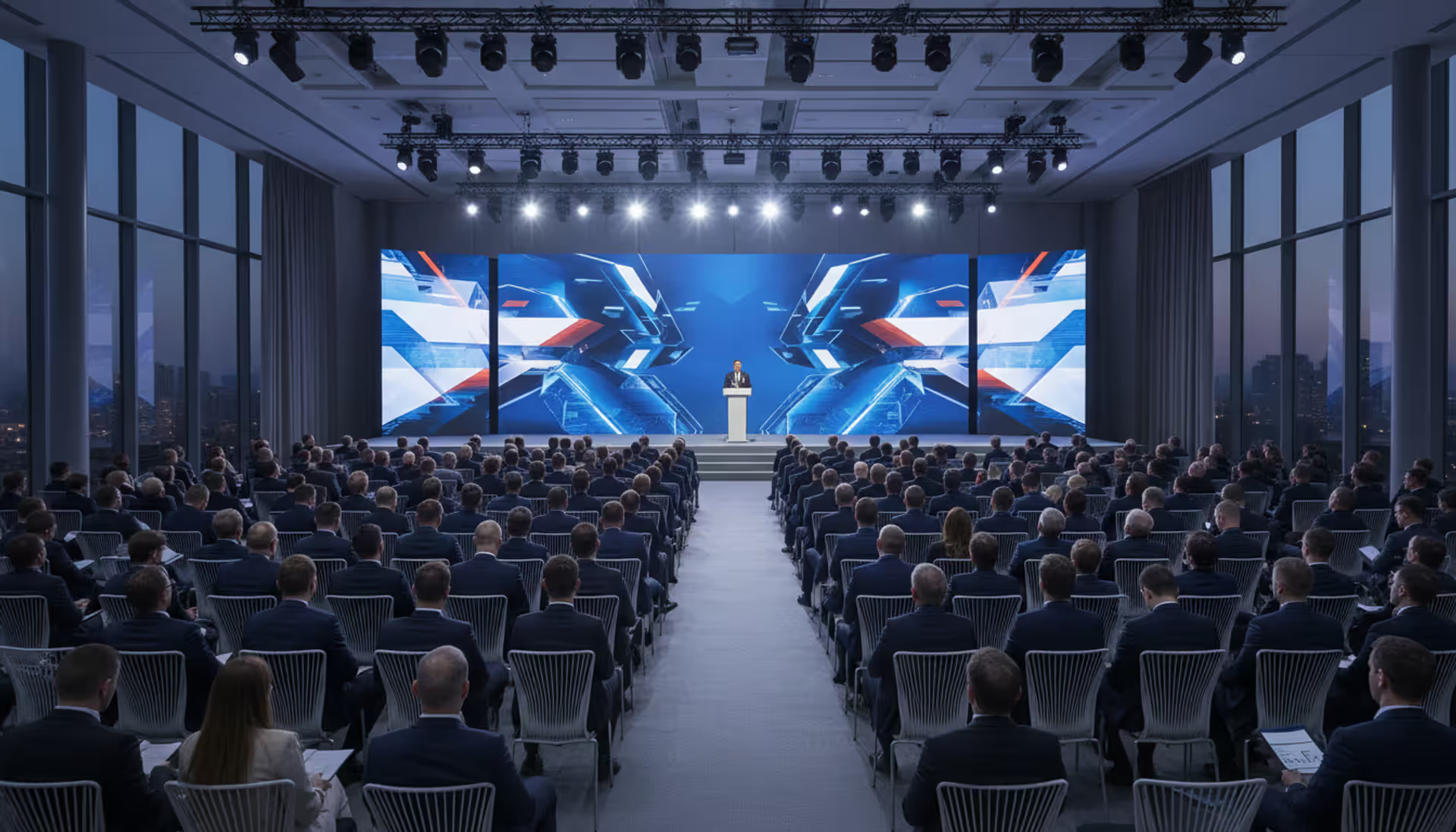
Event marketing creates intentional experiences that connect your company with an audience. Could be 30 people in a workshop. Could be 5,000 at an industry expo. Might happen in a hotel ballroom, through video software, or split between both.
Format matters less than function: you're bringing together people around topics they actually want to learn about, and your brand becomes part of that value exchange.
Unlike display ads or content marketing, events force memorability. Passive tactics hope for recall. Someone who spends half a day at your product demo won't blank when they see your logo in their inbox next month.
Three main event structures exist:
Physical events span everything from trade show booths and product launches to roundtable dinners, certification workshops, and pop-up experiences. These win at relationship-building. You can't fake the trust that develops during an unplanned conversation over coffee or a shared complaint about conference WiFi.
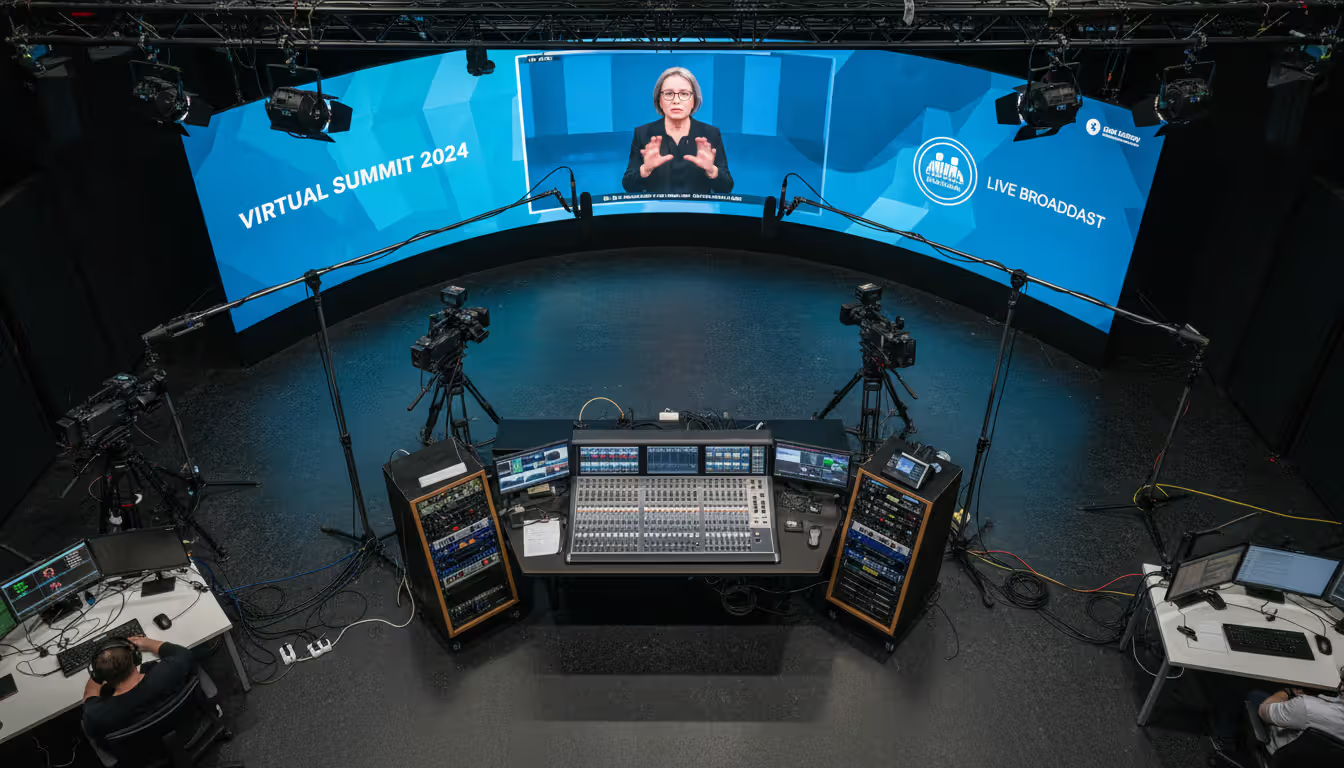
Digital formats cover webinars, virtual summits, online product showcases, livestreamed panels, and remote trade exhibitions. Geography becomes irrelevant. Your Seattle team can host attendees from Singapore without anyone touching a plane ticket.
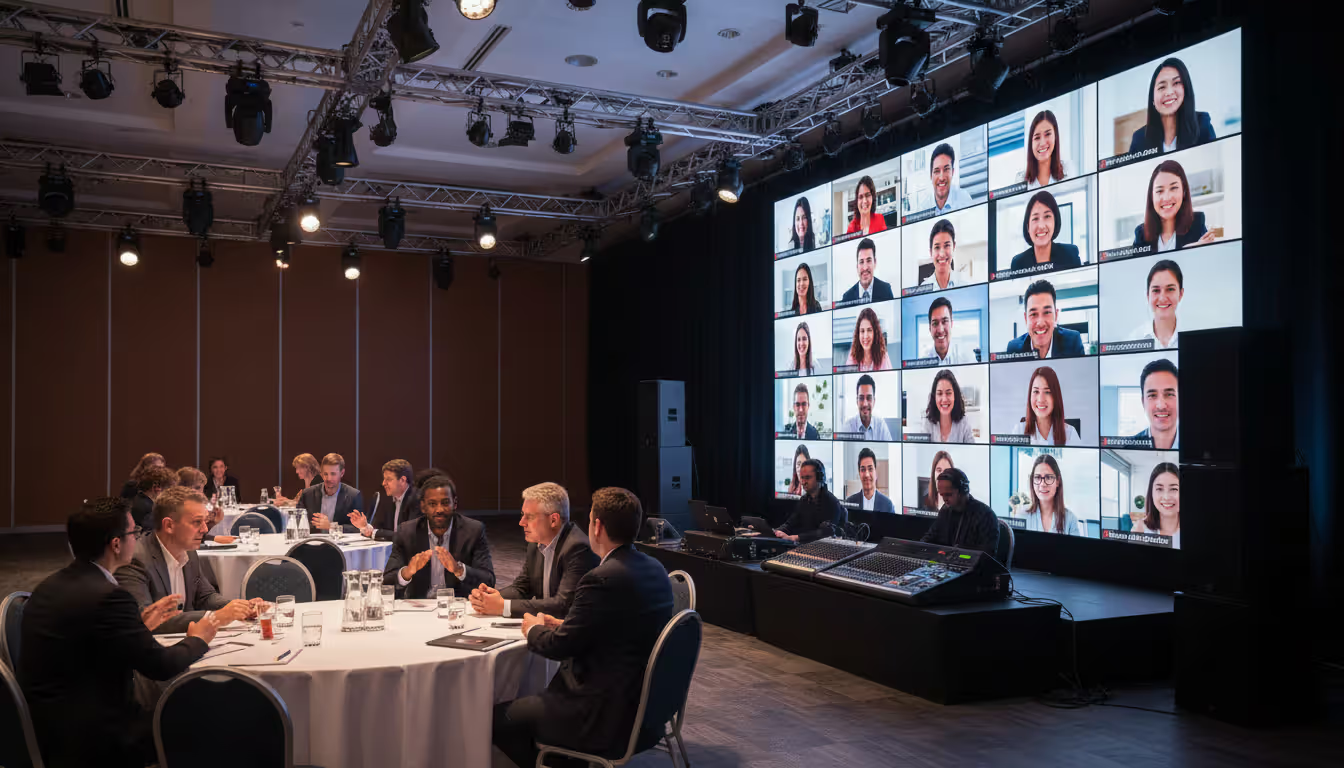
Hybrid models combine in-person venues with remote access. Sounds ideal until you realize you're producing two separate events simultaneously, each with distinct technical and experiential requirements.
Each solves specific problems. Need hands-on product testing? Physical makes sense. Want participants across four continents? Go digital. Trying to serve both? Hybrid works, but triple-check your production budget first.
In our tracking across enterprise campaigns, standard digital channels might touch 10,000 people who forget you by dinner. Events put you in front of 200 people who bring up your presentation in strategy meetings two quarters later. Target the right outcomes and actually follow through, and suddenly your cost-per-opportunity makes every other tactic look bloated
— Sarah Chen
Why companies actually prioritize events
The Event Marketing Institute's research found 84% of leadership teams consider events critical to business outcomes. Not useful. Not helpful. Critical. Their data shows typical events generate 3-5x more engagement compared to purely digital campaigns.
You walk away with tangible results: sales-qualified leads, educated customers, partnership discussions, press coverage, unfiltered product feedback. Plus you're creating content assets that extend value for months. Record everything, capture testimonials, document social activity, and you've built marketing materials until your next gathering.
ROI looks different depending on goals. B2B organizations typically measure cost-per-qualified-lead against alternative channels. Product companies track direct revenue linked to attendance. Brand-building events examine awareness shifts—social reach, media pickups, sentiment changes.
How to Build an Event Marketing Strategy That Works
Most event failures trace to skipped planning. No amount of premium catering or clever swag fixes unclear objectives.
Author: Ethan Marlowe;
Source: musiconmainstreet.com
Setting clear goals and KPIs
"Boost brand awareness" gives you nothing actionable. How much awareness? Measured how? Among which audience segment?
Try instead: "Generate 250 sales-qualified leads from target accounts" or "Hit 600 registrations with minimum 65% show-up rate."
Your objectives might focus on: - Lead generation (both volume and qualification level) - Customer retention (keeping existing clients engaged) - Product education (teaching effective use) - Brand positioning (media coverage and perception shifts) - Revenue impact (direct sales or influenced pipeline)
Pick 3-5 KPIs connecting directly to your primary objective. Chasing leads? Track registration-to-SQL conversion, cost per qualified lead, and post-event pipeline additions. Running a brand play? Monitor social impressions, earned media, and branded search volume changes.
Identifying target audience
Broad targeting delivers mediocre results. You need detailed persona work: specific job titles, documented pain points, purchasing authority, preferred event formats.
A CFO wants completely different content than a marketing coordinator. Your event should acknowledge this reality rather than pretend one-size-fits-all works.
Define these elements: - Geographic concentration (impacts venue selection and timing) - Seniority distribution (executives prefer condensed, strategic content) - Industry verticals (specialized topics attract fewer but better attendees) - Company size brackets (enterprise buyers behave differently than SMB) - Relationship status (prospects need different approaches than existing customers)
Size expectations realistically based on audience availability. A niche B2B event might target 80 highly qualified attendees instead of 800 casual registrants. Quality beats volume when you're measuring business impact.
Budget planning and resource allocation
Basic virtual webinars might cost $2,000-5,000 covering software and promotion. Mid-tier physical conferences? Think $50,000-200,000 once you factor venue rental, food service, AV gear, and speaker fees.
Typical breakdowns look like: - Venue and logistics: 30-40% (for physical events) - Marketing and promotion: 20-30% - Technology and platforms: 10-15% - Content and speakers: 10-15% - Staff and operations: 10-15% - Contingency buffer: 10%
Virtual events shift spending from venue costs toward technology platforms and digital advertising. Hybrid events typically consume 60-80% of comparable physical costs—not the savings most people expect, since you're essentially running two productions in parallel.
Build budgets component by component. Price each element separately, then tack on 10-15% for inevitable surprises. Events always run over initial projections. Every single time.
Timeline development
Work backward from your event date. Major conferences demand 6-12 months lead time. Smaller gatherings need at least 2-3 months. Rush the schedule and you'll sacrifice either quality or attendance. Frequently both.
Sample 12-week timeline for a mid-sized event:
Week 1-2: Lock goals, budget, core team assignments
Week 3-4: Secure venue or platform, begin speaker outreach
Adjust timelines based on your audience's decision-making processes. B2B events need longer runways since participants require approval chains and travel coordination.
Measuring success metrics
Decide on measurement approaches before launch day. You can't retroactively track what you didn't plan to capture.
Pre-event monitoring: - Registration volume and velocity - Email open rates and click-throughs - Social engagement metrics - Landing page traffic and conversion
During the event, watch: - Actual attendance versus registrations - Session participation rates - Engagement signals (questions submitted, poll responses, networking connections) - Social mentions and sentiment
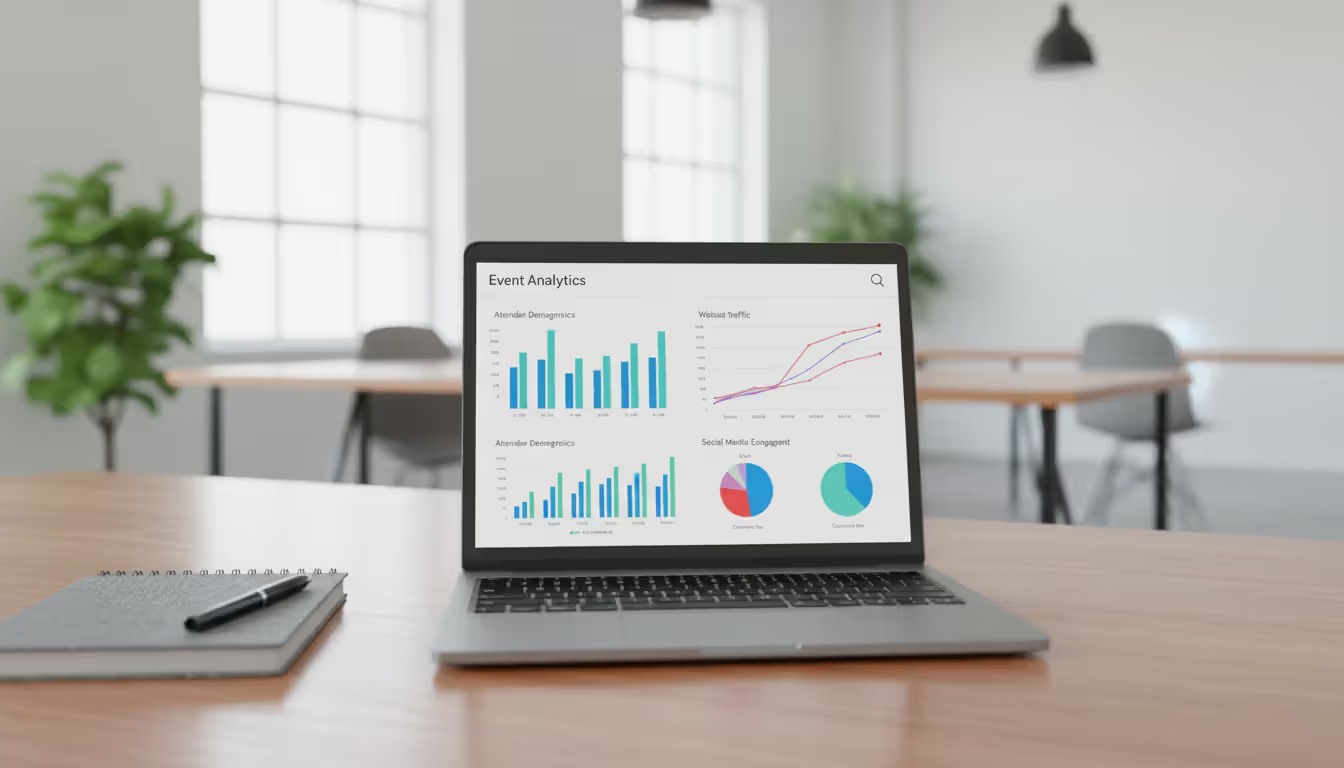
Post-event measurement: - Lead quality scoring - Sales pipeline influence - Content downloads and session replays - Attendee satisfaction scores - Cost per attendee and cost per lead
Connect event data to your CRM for full-cycle tracking. That lead from your March conference might not close until October in enterprise sales cycles, but proper attribution proves event value when the deal finally comes through.
Author: Ethan Marlowe;
Source: musiconmainstreet.com
Event Promotion Tactics to Drive Attendance
Perfect events fail without attendees. Promotion deserves equal attention to planning—allocate at least 20-30% of total budget toward filling seats.
Pre-event promotion channels
Email typically converts 2-3x better than social for event registrations. Start with your house database, then expand to paid channels based on gaps.
Effective email sequences look like: - Save-the-date (8-12 weeks before) - Early registration discount (6-8 weeks before) - Speaker and agenda reveal (4-6 weeks before) - Social proof and testimonials (2-4 weeks before) - Final countdown series (1 week out, 3 days out, day before)
Social media builds awareness and creates amplification. Share consistently—daily during peak promotion windows, several times weekly during early phases. Mix up content types: speaker spotlights, value propositions, behind-the-scenes prep, urgency messaging. LinkedIn converts best for B2B. Instagram and Facebook perform better for consumer-focused experiences.
Paid advertising accelerates reach when organic channels fall short. LinkedIn targeting lets you reach decision-makers at specific companies by job function. Google Search ads capture people actively hunting for industry events. Retargeting reminds website visitors who bounced before registering.
Creating compelling event landing pages
Your landing page converts interest into registrations. Weak pages lose 50-70% of potential attendees who click through from promotions.
Essential landing page elements: - Clear value statement above the fold - Explicit date, time, format (virtual/physical/hybrid) - Agenda breakdown or topic overview - Speaker credentials with headshots - Social proof (past attendance numbers, testimonials, customer logos) - Prominent registration form (shortest possible) - FAQ addressing common objections
Remove navigation menus and other distractions. This page has one purpose: drive registrations. Every element either supports that goal or gets deleted.
Test different headlines and form field counts. Sometimes asking for just email and name doubles conversions versus forms demanding company size, job role, and phone number. Collect additional details post-registration if you really need them.
Leveraging partnerships and sponsors
Partners extend promotional reach to audiences you couldn't access independently. The right partnership can double attendance without doubling promotion spend.
Look for partners whose audience overlaps yours without direct competition. A marketing automation platform and a CRM vendor both target marketers but solve different problems—ideal partnership material.
Provide clear value exchange. Partners promote to their database in exchange for speaking opportunities, booth presence, attendee access, or brand visibility. Sponsors pay for exposure but expect professional benefits packages: logo placement, email mentions, lead capture rights, or presentation slots.
Build promotional toolkits for partners: pre-written emails, social graphics, unique tracking URLs. Make promotion effortless and you'll get better participation.
Using influencers and speakers for amplification
Speakers carry built-in audiences who trust their recommendations. Choose strategically—not just for subject expertise, but for promotional willingness and capability.
When recruiting speakers, ask directly about their promotion plans. Will they email their list? Share on social? Feature the event in their newsletter? Some speakers have huge followings but never promote events. Others have smaller audiences but actively drive registrations.
Industry influencers amplify reach even without presenting. Offer exclusive previews, interviews with keynotes, or early content access in exchange for social promotion or blog mentions.
Post-event promotion for future events
Your next event starts the moment this one wraps. Capture content, testimonials, and momentum while attendees still feel the energy.
Record sessions and create highlight clips demonstrating value and excitement. Share attendee reactions and photos across social platforms. Turn key takeaways into blog posts or social content. This extends current event ROI while promoting future gatherings.
Survey attendees within 48 hours while memories stay fresh. Ask what worked, what flopped, and what topics they want next. This feedback improves future events while keeping your brand top-of-mind.
Announce your next date to current attendees first. Offer early-bird pricing exclusively to past participants. Converting previous attendees runs 5-10x easier than acquiring new ones.
Author: Ethan Marlowe;
Source: musiconmainstreet.com
Choosing the Right Event Marketing Tool for Your Needs
Manual event management handles small gatherings just fine but collapses under complexity. Specialized platforms manage registration, email sequences, attendee tracking, and analytics in unified systems.
Platform comparison for event marketing software
Tool
Core Capabilities
Cost Structure
Ideal Scenario
System Connections
Average Rating
Eventbrite
Registration handling, ticket sales, email sequences, mobile access
Free option (charges 3.5% plus $1.59 per ticket); Premium tiers $99-$499 monthly
Consumer events, ticketed experiences, standard conferences
Brand-focused companies, event series, field marketing
Salesforce, Marketo, ON24, LinkedIn
4.6/5
Must-have platform capabilities
Registration forms the foundation of any event platform. Your system should build custom forms, handle payment processing when needed, trigger automatic confirmations, and manage waitlists for capacity-constrained events.
Email automation eliminates manual work. Look for platforms that trigger registration confirmations, send reminder sequences, deploy post-event follow-ups, and segment communications by attendee type or behavior.
Analytics and reporting prove event value. Track registration sources (which promotions worked), show-up percentages, engagement signals, and push data to your CRM for lead-to-customer tracking.
Other valuable capabilities: - Mobile apps for networking and schedule management - Check-in systems (QR scanning, badge printing) - Survey and feedback collection - Sponsor management and lead scanning - Session capacity controls - Waitlist automation
Integration with CRM and marketing platforms
Standalone event data provides limited value. Connecting with your CRM and marketing automation creates complete attendee journeys.
Critical system connections: - CRM platforms (Salesforce, HubSpot, Microsoft Dynamics) for lead tracking - Marketing automation (Marketo, Pardot, ActiveCampaign) for nurture sequences - Video platforms (Zoom, WebEx, Teams) for virtual delivery - Analytics systems (Google Analytics, Mixpanel) for attribution
Native integrations work more reliably than third-party connectors. Before committing to any platform, test integrations with your current tech stack. A tool that won't sync properly with your CRM creates more headaches than it solves.
When to Hire Event Marketing Companies
Managing events internally makes sense until it doesn't. Knowing when to bring in external expertise saves money and improves outcomes.
Signs you need external expertise
Your team lacks event experience. First-timers make expensive mistakes—wrong venue capacity, inadequate AV setup, unrealistic promotion windows. Agencies have managed hundreds of events and sidestep common pitfalls.
You're juggling multiple events simultaneously. Internal teams get overwhelmed managing several events while handling regular job responsibilities. Agencies scale support based on your calendar.
The stakes are too high for learning on the job. Mission-critical product launches or flagship annual conferences carry too much risk for experimentation. Professional execution protects your brand and maximizes investment.
You need specialized skills like complex production, celebrity speaker booking, or international logistics. Agencies bring networks and expertise requiring years to develop internally.
What agencies typically deliver
Full-service event marketing firms handle everything from initial strategy through post-event analysis. Common service offerings:
Post-event services: Follow-up sequences, data compilation, ROI analysis, improvement documentation.
Some firms specialize in specific areas—virtual production, trade show management, or experiential marketing. Others provide comprehensive services across all formats.
Vetting and selecting the right agency
Request case studies from events matching yours in scale, format, and industry. An agency crushing consumer festivals might struggle with B2B conferences.
Questions for agency evaluation: - How do you define and track event success? - What client involvement level do you expect? - How are budget overruns handled when they happen? - Who steps in if key team members become unavailable mid-project? - Which recent clients would discuss their experience?
Review their technology partnerships. Agencies with established vendor relationships often negotiate better rates than you'd access independently.
Understand fee structures before signing anything. Some agencies charge flat project fees, others bill hourly, some work on retainer for ongoing series. Clarify what's included versus extra—travel, software licenses, and vendor coordination fees can add 20-30% to quoted prices.
In-house versus outsourced analysis
Agencies cost more per hour than internal staff but frequently deliver better results faster. A $50,000 agency fee seems expensive until you calculate the opportunity cost of pulling three employees off revenue work for eight weeks.
In-house makes sense when: - You run frequent events (monthly or more) justifying dedicated staff - Events follow straightforward, repeatable processes - Budget constraints are severe - Internal knowledge and relationships prove critical
Outsourcing makes sense when: - Events happen infrequently (quarterly or less) - Complexity exceeds internal capabilities - Speed matters critically - You need specialized skills temporarily
Hybrid approaches work well: hire agencies for strategy and complex production while managing promotion and communications internally. This balances cost control with professional execution.
Author: Ethan Marlowe;
Source: musiconmainstreet.com
Digital Marketing Event Strategies for Virtual Success
Virtual events exploded during pandemic lockdowns and stuck around because they solve real problems: geographic barriers, travel expenses, scheduling flexibility. Success demands different strategies than physical gatherings.
Webinar and virtual event best practices
Keep sessions shorter than physical equivalents. Attention spans crater in virtual environments. A topic working as a 60-minute conference session should shrink to 30-40 minutes online.
Schedule strategically across time zones. 10 AM Pacific works for US audiences but excludes European participation. Consider running duplicate sessions or choosing compromise times like 8 AM Pacific (11 AM Eastern, 4 PM London).
Invest in production quality. Poor audio kills engagement faster than anything else. Require speakers to use external microphones, test connections beforehand, and have backup presenters ready for technical failures.
Design for interaction, not passive consumption. Include polls every 10-15 minutes, Q&A segments, chat discussions, and interactive elements like live demos or breakout rooms. Passive webinars lose 40-60% of attendees before finishing.
Engagement tactics for online audiences
Virtual attendees multitask—email, Slack, other browser tabs all compete for attention. Active engagement techniques maintain focus on your content.
Effective engagement tactics: - Live polls with instant results visualization - Chat-based discussions with moderators surfacing strong questions - Gamification (participation points, leaderboards, prize drawings) - Breakout networking sessions for small group conversations - Live Q&A with speakers addressing participants by name - Interactive workshops requiring active participation - Social media integration (live tweeting, Instagram stories)
Assign dedicated moderators to manage chat and engagement. Speakers can't present effectively while monitoring chat streams. Moderators surface good questions, handle basic inquiries, and maintain conversation flow.
Technology stack for digital events
Choose platforms based on event scale and interaction requirements. Zoom handles smaller, interactive sessions up to 300 people well. Dedicated virtual event platforms like Hopin or Airmeet support thousands with expo halls, networking features, and multiple concurrent sessions.
Essential technology components: - Video platform (Zoom, WebEx, Teams, or specialized event software) - Registration and email system (frequently integrated with video platform) - Engagement tools (polling, Q&A, chat) - Analytics and tracking - CRM connectivity for lead capture - Recording and post-event hosting
Test everything 48 hours before launch. Run complete rehearsals with speakers, verify screen sharing, confirm audio quality, and check recording settings. Technical failures during events damage credibility and lose attendees.
Hybrid event considerations
Hybrid events promise best-of-both-worlds but demand careful execution. Done poorly, they deliver mediocre experiences to both audiences.
Design content for simultaneous consumption. Physical attendees shouldn't get exclusive content virtual participants miss, or vice versa. Ensure remote attendees can ask questions, participate in polls, and network just like in-person participants.
Production complexity increases significantly. You need onsite AV teams managing physical experience plus digital production crews running virtual components. Budget 60-80% of full physical costs, not the 30-40% savings many anticipate.
Consider separate sessions optimized per format rather than forcing every session to work for both. Some content suits physical delivery better (hands-on workshops, networking), while other topics work better virtually (presentations, panels).
Author: Ethan Marlowe;
Source: musiconmainstreet.com
Common Event Marketing Mistakes to Avoid
Even experienced marketers make predictable mistakes that tank performance. Awareness helps you sidestep these pitfalls.
Poor timing and scheduling conflicts
Research your industry calendar before locking dates. Scheduling your conference the same week as a major trade show guarantees weak attendance. Check competitor events, holidays, school breaks, and fiscal year-end timing affecting budget availability.
Tuesday, Wednesday, and Thursday work best for B2B gatherings. Mondays get skipped due to travel and catching up from weekends. Fridays see lower turnout as people protect weekend time.
Virtual events offer more flexibility but still require strategic timing. Avoid Monday mornings and Friday afternoons. Mid-week, mid-morning (10-11 AM) or lunch sessions (12-1 PM) typically perform best.
Inadequate promotion lead time
Starting promotion 2-3 weeks before rarely generates strong attendance. Calendars fill months ahead, especially for physical events requiring travel.
Minimum promotion windows: - Small local gatherings: 4-6 weeks - Regional conferences: 8-12 weeks - Major industry events: 4-6 months - Virtual webinars: 3-4 weeks
Early promotion also improves budget efficiency. Last-minute registration drives require expensive paid advertising. Longer windows allow organic promotion and lower-cost channels to perform.
Ignoring post-event follow-up
The event ending isn't the finish line—it's halftime. Most ROI comes from post-event nurture and sales outreach.
Contact attendees within 48 hours while the experience stays fresh. Include session recordings, presentation downloads, additional resources, and explicit next steps. Segment communications by attendance behavior—someone who attended every session receives different messaging than someone who registered but never showed.
Route qualified leads to sales immediately. Waiting a week to follow up cuts conversion rates dramatically. Brief your sales team before the event on attendee experiences so conversations feel connected, not generic.
Not collecting and using attendee data
Every attendee interaction generates data improving future marketing. Registration forms reveal job titles and company profiles. Session attendance indicates topic interest. Poll responses signal pain points and priorities.
Push event data into your CRM and marketing automation platform. Tag attendees with event name, sessions attended, and engagement level. Use this information for segmentation in future campaigns.
Survey after the event, but keep it short. Five focused questions get higher response rates than 20-question surveys. Ask what worked, what didn't, and what topics they want covered next.
Budget miscalculations
Events almost always exceed initial cost estimates. Venue minimums increase, AV requirements expand, and unexpected costs surface during planning.
Common budget surprises: - AV and production expenses (frequently 2-3x initial estimates) - Catering minimums and service fees (add 20-25% to food costs) - WiFi and internet access (venues charge premium rates) - Shipping and logistics for materials - Last-minute speaker travel modifications - Insurance and permits - Overtime charges for venue staff
Build 10-15% contingency into budgets and track spending weekly. Watch for creep across multiple categories—individual overruns compound faster than expected. Regular budget reviews let you adjust before costs spiral.
FAQ
How much does event marketing cost?
Costs swing wildly based on format, attendance, and complexity. Basic virtual webinars might run $2,000-5,000 covering platform subscriptions and promotional spend. Mid-sized physical gatherings (100-200 attendees) typically land between $30,000-75,000. Large conferences can exceed $500,000 factoring venue rental, food service, speakers, production, and marketing. Budget roughly $150-400 per attendee for standard events, $500-1,500 for premium experiences. Virtual formats usually cost 60-80% less than comparable physical events but still require genuine investment in technology, promotion, and production quality.
What's the minimum lead time for promoting an event?
You'll want 8-12 weeks for small local gatherings, 3-4 months for regional conferences, and 6-12 months for major industry events. Virtual formats need less runway—4-6 weeks usually suffices. Starting early improves turnout and reduces per-registration costs by allowing organic channels to build momentum. Wait until the last minute and you'll need expensive paid ads to manufacture urgency. B2B events need even longer runways than consumer events since attendees require approval processes and travel coordination.
Which metrics actually matter for event marketing success?
Track metrics matching your primary objective. Running a lead generation event? Monitor registration-to-SQL conversion, cost per qualified lead, and influenced sales pipeline. Building brand awareness? Measure social impressions, earned media coverage, and branded search volume shifts. Universal metrics worth tracking: registration volume, actual show-up rate (target 60-70%), email engagement rates, session participation, attendee satisfaction scores, and cost per attendee. Push event information into your CRM for full-cycle tracking. That lead from your spring conference might not convert until fall in enterprise sales cycles, but proper attribution proves event value when deals close months later.
Do small events really need dedicated event marketing tools?
Small gatherings (under 50 people) can manage with basic tools like Google Forms for registration and manual email sequences. That said, dedicated platforms save time and look more professional even at small scale. Free tiers from Eventbrite or Zoom handle basic requirements without expense. Invest in proper tools once you're running events quarterly or more—the time savings and data organization justify costs. Tools become essential when you need payment processing, automated email workflows, or connections with your CRM and marketing automation platform.
How do you actually measure ROI from event marketing?
Calculate ROI by comparing event expenses against generated value. For lead generation, track cost per lead compared to other channels, then follow leads through sales cycles to measure influenced revenue. Take revenue attributed to the event, subtract total event costs, divide by those costs, then multiply by 100 for ROI percentage. Include both direct revenue and pipeline influence. For brand-focused events, assign value to outcomes like media mentions, social reach, and customer retention. Track attendee lifetime value—customers acquired through events frequently show 20-30% higher retention than other channels. Measure both immediate impact (instant leads and sales) and long-term value (pipeline influence over 6-12 months).
What separates event marketing from event planning?
Event planning concentrates on logistics: venue selection, food service, AV setup, registration systems, day-of execution. Event marketing concentrates on promotion, driving attendance, generating leads, and measuring business outcomes. Event planners ensure smooth operations. Event marketers ensure the right people attend and business objectives get achieved. Most successful events need both skill sets. Smaller companies frequently combine roles, while larger organizations separate planning and marketing functions. Agencies may offer both services or specialize in one area. Strong promotional efforts can't overcome poor planning, and flawless execution doesn't matter if nobody shows up.
Event marketing delivers outcomes few other tactics can match—direct engagement, relationship development, and memorable experiences driving long-term loyalty. Success demands strategic planning, consistent promotion, appropriate technology, and relentless focus on attendee experience.
Start with explicit goals and build your approach backward from desired outcomes. Invest adequate time in promotion—exceptional events fail without attendees. Choose platforms that connect with your existing systems and scale with your requirements. Measure everything and use data to improve each subsequent gathering.
Whether you're planning your first webinar or your fiftieth annual conference, the fundamentals stay consistent: understand your audience, deliver genuine value, promote effectively, and follow up relentlessly. Events checking these boxes consistently outperform other marketing channels and justify continued investment.
The event landscape keeps evolving with new technologies, shifting attendee expectations, and hybrid format innovations. Companies mastering event marketing gain competitive advantages that compound over time—stronger relationships, better brand positioning, more efficient lead generation. Start planning your next event with these strategies, and you'll see measurable improvements in both attendance and business impact.
Security information and event management (SIEM) combines security information management and security event management to collect, analyze, and correlate security data across IT infrastructure, enabling real-time threat detection and incident respons
Event tracking software captures attendee behavior and event performance metrics throughout the entire event lifecycle. This guide covers how these platforms work, key features to prioritize, common selection mistakes, and how to measure event success with data-driven insights
Setting up a smooth registration system can mean the difference between a packed venue and empty seats. This comprehensive guide walks through everything you need to build an event registration process that converts interest into confirmed attendance, from choosing the right platform to avoiding common mistakes
Event marketing tools handle promotion, analytics, and automation for modern events. Learn which platforms streamline workflows, track ROI, and boost attendance—from email marketing and social media to paid ads and attribution modeling
The content on this website is provided for general informational and educational purposes only. It is intended to explain concepts related to event management software, ticketing systems, hybrid event platforms, and operational tools for event organisers.
All information on this website, including articles, guides, and examples, is presented for general educational purposes. Outcomes may vary depending on event size, technology choices, and organisational needs.
This website does not provide professional legal, financial, or software advice, and the information presented should not be used as a substitute for consultation with qualified event tech or IT professionals.
The website and its authors are not responsible for any errors or omissions, or for any outcomes resulting from decisions made based on the information provided on this website.