Your last product launch fell flat. Great product, solid messaging, decent turnout—but zero buzz. Nobody posted about it. Press didn't bite. Sales stayed unchanged.
Meanwhile, your competitor threw a pop-up in Brooklyn that got picked up by Adweek, generated 50,000 Instagram impressions, and moved actual product off shelves.
What's the difference? They hired people who know what they're doing.
Here's the thing most marketing teams miss: running events isn't the same as marketing through them. You can nail the logistics—catering on time, AV working perfectly, everyone gets a badge—and still produce something forgettable. The agencies worth hiring start with a different question: what behavior change are we trying to create?
This guide breaks down how event marketing agencies actually operate, when you genuinely need one (versus when you're just nervous), and how to avoid the expensive mistakes that seem obvious only in hindsight.
What Does an Event Marketing Agency Do?
Think of them as the people who connect "we're throwing an event" to "here's how it helped us hit Q3 targets."
They start upstream of logistics. Before anyone books a venue or orders tote bags, they're mapping out who needs to show up, why those people would care, and what success looks like in numbers you can actually track. Lead volume. Media mentions. Pipeline influence. Whatever matters to your CFO.
Here's what that looks like in practice:
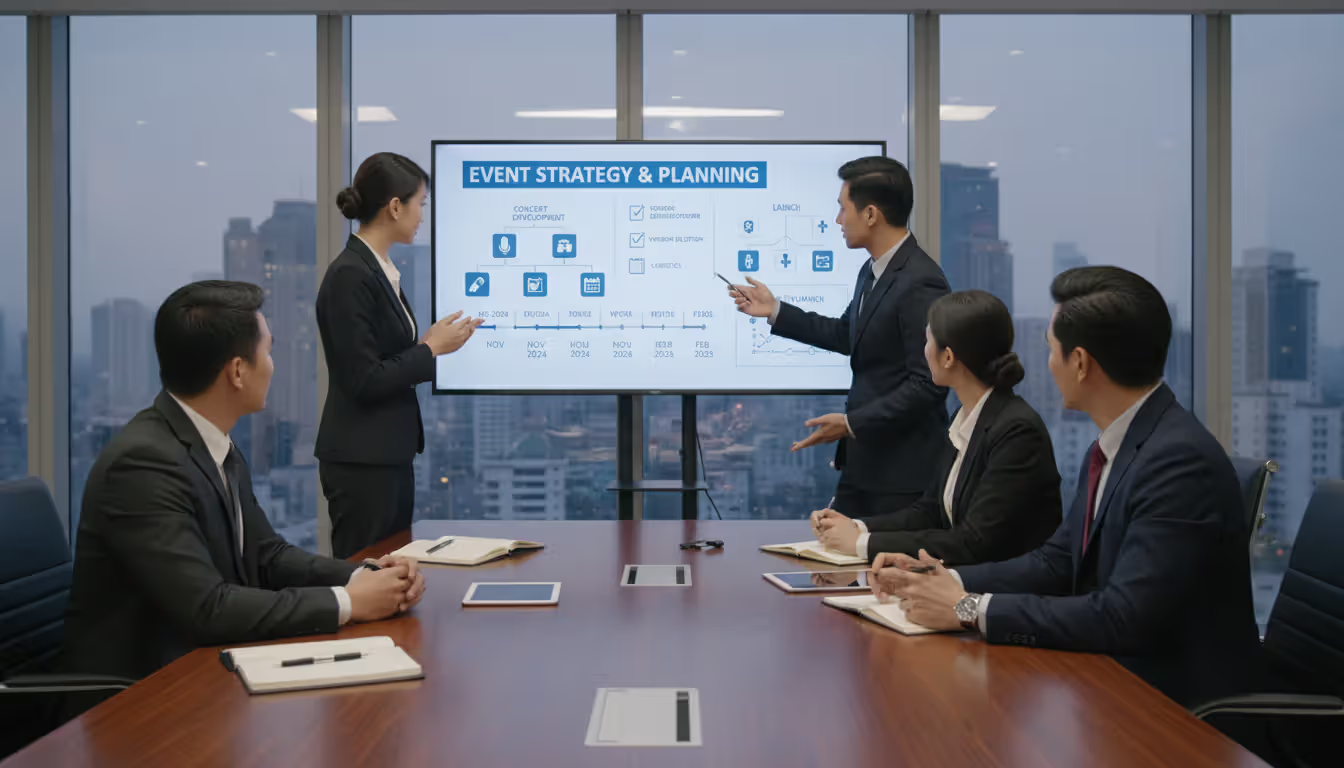
They build the strategy first. You tell them "we're launching our SaaS platform for healthcare admins." They come back with audience profiles, event format recommendations (conference booth vs. intimate dinner vs. demo tour), success benchmarks from similar launches, and a realistic budget range. They're deciding whether you need 50 qualified conversations or 5,000 brand impressions—totally different events.
They run the promotional campaign. Nobody just "shows up" anymore. The agency handles pre-event hype: targeted ads, email sequences, influencer outreach, press pitches, partnership activations. An event campaign agency makes sure your target audience knows it's happening and understands what's in it for them. Otherwise, you're hosting an expensive party for your own employees.
They design and execute the experience. This is booth design, branded environments, interactive demos, entertainment, swag strategy (yes, that's a thing), staffing, vendor wrangling, and real-time problem-solving when the keynote speaker's flight gets delayed. Everything that shapes whether attendees think "that was cool" or "that was whatever."
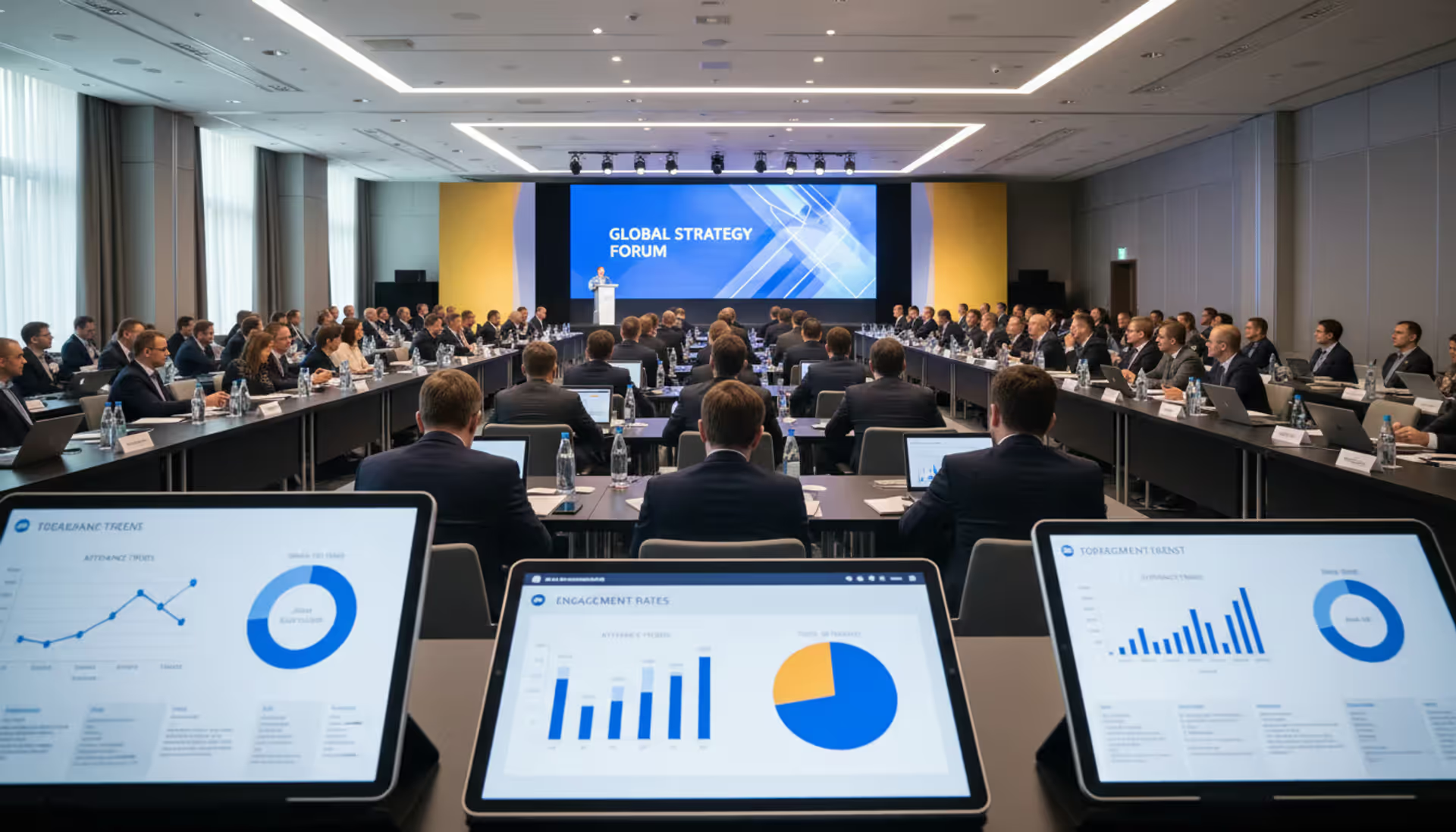
They measure what happened. Registration rates, attendance conversion, engagement metrics, lead quality scores, social reach, media value, survey responses, pipeline contribution. The good agencies don't just send you a recap deck with photos—they show you which parts worked, which didn't, and what to change next time.
An event management agency keeps the trains running on time. An event marketing partner makes sure those trains are going somewhere that matters.
Author: Chloe Winslow;
Source: musiconmainstreet.com
Types of Event Marketing Services
Not every agency does everything. Some specialize. Understanding these distinctions helps you avoid hiring the wrong hammer for your particular nail.
Experiential Marketing vs. Traditional Event Promotion
An experiential marketing agency builds stuff people want to participate in, not just attend.
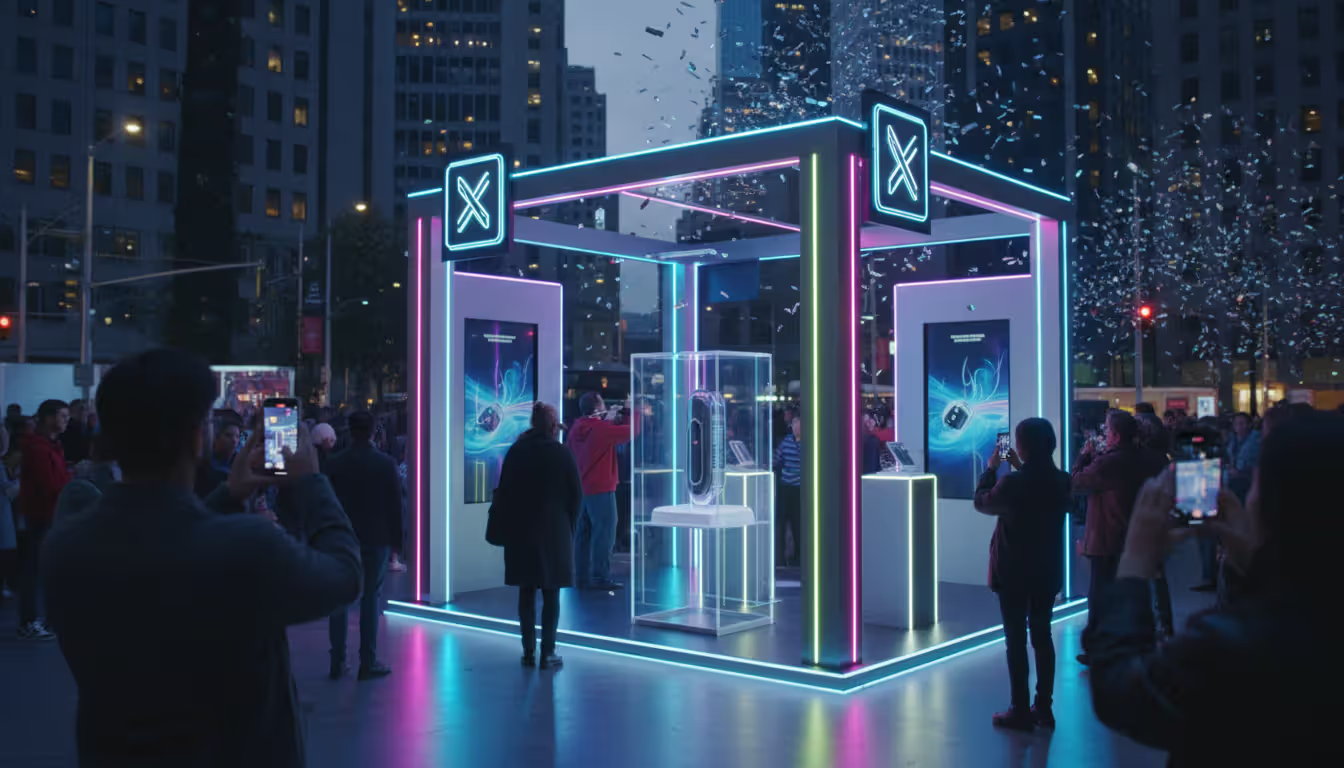
They create pop-up installations where your product becomes interactive. Guerrilla stunts that get people filming and sharing. Multi-sensory brand environments at SXSW or Coachella where attendees spend 20 minutes inside your world instead of grabbing a free sample and walking away.
Example: When a running shoe brand wants to launch a new trail model, an experiential agency doesn't just set up a booth—they build a mini trail course with real terrain, mud, elevation changes. People run it, feel the product perform, and leave with an actual experience instead of a brochure.
Author: Chloe Winslow;
Source: musiconmainstreet.com
Traditional event promotion is different. An event promotion agency excels at filling seats. They run ad campaigns, manage email lists, coordinate partnerships, optimize registration funnels. If you've already got a great event and just need more people there, this is your play.
Both matter. But if your brand problem is "nobody understands what makes us different," you need experiential. If it's "we're running a webinar series and registration is weak," you need promotion.
Event PR and Media Relations
An event PR agency gets journalists to care.
They know which reporters cover your industry, what angles they're currently interested in, and how to pitch your event as newsworthy rather than just another brand thing happening. They manage press lists, coordinate interviews, write releases that don't sound like robot marketing speak, and handle damage control when something goes sideways.
For high-stakes launches, this becomes critical. You can throw a beautiful product reveal, but if TechCrunch doesn't cover it, did it really happen? An event branding agency might create stunning visuals, but visuals don't generate earned media unless someone with media relationships is pitching them.
Some agencies bundle PR into their core offering. Others partner with specialized PR firms or expect you to bring your own. Clarify this upfront. Also ask about their actual media contacts in your vertical—consumer lifestyle PR doesn't translate to enterprise B2B credibility, and vice versa.
Then there's the event content agency angle: capturing everything (video, photos, quotes, reactions) and turning one event into three months of marketing assets. Highlight reels, social clips, blog posts, case studies, testimonial videos. This extends ROI way beyond the live moment.
When Your Brand Needs an Event Marketing Partner
Most companies realize they need help when internal bandwidth hits a wall. But here are specific scenarios where bringing in an event marketing partner makes actual business sense:
You're launching something that matters. Product releases requiring coordinated press events, influencer activations, customer demos, and retail experiences across multiple cities. Your team already handles day-to-day marketing—asking them to also orchestrate a multi-market launch tour is how things fall through cracks.
You're activating at a major industry event. Buying booth space at CES is easy. Standing out among 4,000 other exhibitors, generating real social buzz, and capturing qualified leads instead of badge-scanners grabbing free chargers? That requires people who've done it dozens of times and know what actually works versus what looks good in planning docs.
You're taking a brand experience on tour. Multi-city tours sound straightforward until you're dealing with venue scouting in markets you don't know, local permitting nightmares, vendor coordination across time zones, staffing challenges, and maintaining brand consistency when everything's moving. Agencies have the vendor networks and processes to scale this without losing quality.
Nobody on your team has actually done this before. Your marketing team crushes digital campaigns and content strategy but has never managed a live event with 500 people. You can learn through expensive mistakes, or hire people who've already made those mistakes on someone else's budget.
You need to prove ROI. Internal teams often struggle with rigorous event tracking and attribution. Which conversations turned into pipeline? What was the cost per qualified lead? How much media value did we generate? Agencies bring measurement frameworks and reporting infrastructure that connect event activities to revenue.
The stakes are too high for amateur hour. Investor days, major customer conferences, anniversary celebrations—these carry reputational risk. One logistics failure or poorly designed experience damages brand perception. Agencies provide redundancy, experience, and professional execution that reduces "what if" scenarios.
Author: Chloe Winslow;
Source: musiconmainstreet.com
You don't need a full-service agency for everything. Internal town halls, small team offsites, recurring local meetups—these you can probably handle. But when complexity scales, expertise gaps widen, or failure would actually hurt, the right partner stops being an expense and becomes insurance.
How to Evaluate Event Marketing Agencies
Choosing an agency requires more discipline than sitting through three pitches and picking whoever had the best slide deck. Here's what actually predicts success:
Look for results, not just pretty pictures. Every agency has photos of gorgeous events. Ask for specific outcomes: "What was the attendance rate versus registration? How many leads? What percentage qualified? Media impressions? Sales lift tracked to the event?" Agencies that can't provide concrete numbers either don't measure properly or don't deliver results worth measuring.
Match industry experience to your audience. The agency crushing consumer CPG activations at music festivals might totally miss the mark on enterprise software launches. Ask for examples in your specific vertical and audience segment. An agency that understands B2B purchasing cycles, decision-maker personas, and trade show dynamics brings context that generalists can't fake.
Clarify what's actually included. Does their scope cover venue sourcing, or just recommendations you have to execute? Is on-site staffing included? What about post-event reporting—standard or add-on? These gaps create friction later when you thought something was covered and it wasn't. Get detailed scope docs before signing anything.
Understand their vendor relationships. Established agencies have connections with venues, AV companies, caterers, production partners. This translates to better pricing, priority scheduling, and reliable execution. Ask directly: "What's your vendor network look like? How do you handle sourcing in new markets?" Vague answers suggest they're figuring it out on your dime.
Check their measurement infrastructure. What registration platform do they use? How do they track engagement during events? What survey tools? How do they connect event influence to pipeline? Agencies without solid measurement infrastructure can't prove they delivered value, which makes renewals awkward.
Demand budget transparency. Understand their fee model (flat project fee, percentage of total budget, monthly retainer), what's included in that fee, and how they handle cost overruns. Red flags: vague estimates, resistance to line-item breakdowns, or dodging questions about vendor markup. Some agencies mark up vendor costs 15-25% as part of their compensation—that's fine, just know about it.
Test the working relationship. You'll collaborate under tight deadlines and high pressure. Do they actually listen, or just pitch? Ask good questions? Communicate proactively, or go dark for days? Technical competence matters less if working with them makes you miserable.
Call their references. Ask about responsiveness, budget management, problem-solving when things went wrong, and whether they'd hire them again. Former clients tell you what sales pitches hide.
Author: Chloe Winslow;
Source: musiconmainstreet.com
Common Mistakes When Hiring an Event Agency
Even experienced marketers make predictable errors. Avoid these:
Optimizing purely on price. The cheapest proposal usually means cut corners, junior staff, or surprise costs that emerge later. Events involve too many variables and too much reputational risk to optimize for lowest bid. Focus on value: the right agency prevents mistakes that cost more than their fee.
Starting without clear goals. "Increase brand awareness" isn't a goal anyone can execute against. Get specific: "Generate 500 qualified leads with contact info and budget confirmation," or "Achieve 10 million social impressions from target demographic," or "Secure coverage in three tier-one publications." Vague goals produce vague results.
Being slow with communication. Event planning involves hundreds of small decisions. When your team takes three days to review booth concepts or provide speaker bios, timelines slip and creative suffers. Designate one point of contact with decision authority and commit to 24-hour response times during planning sprints.
Ignoring post-event follow-up. The event ends, everyone's exhausted, momentum dies, and leads go cold. Good event marketing agencies build post-event nurture, content repurposing, and measurement into the initial scope. If your agency doesn't proactively discuss this, push for it or find someone who plans beyond day-of execution.
Mismatching expertise to event type. Hiring an agency known for 5,000-person festival activations to run an intimate C-suite dinner is like booking a stadium rock band for your jazz club. Match agency strengths to your actual format and audience.
Unrealistic timelines. Expecting an agency to pull together a major activation in six weeks sets everyone up for failure. Quality events need lead time: venue sourcing (good spaces book out), creative development, vendor coordination, promotional runway. Plan for three to six months minimum for anything significant.
Not reading contracts. Understand cancellation policies, what happens if attendance misses targets, who owns creative assets, how scope changes get priced. Event contracts involve real money—treat them like the legal commitments they are.
Event Marketing Agency Pricing and Budgets
The brands winning customer loyalty in 2026 aren't the ones with the biggest ad budgets—they're the ones creating experiences that make people feel something.An event marketing partner who understands that emotional connection is worth far more than one who just checks logistical boxes. The ROI of experiential marketing isn't always immediate, but when done right, it creates brand advocates who do your marketing for you
— Marcus Chen
Pricing varies wildly. A local pop-up activation costs differently than a multi-city brand tour. Here's how agencies typically structure fees and what drives costs up or down.
Project fees vs. retainers. One-off events usually work on project pricing: flat fee covering strategy, planning, and execution for that specific event. Ongoing programs (quarterly activations, monthly webinar series, annual conferences) often make more sense on retainer—you get consistent support, they get predictable revenue.
What drives costs higher:
Event scale matters obviously. A 50-person executive dinner requires less coordination than a 5,000-person festival activation. Multi-city tours multiply logistics complexity and vendor management hours.
Geography makes a big difference. Events in New York, Los Angeles, San Francisco carry higher venue costs, labor rates, and vendor pricing than secondary markets. International events add travel, shipping, customs, and local expertise requirements.
Service scope determines fees. Strategy and planning only? Full execution management? Staffing included or separate? Creative development? Post-event analytics? The more comprehensive the service, the higher the fee—but often better overall value than piecemealing.
Vendor markup approaches vary. Some agencies charge a flat fee and you pay vendors directly. Others mark up vendor costs 15-25% as their compensation model. Neither is inherently wrong, but you need transparency about how it works.
What events actually cost in 2026:
Small activations (pop-up experiences, local launches, executive dinners): $25,000–$75,000 total budget. Agency fees typically run 20-30% of that, so $5,000–$22,000.
Mid-size events (regional conferences, trade show activations, multi-day brand experiences): $75,000–$250,000 total. Agency fees range from $15,000–$60,000 depending on complexity.
Large programs (national tours, major festival activations, flagship brand experiences): $250,000–$1 million+. Agency fees scale with scope but also benefit from some economies of scale.
These ranges include everything—agency fees and execution costs combined. Most agencies recommend allocating 60-70% of budget to actual execution (venue, production, staffing, promotion) and 30-40% to agency fees, contingency, and measurement.
What agency fees typically cover:
Strategic planning and concept development, project management and timeline coordination, vendor sourcing and contract negotiation, creative development (messaging, themes, visual identity), promotional campaign planning and coordination, on-site management oversight, post-event measurement and reporting.
What usually costs extra:
Venue rental, food and beverage, AV and production equipment, talent and entertainment fees, promotional media buys (ads, influencer partnerships, sponsored content), travel and shipping for multi-market events, insurance and permits, premium creative services (custom fabrication, professional video production).
Always request detailed budget breakdowns showing agency fees separate from pass-through vendor costs. This transparency helps you understand value and make smart trade-offs when budget constraints require adjustments.
Service Type
What You Actually Get
Works Best For
What It Costs
Experiential Marketing
Immersive activations, pop-up installations, interactive product demos, multi-sensory environments that people want to post about
Product launches, brand repositioning, festival presence, creating shareable moments that drive organic reach
$50,000–$500,000+ depending on scale and production complexity
Event PR
Press releases that don't suck, media lists, journalist outreach, interview coordination, coverage tracking, crisis management
High-profile launches, events needing media validation, situations where press coverage matters more than attendance numbers
$10,000–$50,000 per event, more for ongoing relationships
New event franchises, events needing strong visual differentiation, maintaining brand consistency across multiple touchpoints
$15,000–$100,000 for comprehensive branding packages
Frequently Asked Questions
What's the difference between an event marketing agency and an event planner?
Event planners handle logistics and execution. They book venues, coordinate catering, manage AV setup, handle registration systems, and make sure everything runs smoothly on event day. They're excellent at operational details but typically don't develop marketing strategy, run promotional campaigns, or measure business outcomes.
Event marketing agencies start with your business objectives and work backward. They ask "what behavior change are we trying to create?" before anyone picks a venue. They integrate promotion, branding, content creation, and measurement alongside execution. For a wedding or internal company party, hire a planner. For a brand activation meant to generate leads or shift market perception, you need a marketing agency that happens to also handle execution.
How far in advance should I hire an event marketing agency?
For major events—conferences, multi-city tours, large-scale activations—start conversations six to twelve months out. This gives you time for strategic planning, venue sourcing in competitive markets (good spaces book early), creative development, vendor booking, and meaningful promotional runway. Rushing this process limits your options and usually costs more.
Mid-size events like product launches or trade show activations need at least three to four months. Smaller activations can sometimes happen in six to eight weeks, but you'll have limited venue choices and compressed promotion windows, which hurts attendance and awareness.
Rush timelines also cost more. Agencies must deprioritize other work, and vendors charge premiums for short-notice bookings. Plan ahead unless you enjoy paying urgency taxes.
Do event marketing agencies handle virtual and hybrid events?
Most agencies adapted during 2020-2022 and now include virtual and hybrid capabilities. This means platform selection and management, virtual audience engagement strategies (because Zoom fatigue is real), digital content production, speaker coaching for camera presence, and integrated experiences connecting in-person and remote attendees.
That said, virtual event expertise varies significantly. Some agencies treat it as a core competency with dedicated production teams. Others bolt it on as an afterthought. If your event is primarily or entirely virtual, ask specifically about their platform experience, virtual production capabilities, and examples of engaging digital events they've run. Request references from virtual events, not just in-person ones.
What metrics do event marketing agencies track?
Good agencies measure both engagement and business impact. Common metrics include registration and attendance rates, session attendance and duration, lead capture and quality scores, social media reach and sentiment analysis, media coverage value, content downloads and resource requests, post-event survey responses and NPS scores, pipeline influence and revenue attribution, and cost per lead or cost per acquisition.
The specific metrics depend on your goals. Brand awareness events prioritize reach, impressions, and sentiment. Demand generation events focus on lead volume and quality. Customer retention events track satisfaction scores and upsell conversations.
Make sure your agency defines success metrics upfront and has the infrastructure to actually track them. "We'll measure engagement" is too vague. "We'll track badge scans, booth dwell time, demo requests, and 30-day pipeline influence" is specific enough to hold them accountable.
Can a small business afford an event marketing agency?
Full-service agency relationships typically start around $25,000–$50,000 for a single event, which puts them out of reach for many small businesses. But you have options:
Some agencies offer tiered services where you handle execution and they provide strategy and planning consultation at lower price points. You get expert guidance without paying for full execution management.
Specialized agencies focus on specific event types (local pop-ups, webinar series, LinkedIn Live events) with more accessible pricing since they've templatized their approach.
Project-based engagements for specific needs—just promotional strategy, just post-event content production—cost less than full-service relationships.
Also consider whether one strong event justifies the investment. If a well-executed activation generates qualified leads worth 10x the event cost, or media coverage you couldn't buy for that price, even smaller companies can make the math work. Run the ROI calculation honestly before dismissing agencies as "too expensive."
Do I need a separate PR agency if I hire an event marketing agency?
Depends on the event agency's capabilities and your ongoing PR needs.
Many full-service event marketing agencies include PR in their offering: event-specific media outreach, press releases, journalist coordination, coverage tracking. This integrated approach often works well because the agency understands the event strategy and can pitch it authentically to media.
However, if you already have a PR agency managing ongoing media relations and brand narrative, you'll need coordination to avoid duplicate outreach or conflicting messages. Some brands use their existing PR agency for strategic messaging and media strategy, while the event agency handles tactical execution and on-site press management.
Clarify roles upfront. Who owns the press list? Who pitches journalists? Who coordinates interviews? Who handles coverage tracking? Clear swim lanes prevent gaps where nobody does something important, or overlaps where you're paying twice for the same work.
The right event marketing agency stops being a vendor and becomes an extension of your team. They translate business objectives into experiences that create actual connections with your audience—not just pretty events that look good in recap emails.
They bring expertise your team doesn't have: proven processes, established vendor relationships, measurement frameworks that connect event activities to revenue, and experience from hundreds of events that helps them spot problems before they happen.
Choosing that partner means looking past creative portfolios and smooth pitches. Focus on measurable results from events similar to yours. Demand clear service scope and pricing transparency. Match their industry expertise to your actual audience. Test whether their communication style fits your culture.
Don't optimize purely on cost. Bad event marketing wastes money and damages your brand. Strategic investments create returns that compound—leads that convert, media coverage that builds credibility, brand experiences people actually remember and talk about.
Start conversations early. Define success metrics clearly. Treat the relationship as a partnership, not a vendor transaction. The agencies that deliver exceptional results are the ones who understand your business deeply enough to challenge assumptions, recommend trade-offs, and push for experiences that create lasting impact instead of just looking good on Instagram.
Whether you're launching a flagship product, building presence at major industry events, or creating experiential programs that differentiate you from competitors, the right event marketing partner transforms ambitious ideas into executed reality. And then they show you the data proving it actually worked.
Security information and event management (SIEM) combines security information management and security event management to collect, analyze, and correlate security data across IT infrastructure, enabling real-time threat detection and incident respons
Event tracking software captures attendee behavior and event performance metrics throughout the entire event lifecycle. This guide covers how these platforms work, key features to prioritize, common selection mistakes, and how to measure event success with data-driven insights
Setting up a smooth registration system can mean the difference between a packed venue and empty seats. This comprehensive guide walks through everything you need to build an event registration process that converts interest into confirmed attendance, from choosing the right platform to avoiding common mistakes
Event marketing tools handle promotion, analytics, and automation for modern events. Learn which platforms streamline workflows, track ROI, and boost attendance—from email marketing and social media to paid ads and attribution modeling
The content on this website is provided for general informational and educational purposes only. It is intended to explain concepts related to event management software, ticketing systems, hybrid event platforms, and operational tools for event organisers.
All information on this website, including articles, guides, and examples, is presented for general educational purposes. Outcomes may vary depending on event size, technology choices, and organisational needs.
This website does not provide professional legal, financial, or software advice, and the information presented should not be used as a substitute for consultation with qualified event tech or IT professionals.
The website and its authors are not responsible for any errors or omissions, or for any outcomes resulting from decisions made based on the information provided on this website.