You've booked the venue. Confirmed the speakers. Finalized the agenda. Now comes the hard part: getting people to actually register.
Here's what usually happens. You announce your event about six weeks before the date. You post on social media a few times. Send some emails. Maybe run a couple of ads. Then you sit back and wait for registrations to roll in.
They don't.
Meanwhile, events that sell out months in advance? They're doing something fundamentally different. They started promoting 12-16 weeks early. They mapped out every touchpoint. They knew exactly who they were reaching and why those people should care.
This guide shows you how to build that kind of plan—the systematic approach that fills seats instead of hoping attendees will magically appear.
What an Event Marketing Plan Includes and Why You Need One
Think of your event marketing plan as the master document that answers five questions: Who needs to know about this? What will make them register? Where will we reach them? When does each action happen? How will we know if it's working?
It's not just a list of promotional ideas. It's a coordinated system where every piece reinforces the others.
Here's what goes into one:
Target audience breakdowns showing exactly who you're trying to reach and what motivates them
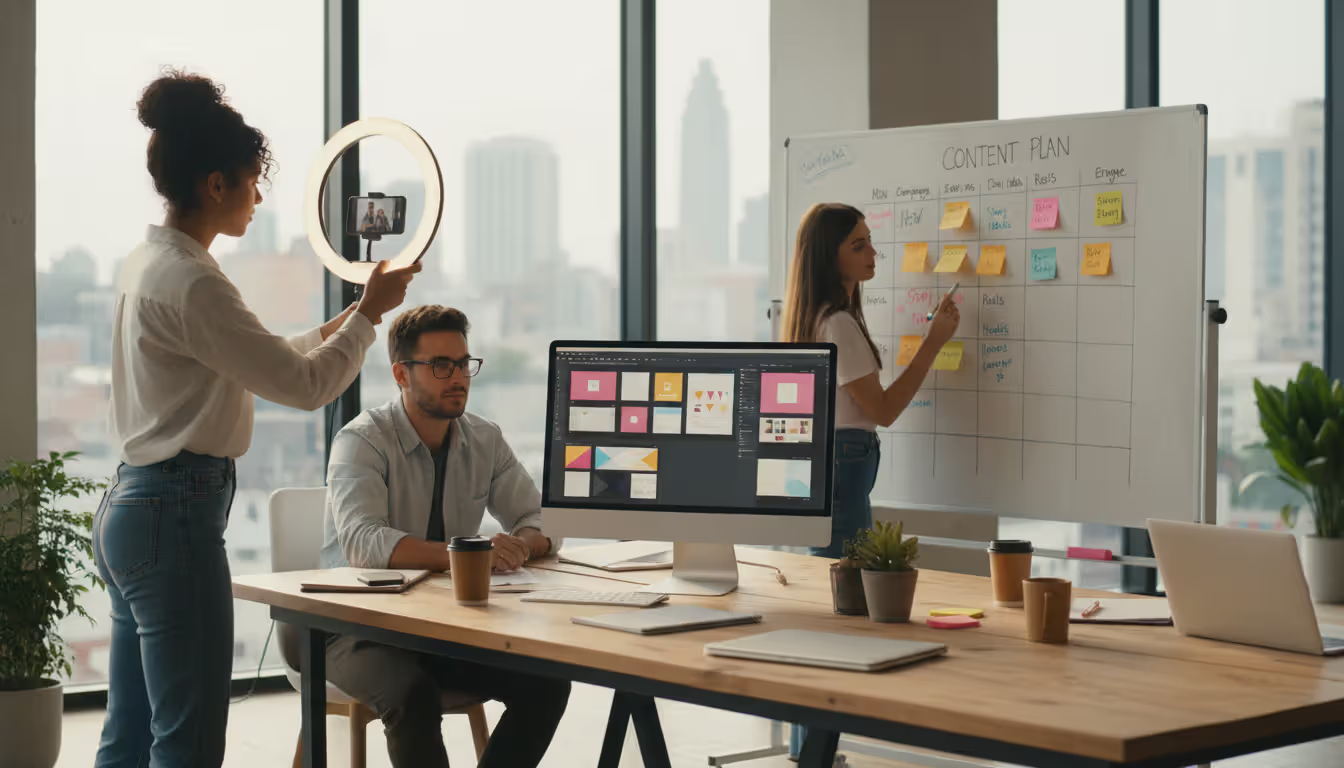
A week-by-week calendar spelling out every task from initial announcement through post-event follow-up
Specific tactics for each channel—your LinkedIn strategy won't look like your email strategy
All the content you'll need, from teaser videos to speaker spotlights to urgency-driven countdown posts
Your full budget, divided by channel and time period so you know what to spend when
Measurement systems tracking registrations back to specific messages and channels
Bizzabo studied thousands of events and found something striking: events with written marketing plans got 34% more attendees than events promoted informally.
Why? Because planning reveals gaps before they become problems. You realize in week eight that you haven't secured any media partners. You notice your early-bird deadline conflicts with a major industry conference. You catch these issues when there's still time to fix them.
Without a plan, you're reacting. Someone asks about ticket sales, so you send an email. You remember you haven't posted in a while, so you throw something on Instagram. That's not strategy—that's scrambling.
Setting Goals and Identifying Your Target Audience
Defining Measurable Event Objectives
Ambiguous goals like "build awareness" or "generate buzz" won't help you make decisions. You need numbers attached to deadlines.
Try these instead:
625 total registrations by October 15, with at least 55% from email outreach and 30% from social channels
$112,500 in revenue based on 450 full-price tickets at $250 each
Email campaign benchmarks: 38% open rate minimum, 8% click-through rate
Post-event pipeline: 175 qualified sales leads captured through our lead retrieval system
Notice how each goal includes specifics. You can look at that goal on any given day and know whether you're on track.
Also set goals that build long-term value beyond this single event: add 2,000 qualified contacts to your email database, establish three new co-marketing partnerships, create 15 pieces of evergreen content you can repurpose.
Building Audience Personas and Segmentation Strategies
Event audience targeting fails when you try reaching "everyone interested in marketing" or "people who care about innovation." That's too broad to guide real decisions.
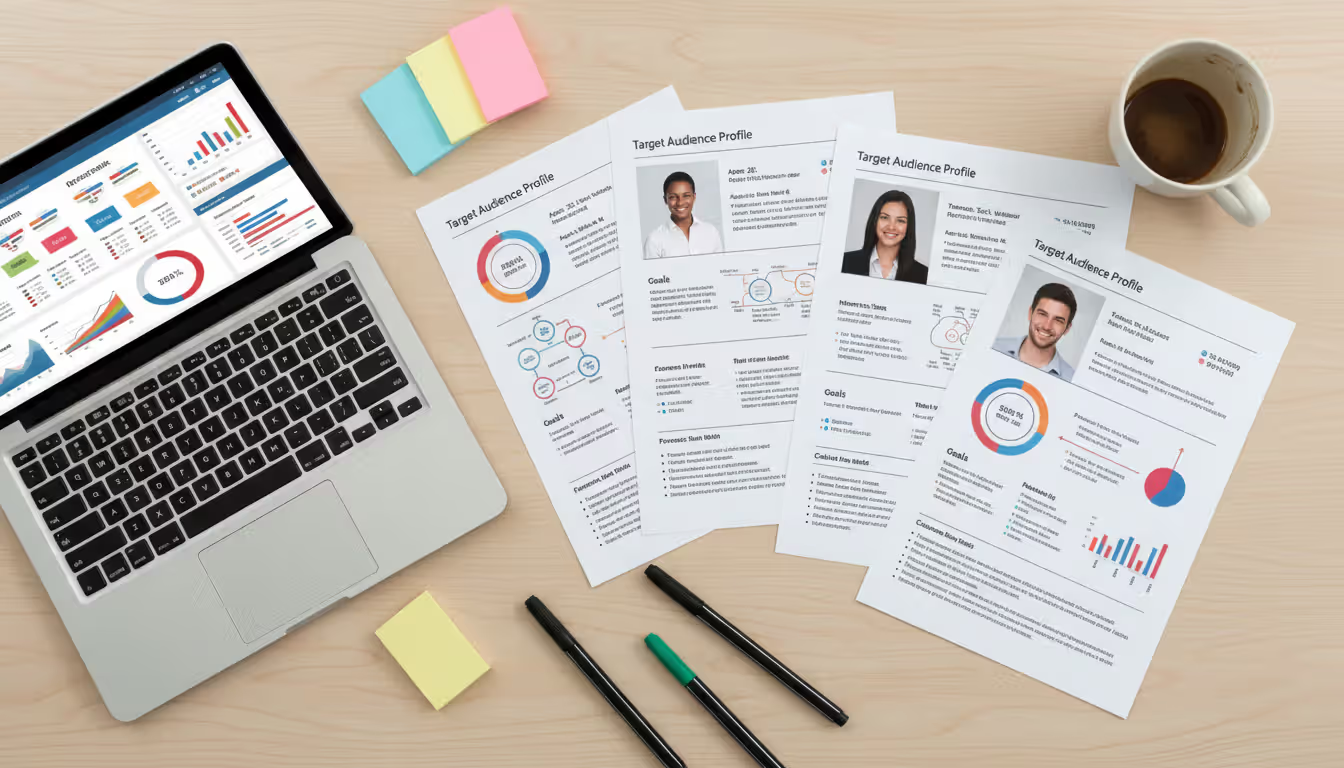
Instead, build 2-3 detailed profiles of your ideal attendees:
Who they are: Age bracket, job function, industry, company size, geographic location
What keeps them up at night: Specific challenges your event addresses
Where they get information: Industry Slack groups? Trade publications? LinkedIn? Podcasts?
What tips them from browsing to buying: Peer recommendations? Specific speakers? Networking access? Professional development credits?
Let's say you're running a financial services conference. You might have:
Persona A - Compliance Directors: 35-50 years old, responsible for regulatory adherence at regional banks, reads American Banker and attends ABA events, decides to attend based on specific regulatory topics and case studies from peer institutions.
Persona B - Fintech Product Managers: 28-40 years old, building digital banking products at tech companies, active in fintech Twitter and product management Slack channels, registers when they see innovative technology demos and networking with potential partners.
Same event. Completely different messaging for each group.
Pull data from past attendees if you have it. Survey your existing customers. Check your website analytics to see what content resonates. If 68% of last year's registrations came from healthcare companies, focus your promotion on healthcare publications and associations instead of general business outlets.
Your personas also determine channel mix. Reaching HR executives? LinkedIn and HR-specific newsletters work better than TikTok. Marketing to Gen Z consumers? Instagram and influencer partnerships outperform LinkedIn.
Author: Liam Crestwood;
Source: musiconmainstreet.com
Building Your Event Promotion Strategy Across Channels
Social Media Platforms and Tactics
Your event social media strategy needs to shift as the event approaches. Three months out, you're building awareness—most people don't even know your event exists yet. Two weeks out, you're creating urgency and addressing last objections.
Here's how to use each platform:
LinkedIn crushes it for professional conferences and B2B events. Post speaker Q&As where they share contrarian takes on industry trends. Run polls asking your audience about their biggest challenges. Share photos from last year's event showing the networking, not just the presentations. Use LinkedIn's native Events feature to centralize everything and make sharing easy. Your speakers and sponsors should post about the event too—their networks are your networks.
Instagram and Facebook let you tell visual stories. Film 15-second clips of speakers explaining their biggest takeaway. Take followers behind the scenes as you plan. Show the venue. Post testimonials as carousel graphics. Use Stories for flash promotions and real-time updates. Create a unique hashtag (check that it's not already taken) and get early registrants using it.
X works particularly well during the event itself. Before the event, share compelling quotes from speaker prep calls, post agenda sneak peeks, run interactive polls. During the event, amplify attendee tweets and share real-time highlights from sessions.
YouTube extends your event's reach beyond the single day. Post teaser interviews with speakers. Create "What to expect at [Event Name]" walkthroughs. After the event, publish session recordings (if you have permission). This content supports next year's promotion and provides value to people who couldn't attend.
How often should you post? Aim for 3-5 times weekly across your channels. Create content in batches—dedicate one afternoon to filming three weeks of video clips. You'll stay consistent without the daily stress.
Author: Liam Crestwood;
Source: musiconmainstreet.com
Email Marketing and Retargeting
Email still converts better than any other channel for event registration, but only if you segment your list.
Send different messages to:
Previous attendees: "Here's what's new this year" plus early access pricing
Your general email list: Problem-focused messaging with social proof from past attendees
Partner lists: Reference the partnership and explain the specific value for their audience
Early-bird pricing (8-10 weeks before): Time-limited discount with clear deadline
Full agenda reveal (6 weeks before): Detailed session descriptions that justify the investment
Testimonial-heavy email (4 weeks before): Stories from past attendees, growing registration numbers
Urgency message (7-10 days before): Countdown timer, last-chance framing
Logistics email (2 days before): What to bring, parking details, event app download
Track everyone who visits your registration page but doesn't complete. Retarget them with Facebook and Google ads that handle common objections: "Worried about time away from work? Every session includes implementation frameworks you can use the next day."
Partnerships and Influencer Outreach
Partnerships let you tap into audiences that already trust someone else's recommendation. Look for organizations whose members overlap with your target personas—industry associations, complementary brands, media companies, influencers with engaged communities.
Make it worth their while. Offer discounted member tickets. Create co-branded content they can share. Give them a speaking slot or sponsor recognition.
Example: A SaaS company hosting a customer conference partners with an online training platform. The training platform promotes the conference to its users in exchange for free training credits for conference attendees. Both get value.
For influencer outreach, skip the celebrities and focus on micro-influencers—5,000 to 50,000 followers with real expertise in your event's subject area. They engage better and cost less. Give them ready-to-use graphics, key talking points, and unique discount codes so you can track which influencers actually drive registrations.
Creating Your Event Marketing Timeline and Calendar
Your event marketing timeline breaks promotion into distinct phases, each with its own goals and tactics:
Phase
Timing
What You're Trying to Accomplish
Where to Focus
Content Themes
Early Awareness
12-16 weeks before
Get the event on people's radar, establish credibility
Social media, PR outreach, save-the-date emails
Speaker announcements, event theme explanation, highlights from previous years
Active Consideration
6-8 weeks before
Push people from "sounds interesting" to "I should register"
Email campaigns, blog content, partnership activation
Your event marketing calendar turns this high-level timeline into specific weekly tasks. Use Asana, ClickUp, or even a detailed spreadsheet. For each week, document:
Always build in cushion time. Need a video ready at week eight? Schedule production for week ten. Delays happen. Buffer time prevents panic.
Developing Content and Messaging for Your Campaign
Event content marketing does two jobs at once: attracts registrations and builds credibility that makes people trust their decision to attend. Your event communication plan should map content types to campaign phases.
During awareness phase: Create thought leadership content establishing why your event's topic matters right now. Hosting a supply chain conference? Publish original research on shipping delays. Interview speakers about emerging trends. Share survey results revealing what keeps your audience up at night. This content lives on your blog, gets distributed through email, and forms the backbone of social posts.
During consideration phase: Show what attendees actually get. Film 60-second speaker previews where they share one actionable insight. Write detailed case studies about how past attendees used what they learned to solve real problems. Design visual agenda breakdowns highlighting networking sessions and interactive workshops, not just presentations.
During conversion phase: Lean into urgency and proof. Share video testimonials from past attendees. Post countdown graphics. Send "only 50 tickets left" updates. Highlight sold-out sessions or waitlists.
Keep your voice consistent everywhere. Running a data-focused analytics conference? Your social posts should be sharp and information-dense, not casual and chatty. Hosting a creative community festival? Stiff corporate emails will fall flat.
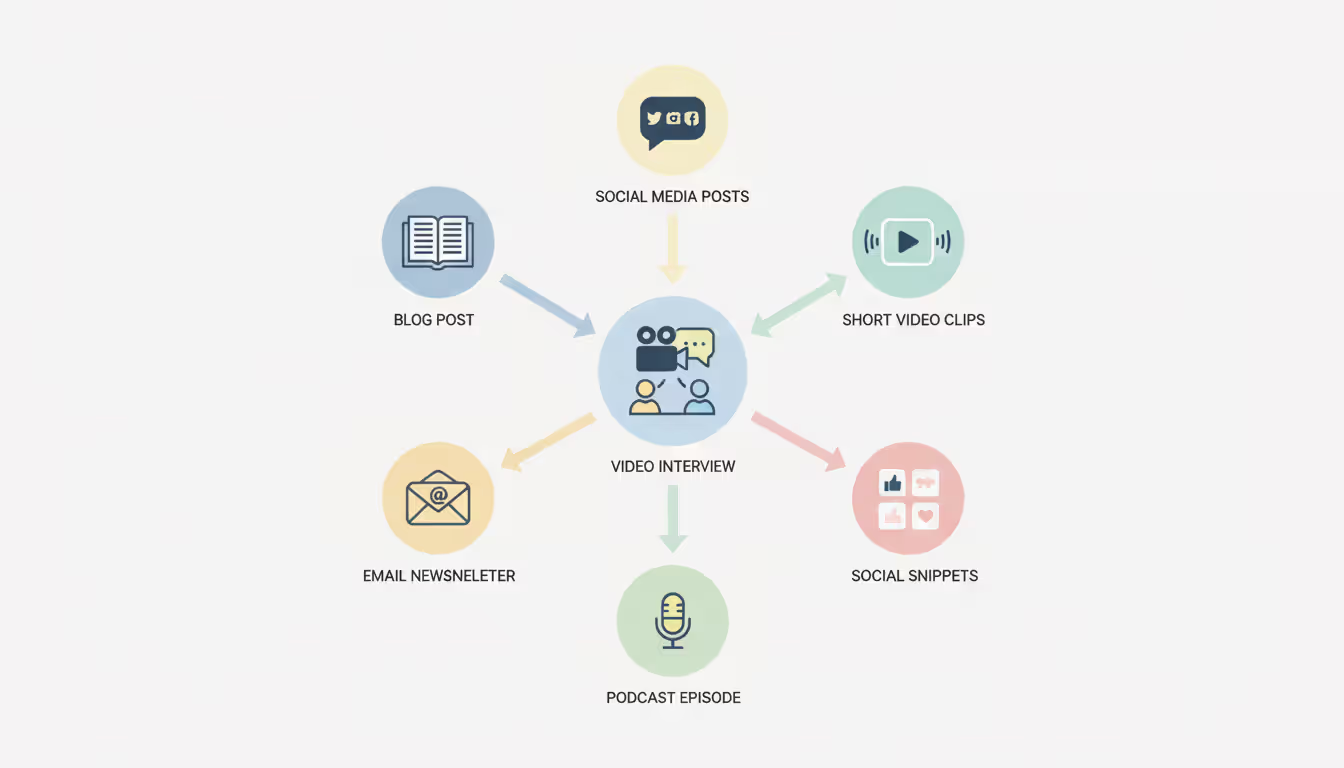
Repurpose relentlessly. One 20-minute speaker interview becomes a blog post, five quote graphics for social, a feature in your email newsletter, three short video clips, and content for a pre-event podcast episode. That's six promotional assets from one interview.
Author: Liam Crestwood;
Source: musiconmainstreet.com
Common Event Marketing Mistakes to Avoid
Announcing too late: The fatal error is launching promotion six weeks before your event and expecting strong turnout. Professionals book their calendars 8-12 weeks out. Late announcements mean competing with already-scheduled commitments. You've lost before you start.
Treating everyone the same: Blasting identical messages to your entire list kills performance. A C-suite executive and an individual contributor have different reasons for attending. Different pain points. Different decision criteria. Segment your messaging or accept mediocre results.
Forgetting mobile users: More than 60% of event registrations now happen on phones. If your registration form requires endless scrolling or takes 45 seconds to load, you're bleeding conversions. Test every step on an actual smartphone before launch.
Not tracking source data: Without UTM parameters and proper tracking, you can't tell which efforts actually work. You might assume Facebook ads are crushing it while email quietly delivers triple the registrations at one-tenth the cost. Track from day one or fly blind.
Going silent after registration: Getting someone to register isn't the finish line. People who registered three months ago may forget about your event or lose interest. Send regular updates: newly added speakers, agenda details, networking opportunities. Keep them engaged or watch your no-show rate climb.
Rushing content creation: Quality video and graphics take longer than you think. Want a polished speaker interview? Factor in scheduling the interview, filming, editing, getting speaker approval on the final cut, and creating promotional clips. Build production timelines backward from when you need to publish.
Underfunding promotion: Most event organizers dramatically underestimate marketing costs. They skimp on promotion to reduce expenses, then watch poor attendance cost them far more than adequate marketing would have. Plan for 15-25% of your total event budget going to marketing. New events should hit the higher end.
Eventbrite's research shows that events beginning promotion 12-16 weeks in advance achieve registration rates 40% higher than events starting at just 6 weeks out. Even more interesting: the attendees they attract engage more during the event and convert at higher rates afterward, suggesting that giving people adequate time to plan yields better-quality audiences, not just larger ones.
— Eventbrite
Frequently Asked Questions
How far in advance should I start my event marketing plan?
Start planning 4-5 months before your event date and begin public promotion 12-16 weeks out. This gives you enough runway to secure partnerships, create quality content, and reach your audience before they commit to other events. Larger conferences or annual marquee events need 6-9 months of lead time for planning.
What budget percentage should go toward event promotion?
Put 15-25% of your total event budget into marketing. If you're spending $100,000 on the event itself, allocate $15,000-$25,000 for promotion. First-time events or those targeting new audiences should lean toward 25%. Established events with strong brand recognition can work at 15%. Split your budget roughly 40% to paid digital advertising, 30% to content creation, 20% to partnerships and influencers, 10% to tools and platforms.
Which social media platforms work best for event marketing?
Depends entirely on your audience. LinkedIn dominates for B2B conferences, professional development events, and executive gatherings. Instagram and Facebook excel for consumer events, local festivals, and community gatherings. X works well for live engagement during the event itself. YouTube extends your reach through video that continues working long after the event ends. Pick 2-3 platforms where your target audience actually spends time rather than trying to maintain presence everywhere.
How do I measure the success of my event marketing campaign?
Track these core metrics: registration conversion rate (site visitors who actually register), cost per registration broken down by channel, email open rates and click-through rates, social media engagement per post, traffic sources to your event page, and actual attendance versus total registrations. Use UTM parameters on every link to identify which specific channels, messages, and partnerships drive conversions. After the event, measure attendee satisfaction and track repeat attendance for future events.
What's the difference between an event marketing plan and an event promotion strategy?
Your event marketing plan is the complete blueprint covering goals, audience research, budget, timeline, channels, content, and measurement systems. Your event promotion strategy is one section of that larger plan—it focuses specifically on the channels and tactics you'll use to drive awareness and registrations. The marketing plan is your comprehensive roadmap. The promotion strategy is your execution playbook.
Do I need different marketing plans for virtual vs. in-person events?
Absolutely. Virtual events need stronger content previews since attendees can't evaluate venue quality or gauge networking atmosphere. They also work with shorter promotional windows (6-8 weeks versus 12-16) because there's no travel planning involved. In-person events require more logistical communication—venue walkthroughs, parking maps, hotel blocks—and benefit from local media partnerships and community outreach. Hybrid events need both approaches: crystal-clear communication about participation options plus platform tutorials for virtual attendees.
Filled seats don't happen by accident. They're the result of a methodical marketing plan that reaches the right people through the right channels at the right time with messaging that compels them to register.
Start early—give yourself 12-16 weeks before the event date. Build detailed profiles of your target attendees and customize your approach for each segment. Layer your tactics across owned, earned, and paid channels instead of betting everything on one approach. Create a granular timeline assigning specific responsibilities and deadlines to team members. Develop content that delivers genuine value, not just promotional noise. Track everything so you know what's working and can adjust on the fly.
The gap between packed rooms and empty seats usually comes down to discipline—following your plan consistently, executing every week, and measuring ruthlessly. Your event provides real value to attendees. A solid marketing plan ensures they find out about it, understand why it matters, and show up ready to participate.
Security information and event management (SIEM) combines security information management and security event management to collect, analyze, and correlate security data across IT infrastructure, enabling real-time threat detection and incident respons
Event tracking software captures attendee behavior and event performance metrics throughout the entire event lifecycle. This guide covers how these platforms work, key features to prioritize, common selection mistakes, and how to measure event success with data-driven insights
Setting up a smooth registration system can mean the difference between a packed venue and empty seats. This comprehensive guide walks through everything you need to build an event registration process that converts interest into confirmed attendance, from choosing the right platform to avoiding common mistakes
Event marketing tools handle promotion, analytics, and automation for modern events. Learn which platforms streamline workflows, track ROI, and boost attendance—from email marketing and social media to paid ads and attribution modeling
The content on this website is provided for general informational and educational purposes only. It is intended to explain concepts related to event management software, ticketing systems, hybrid event platforms, and operational tools for event organisers.
All information on this website, including articles, guides, and examples, is presented for general educational purposes. Outcomes may vary depending on event size, technology choices, and organisational needs.
This website does not provide professional legal, financial, or software advice, and the information presented should not be used as a substitute for consultation with qualified event tech or IT professionals.
The website and its authors are not responsible for any errors or omissions, or for any outcomes resulting from decisions made based on the information provided on this website.