Events remain one of the highest-converting channels for B2B marketers, but most companies leave qualified prospects on the table. The difference between a mediocre event and one that fills your pipeline for months comes down to execution across three phases: before, during, and after.
This guide walks through proven systems for capturing, qualifying, and converting event attendees into customers—without the usual platters of empty advice.
What Is Event Lead Generation and Why It Matters
Event lead generation is the process of identifying, capturing, and qualifying potential customers who engage with your brand at conferences, trade shows, webinars, roadshows, or sponsored gatherings. Unlike cold outreach, these prospects have already demonstrated interest by attending an event where your company has a presence.
The core value lies in compressed relationship-building. A 15-minute booth conversation can accomplish what might take seven email touches and three LinkedIn messages to achieve remotely. You're working with warm contacts who've self-selected into your target market simply by showing up.
For B2B companies, events typically generate leads with 40-60% higher close rates compared to digital channels, though at a higher cost per contact. The trade-off makes sense when your average deal size justifies the investment. A software company selling $50K annual contracts can afford a $200 cost per qualified lead from a major conference. An e-commerce brand selling $30 widgets cannot.
Event demand generation differs from other tactics because it compresses awareness, consideration, and decision stages into a single interaction window. Your booth visitor might be researching solutions (awareness), comparing vendors (consideration), and ready to see a demo (decision) all within the same 20-minute conversation. This compression requires your team to qualify and adapt in real-time rather than nurturing over weeks.
The connection to broader demand generation strategy matters because event leads rarely convert immediately. They enter your pipeline at various stages, and most need 3-8 touchpoints post-event before they're sales-ready. Companies that treat event leads as "hot" and immediately hand them to sales typically see 70% of those leads go cold within two weeks.
Author: Sophie Langford;
Source: musiconmainstreet.com
Pre-Event Strategies to Maximize Attendee Acquisition
Most event ROI problems start before anyone sets foot in a venue. Poor pre-event planning means you're fishing in the wrong pond or using the wrong bait.
Your promotion should start 6-8 weeks out for major conferences, 3-4 weeks for smaller regional events. Email remains the workhorse channel—segment your database by job title, industry, and geography, then send targeted invitations explaining what attendees will gain from stopping by your booth. "Free consultation on reducing cloud costs by 30%" beats "Visit us at booth 847" every time.
Registration optimization extends beyond your own events to how you prepare for third-party conferences. If the event offers pre-show attendee lists (many do for sponsors), request it early and cross-reference against your CRM. Identify existing prospects and customers, then reach out personally to schedule meetings. These pre-booked appointments typically convert at 3-5x the rate of walk-up booth traffic.
Event audience growth depends on giving people a reason to seek you out. Interactive elements work: live demos, expert presentations at your booth, prize drawings that require qualification questions, or hands-on workshops. A cybersecurity vendor running 30-minute "security audit" sessions at their booth will capture more qualified leads than one offering branded stress balls.
Setting Clear Goals for Event Pipeline Building
Vague goals produce vague results. "Generate leads" isn't a goal—it's a category. Useful goals include specific numbers tied to pipeline value: "Capture 150 qualified contacts with budget authority, generating $2M in pipeline opportunities" or "Schedule 40 demo meetings with director-level prospects from target account list."
You don't close a sale, you open a relationship if you want to build a long-term, successful enterprise.
— Patricia Fripp
Break this into daily targets if you're staffing a multi-day conference. A three-day show with a 150-lead goal means your team needs to average 50 qualified conversations per day. That math determines booth staffing levels, shift schedules, and how aggressively your team engages passersby.
Define what "qualified" means before the event. Create a simple scoring framework: job title (20 points), budget authority (20 points), active project timeline (30 points), company size match (15 points), engagement level (15 points). Anyone scoring above 60 gets immediate sales follow-up; 40-60 enters nurture sequences; below 40 goes to general marketing automation.
Using Data to Identify High-Value Prospects
If you're exhibiting at a third-party event, mine the attendee list for target accounts. Most event platforms let sponsors download attendee data 2-4 weeks before the show. Export this, enrich it with intent data from your marketing automation platform, and flag anyone from your target account list or showing buying signals.
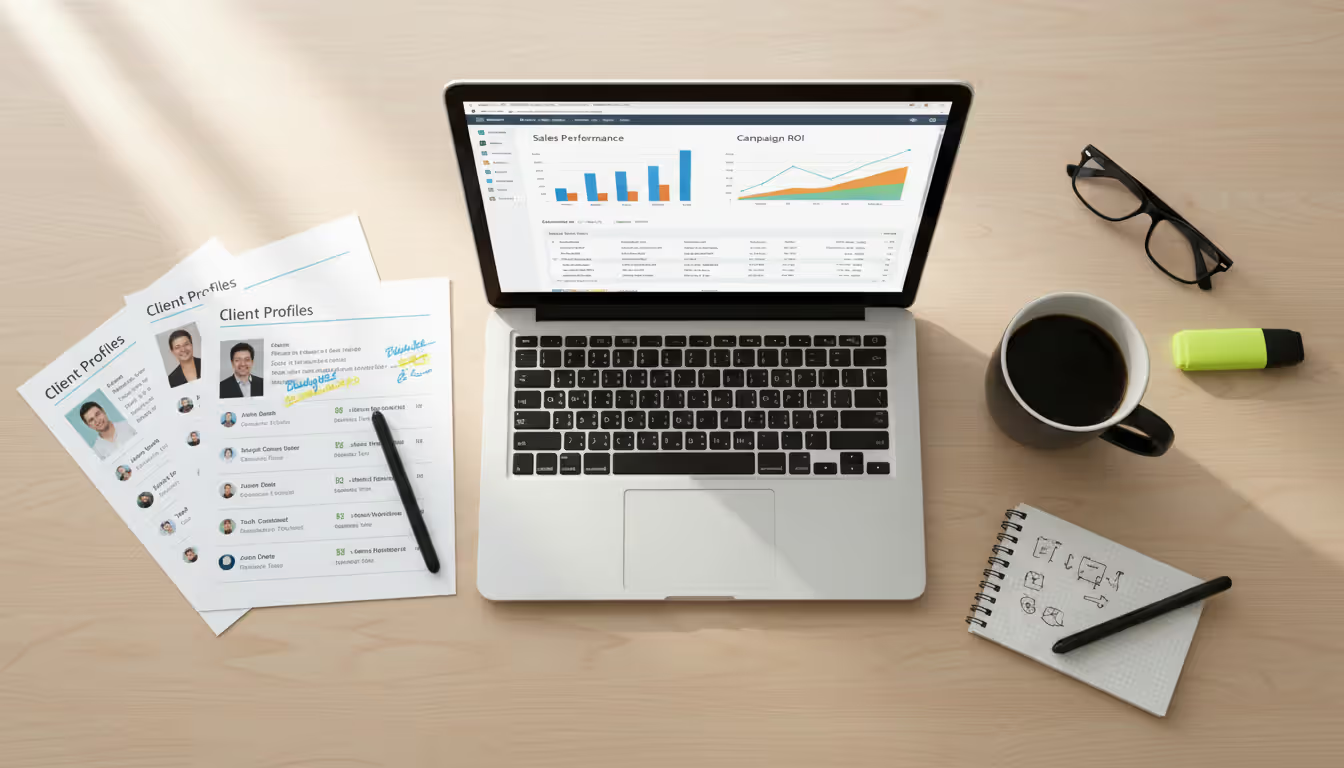
Create a "VIP hit list" of 30-50 attendees your team should specifically seek out. Print photos and brief context for each (current vendor, pain points from past conversations, recent funding news). When someone from that list approaches your booth, your team recognizes them and personalizes the conversation immediately.
For your own hosted events, registration forms are data goldmine opportunities. Ask 3-4 qualification questions beyond basic contact info: current solution, biggest challenge, project timeline, budget range. Make these optional to avoid registration drop-off, but offer incentive for completion ("answer these questions for VIP access to our workshop track").
Author: Sophie Langford;
Source: musiconmainstreet.com
Lead Capture Methods That Actually Work at Events
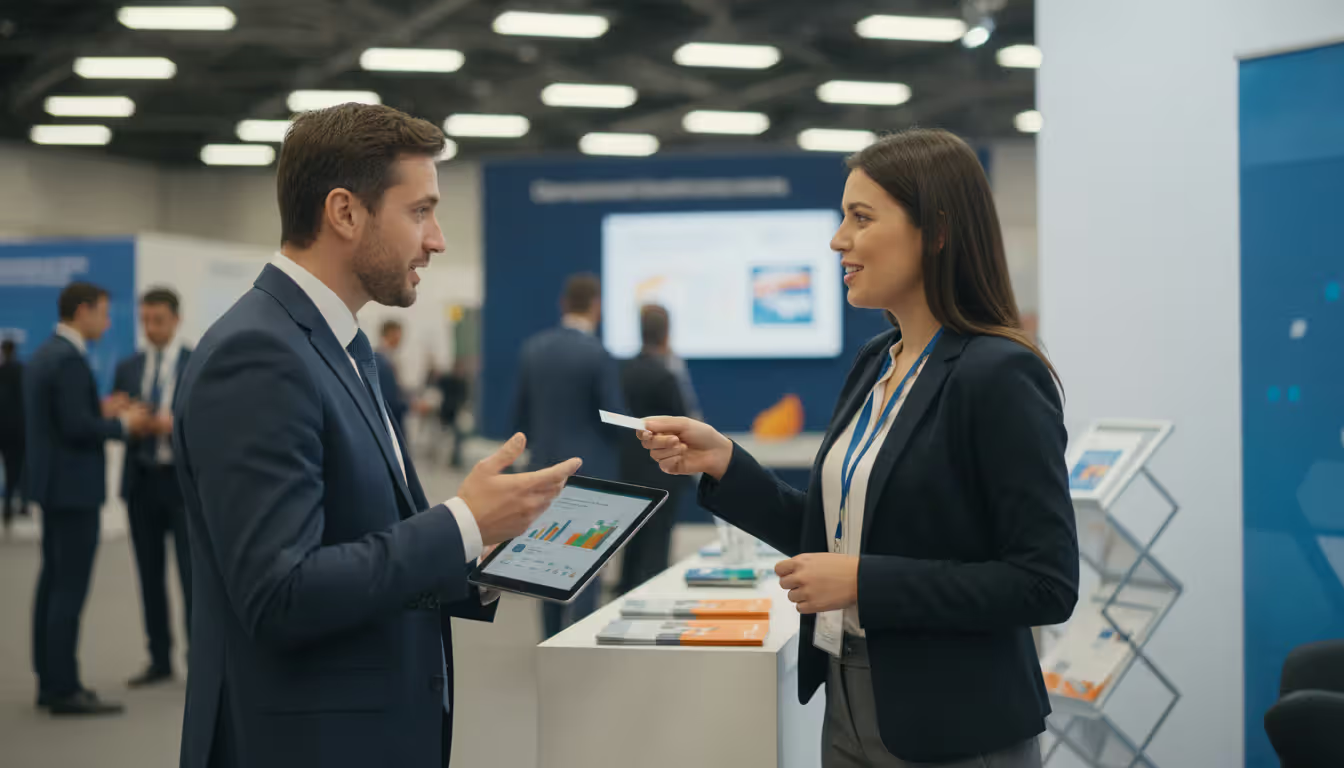
Badge scanning is ubiquitous but often misused. Most conference badges contain basic contact info (name, company, email) but lack qualification data. If you scan everyone who walks by, you'll drown in unqualified contacts. Train booth staff to have a qualifying conversation first, then scan only those who meet minimum criteria.
Mobile apps designed for event lead capture let your team add custom notes and qualification scores immediately after each conversation. This context proves invaluable during follow-up. "Interested in enterprise plan, currently using Competitor X, contract renewal in Q3, budget approved" gives your sales team everything they need. "Stopped by booth, seemed interested" gives them nothing.
QR codes work well for self-service information gathering. Place them at product displays with specific content offers: "Scan for case study on reducing implementation time by 50%." This captures interest in specific solutions while letting your team focus on deeper conversations with serious prospects. The scan data tells you what topics resonated with each lead.
Interactive booth elements generate both engagement and qualification data. A configurator tool that lets prospects build their ideal solution captures their requirements while they play with it. A brief assessment or quiz ("How mature is your data governance program?") segments leads by sophistication level and pain points.
Contests and prize drawings attract booth traffic but often generate junk leads. Improve quality by requiring qualification to enter: "Answer three questions about your current challenges for a chance to win." The prize should appeal to your target buyer, not everyone. An iPad attracts everyone; a year of your software attracts people who might actually use it.
Demos remain the highest-converting booth activity. Prospects who see a live demonstration convert at 2-3x the rate of those who just chat. Keep demos short (5-7 minutes), focused on one key outcome, and interactive. Let the prospect drive it when possible: "What would you like to see it do?"
Digital versus manual methods each have trade-offs. Digital capture (apps, badge scanners) is faster and feeds directly into your CRM, but creates distance—your rep is looking at a screen instead of the prospect. Manual capture (business cards, paper forms) feels more personal but creates data entry work and delays follow-up. Hybrid approaches work best: have the conversation, capture business card, then immediately enter details into your app while the prospect is still present.
Essential Event Lead Capture Tools and Technology
The right tools reduce friction in capture and follow-up. Wrong tools create busywork that delays the very follow-up that drives conversion.
CRM integration is non-negotiable. Leads captured Thursday afternoon should be in your CRM by Thursday evening, not manually entered the following week after someone gets back to the office. Most modern lead capture apps sync with Salesforce, HubSpot, and other major platforms in real-time or on-demand.
Mobile capture apps replace paper and spreadsheets. Your booth team uses smartphones or tablets to scan badges, add notes, score leads, and flag hot opportunities. Better apps let you customize fields, add photos, record voice notes, and trigger immediate alerts to sales reps for high-priority leads.
Landing page builders support pre-event registration and post-event follow-up. Create dedicated pages for each event with specific offers, schedule meeting tools, and content relevant to that audience. Track which attendees visit these pages after the event to identify engaged leads worth prioritizing.
Tool
Key Features
Pricing Tier
CRM Integrations
Mobile Capability
Best Use Case
Scanbot
Badge scanning, custom forms, offline mode
$50-200/user/event
Salesforce, HubSpot, Marketo
iOS, Android
Trade shows with inconsistent WiFi
Eventbrite Organizer
Registration management, check-in, basic capture
Free-$99/month
Salesforce, Mailchimp, Zapier
iOS, Android
Hosted events under 500 attendees
Swoogo
End-to-end event platform, advanced scoring
$5K-25K/event
Salesforce, HubSpot, Eloqua
iOS, Android
Large conferences with complex routing
Leadnomics
AI-powered qualification, conversation prompts
$150/user/month
Salesforce, HubSpot, Dynamics
iOS, Android
High-value B2B events requiring deep qualification
Grip
AI matchmaking, meeting scheduler, capture
Custom pricing
Most major CRMs via API
Web, iOS, Android
Events focused on scheduled 1:1 meetings
Bizzabo
Full event management, networking, lead retrieval
$3K-20K/event
Salesforce, HubSpot, Marketo
iOS, Android
Mid-to-large events needing attendee engagement features
Choose based on event type and volume. If you attend 2-3 conferences per year, a simple badge scanner with CRM sync suffices. If you host monthly webinars and quarterly user conferences, invest in a full event platform that handles registration through follow-up.
Post-Event Lead Nurturing and Management Best Practices
Speed matters disproportionately. Leads contacted within 24 hours of the event convert at 7x the rate of those contacted after five days. The conversation is still fresh in their mind, your brand still has salience, and competitors haven't filled the void yet.
Segment before you follow up. Not all event leads are equal, and identical follow-up messages to everyone waste the opportunity to personalize. Create at least three segments: hot (sales-ready, met qualification criteria, expressed urgency), warm (qualified but no immediate timeline), and cool (early-stage, informational).
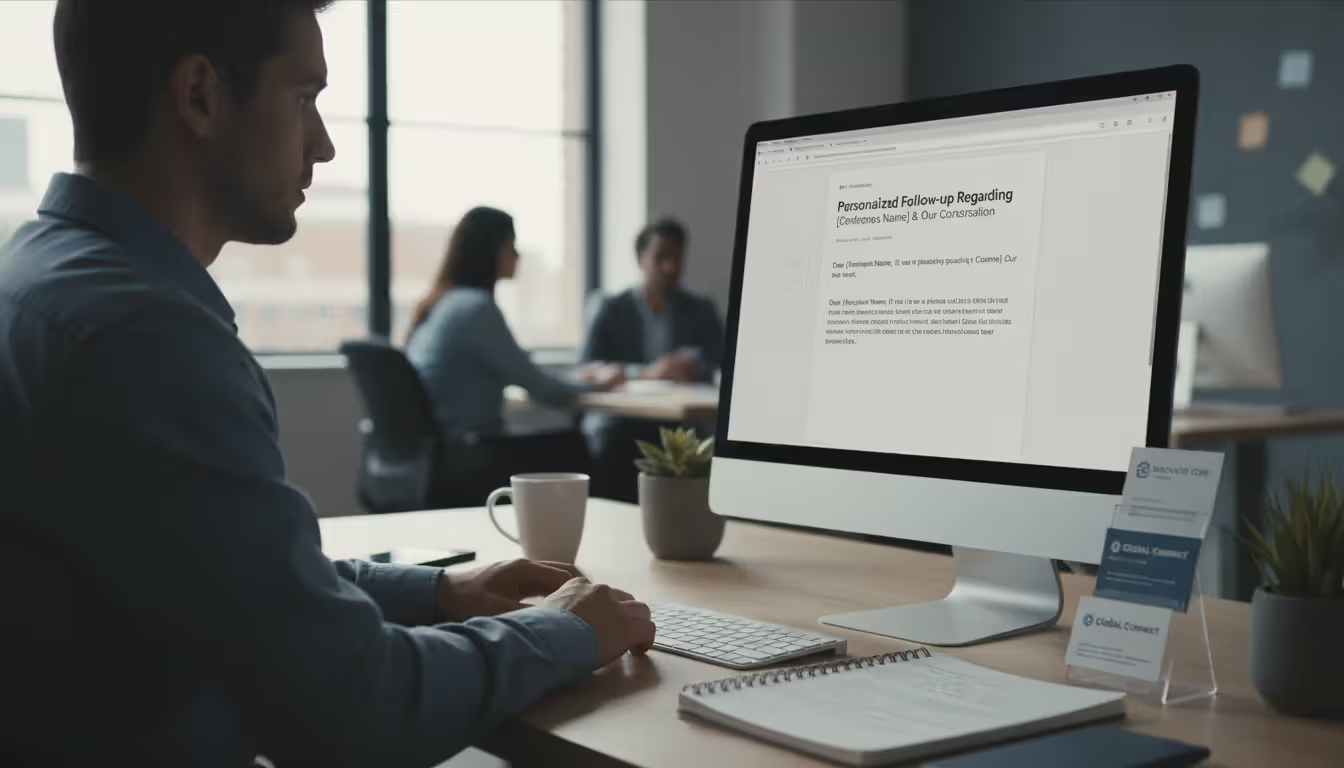
Hot leads get immediate sales outreach—a personalized email within 24 hours referencing the specific conversation, followed by a phone call within 48 hours. Include any resources promised during the conversation and a clear next step: schedule a demo, technical deep-dive, or intro to their account team.
Author: Sophie Langford;
Source: musiconmainstreet.com
Warm leads enter a structured nurture sequence. Start with a personalized recap email, then deliver value-focused content over 4-6 weeks: case studies relevant to their industry, webinar invitations, tool or template downloads. Track engagement and trigger sales alerts when leads show buying signals (multiple email opens, resource downloads, pricing page visits).
Cool leads need longer-term nurturing. They're not ready to buy but could be in 6-12 months. Add them to your regular marketing automation but tag them as event-sourced so you can track event ROI over time. Many companies find that 30-40% of event leads convert, but half of those conversions happen 4+ months post-event.
Lead scoring helps prioritize follow-up effort. Assign points for both explicit criteria (job title, company size, budget) and behavioral signals (attended your workshop, asked about pricing, requested demo, downloaded content post-event). Sales should focus on leads scoring above your threshold; marketing nurtures the rest until they qualify.
Handoff to sales requires clear process and accountability. Define exactly when and how marketing transfers leads to sales, what information accompanies them, and what response time sales commits to. Many event leads die in the handoff because sales doesn't understand the context or doesn't follow up quickly enough.
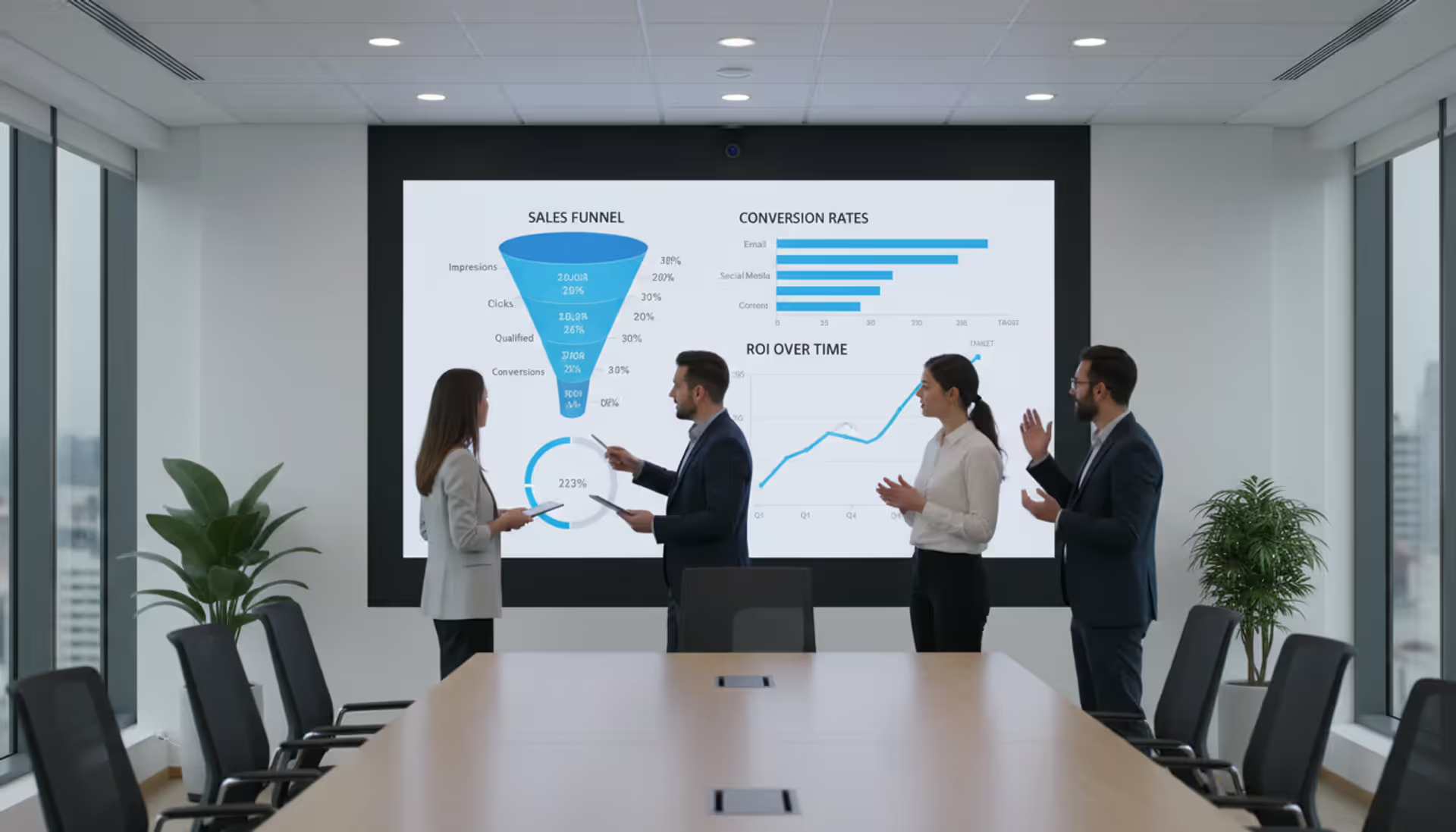
Measure conversion rates at each stage: leads captured, qualified leads, SQLs (sales-qualified leads), opportunities created, closed deals. This reveals where your process breaks down. If 60% of captured leads qualify but only 10% convert to SQLs, your sales follow-up or lead quality needs work.
Common Event Lead Generation Mistakes to Avoid
Poor follow-up kills more event ROI than any other factor. You spent $15K on booth space, $8K on travel and lodging, and countless hours staffing the event—then waited a week to follow up because everyone was "catching up" after being out of office. Your leads moved on. They talked to competitors. They forgot your conversation.
Lack of qualification means your sales team wastes time on tire-kickers while real opportunities go cold. Scanning every badge that passes your booth creates volume, not value. Train booth staff to ask qualifying questions before capture: "What's driving your interest in this solution?" "What are you using currently?" "What's your timeline for making a decision?"
No CRM integration creates data chaos. Leads sit in spreadsheets, get manually entered days later with incomplete information, and lack the context needed for effective follow-up. Worse, duplicate records proliferate because the business card someone entered doesn't match the email format in your system.
Ignoring engagement data means treating all leads equally. Your marketing automation platform tracks who opened emails, clicked links, visited your pricing page, and downloaded content. Leads showing high engagement signal buying intent and deserve prioritized outreach. Those showing zero engagement after three touches should move to long-term nurture, not get the same attention as active prospects.
Weak calls-to-action leave prospects confused about next steps. "Let's stay in touch" isn't a CTA. "I'll send you some information" is vague. Instead: "I'll email you Thursday with that ROI calculator we discussed and a link to schedule a 30-minute demo. Does Thursday afternoon work?" Specific, time-bound, and actionable.
Treating event leads as "hot" by default sets wrong expectations. Most event attendees are researching, not buying. They're 3-6 months from a decision. Aggressive sales tactics alienate them. Match your approach to their actual buying stage, which your qualification conversation should have uncovered.
Measuring Event Marketing ROI and Pipeline Impact
Event marketing ROI extends beyond immediate conversions. A comprehensive measurement approach tracks both short-term results and long-term pipeline impact.
Cost per lead is your starting metric. Divide total event costs (booth, travel, staff time, promotional spend, materials) by qualified leads captured. If you spent $25K and captured 100 qualified leads, your cost per lead is $250. Compare this to your other channels—it's likely higher than digital but should generate higher-quality leads.
Cost per opportunity matters more than cost per lead. Track how many captured leads convert to sales opportunities. If 30 of those 100 leads become opportunities, your cost per opportunity is $833. This metric accounts for lead quality, not just volume.
Author: Sophie Langford;
Source: musiconmainstreet.com
Pipeline value reveals event impact on revenue potential. If those 30 opportunities represent $1.5M in potential deals, your $25K event generated 60x return in pipeline value. Even at a 25% close rate, that's $375K in revenue from a $25K investment—15x ROI.
Attribution models determine which events deserve continued investment. First-touch attribution credits the event for any deal where it was the first interaction. Multi-touch models spread credit across all touchpoints. Most B2B companies find multi-touch more accurate since events rarely close deals alone—they start or accelerate buying cycles.
Track these KPIs for each event: - Total leads captured - Qualified lead percentage - SQL conversion rate - Opportunity conversion rate - Average deal size from event leads - Sales cycle length (often shorter for event leads) - Close rate - Customer acquisition cost - Long-term customer value
Calculate long-term pipeline value by tracking event leads through your full sales cycle. Many companies stop measuring after 90 days, missing the 40% of event leads that convert in months 4-12. Tag all event leads in your CRM and run cohort analysis showing conversion rates at 3, 6, and 12 months.
Compare events against each other, not just against other channels. Some conferences consistently generate better leads than others. A $30K event that generates $2M in pipeline beats a $10K event that generates $400K, even though the smaller event has lower upfront cost.
Factor in soft benefits that don't show up in immediate pipeline: brand awareness in your target market, competitive intelligence gathered, partnership opportunities discovered, and customer relationships strengthened. These matter but shouldn't excuse poor lead generation performance.
Frequently Asked Questions
What is the average conversion rate for event leads?
Conversion rates vary significantly by industry and event type, but B2B event leads typically convert at 20-35% from captured lead to opportunity, and 5-15% from captured lead to closed deal. Trade show leads tend toward the lower end (20-25% to opportunity) while hosted user conferences or exclusive roundtables convert higher (30-45% to opportunity). The key variable is qualification rigor—if you only capture well-qualified leads, your conversion rate will be higher than if you scan every badge. Sales cycle also matters; complex enterprise deals might take 9-12 months to close, while SMB sales might close in 30-60 days.
How quickly should you follow up with event leads?
Within 24 hours for hot leads showing immediate buying intent, within 48-72 hours for all other qualified leads. Research consistently shows that leads contacted within the first day respond at 5-7x the rate of those contacted after a week. Your follow-up doesn't need to be a sales call—a personalized email referencing your specific conversation and providing promised resources counts as first contact. The goal is to reach out while the event and your conversation remain fresh in their memory. For multi-day conferences, consider following up each evening with that day's leads rather than waiting until after the event ends.
What information should you collect during lead capture at events?
At minimum: full name, business email, company name, job title, and phone number. Beyond basics, capture qualification data: current solution or vendor, primary challenge or pain point, project timeline, budget authority, and specific interest area (which product, use case, or feature). Add conversation notes immediately while details are fresh: objections raised, competitors mentioned, promised follow-up items, and personal details that help build relationship (mentioned upcoming vacation, recent promotion, shared connection). The richer your capture data, the more effective your follow-up. Use your mobile app's note field liberally—these details differentiate you from competitors sending generic follow-ups.
How do you qualify leads captured at trade shows and conferences?
Use a consistent qualification framework like BANT (Budget, Authority, Need, Timeline) or CHAMP (Challenges, Authority, Money, Prioritization). Ask open-ended questions that reveal qualification criteria naturally: "What challenges are you trying to solve?" (Need/Challenges), "What's driving the timeline for addressing this?" (Timeline/Prioritization), "Who else is involved in evaluating solutions?" (Authority), "Have you allocated budget for this?" (Budget/Money). Score leads immediately after each conversation using your predetermined criteria. Anyone meeting 3 of 4 BANT criteria qualifies as sales-ready; 2 of 4 enters nurture; 1 or fewer goes to general marketing. Train booth staff on these questions and scoring before the event.
What's the difference between event lead generation and traditional lead generation?
Event lead generation compresses the buyer journey into a single interaction, while traditional digital lead generation nurtures prospects over time through multiple touchpoints. Events provide face-to-face relationship building, immediate qualification through conversation, and the ability to demonstrate products hands-on. Traditional channels (content marketing, paid ads, SEO) scale more easily and cost less per contact but generate colder leads requiring longer nurture. Event leads typically have higher close rates but higher acquisition costs. Events also provide immediate feedback—you learn what messaging resonates, what objections arise, and what competitors prospects are considering. The best strategies combine both: use digital channels for top-of-funnel awareness and use events to accelerate mid-funnel prospects toward decisions.
Which event lead capture tools integrate best with Salesforce and HubSpot?
Most major event lead capture platforms offer native integrations with both Salesforce and HubSpot. Scanbot, Swoogo, and Bizzabo all provide real-time or scheduled sync with both platforms, automatically creating or updating contact records and logging activities. The integration quality matters more than existence—look for tools that map custom fields, support your lead scoring model, and trigger appropriate workflows in your CRM. HubSpot's native integration ecosystem tends to be slightly more plug-and-play than Salesforce, which often requires custom field mapping. For Salesforce users with complex configurations, consider tools like Leadnomics or Swoogo that offer dedicated Salesforce support. Test the integration with a small batch of test leads before your event to ensure data flows correctly and doesn't create duplicate records.
Event lead generation delivers outsized returns when you execute across all three phases: strategic pre-event planning that targets the right prospects, disciplined on-site capture that qualifies before collecting, and rapid post-event follow-up that matches message to buying stage.
The companies winning with events don't simply show up and scan badges. They set specific pipeline goals, equip their teams with qualifying frameworks and capture tools, integrate everything with their CRM, and follow up within 24 hours with personalized outreach. They measure beyond vanity metrics like booth traffic to track what matters: opportunity conversion rates, pipeline value, and closed revenue.
Your next event represents concentrated access to prospects who've self-selected into your target market. The question isn't whether events generate leads—they do. The question is whether you'll capture, qualify, and convert those leads better than your competitors standing in the booth next to yours.
Start with one improvement for your next event. Tighten your qualification criteria. Implement a mobile capture app. Commit to 24-hour follow-up. Measure the impact. Then optimize the next phase. Event lead generation is a skill that compounds—each event teaches you what works for your specific market, and those lessons make every subsequent event more profitable.
Security information and event management (SIEM) combines security information management and security event management to collect, analyze, and correlate security data across IT infrastructure, enabling real-time threat detection and incident respons
Event tracking software captures attendee behavior and event performance metrics throughout the entire event lifecycle. This guide covers how these platforms work, key features to prioritize, common selection mistakes, and how to measure event success with data-driven insights
Setting up a smooth registration system can mean the difference between a packed venue and empty seats. This comprehensive guide walks through everything you need to build an event registration process that converts interest into confirmed attendance, from choosing the right platform to avoiding common mistakes
Event marketing tools handle promotion, analytics, and automation for modern events. Learn which platforms streamline workflows, track ROI, and boost attendance—from email marketing and social media to paid ads and attribution modeling
The content on this website is provided for general informational and educational purposes only. It is intended to explain concepts related to event management software, ticketing systems, hybrid event platforms, and operational tools for event organisers.
All information on this website, including articles, guides, and examples, is presented for general educational purposes. Outcomes may vary depending on event size, technology choices, and organisational needs.
This website does not provide professional legal, financial, or software advice, and the information presented should not be used as a substitute for consultation with qualified event tech or IT professionals.
The website and its authors are not responsible for any errors or omissions, or for any outcomes resulting from decisions made based on the information provided on this website.