Ever planned a big event? Then you know that sinking feeling when something could go sideways. Maybe it's a wedding where the DJ backs out last minute. Or a corporate retreat where someone twists an ankle during the trust-fall exercise (classic). One lawsuit can easily hit $50,000 before you've even hired a lawyer.
That's where event organizer insurance comes in. Think of it as your financial backup plan when things don't go according to script—because they rarely do.
Here's what you'll learn: how this coverage actually works, which protection types matter for your situation, and how to pick a policy without overpaying for stuff you'll never use.
What Is Event Organizer Insurance?
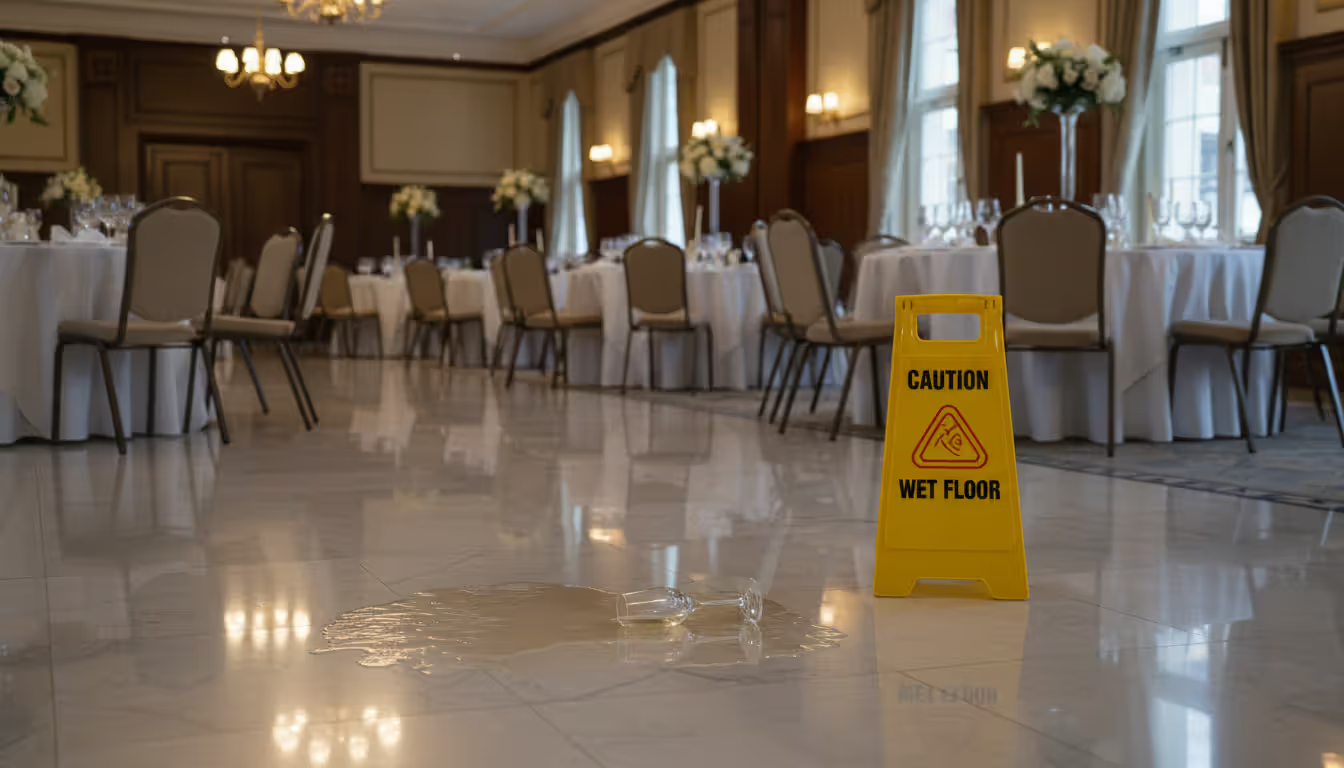
Picture this: you're organizing a charity fundraiser at a rented hotel ballroom. Three hundred guests, live auction, open bar. Two hours in, someone slips on spilled champagne and fractures their elbow. They're suing you for $85,000 in medical bills and lost income.
Your homeowner's policy? Won't touch it. Your LLC's business coverage? Probably excludes special events. You're stuck holding the bill.
Event organizer insurance exists specifically for these scenarios. It's a specialty product that covers the weird, event-specific risks that fall through the cracks of normal policies. We're talking attendee injuries, property damage at venues you're renting, cancellations from freak weather, vendor no-shows—basically the nightmare scenarios that keep you up at 3 AM the week before your event.
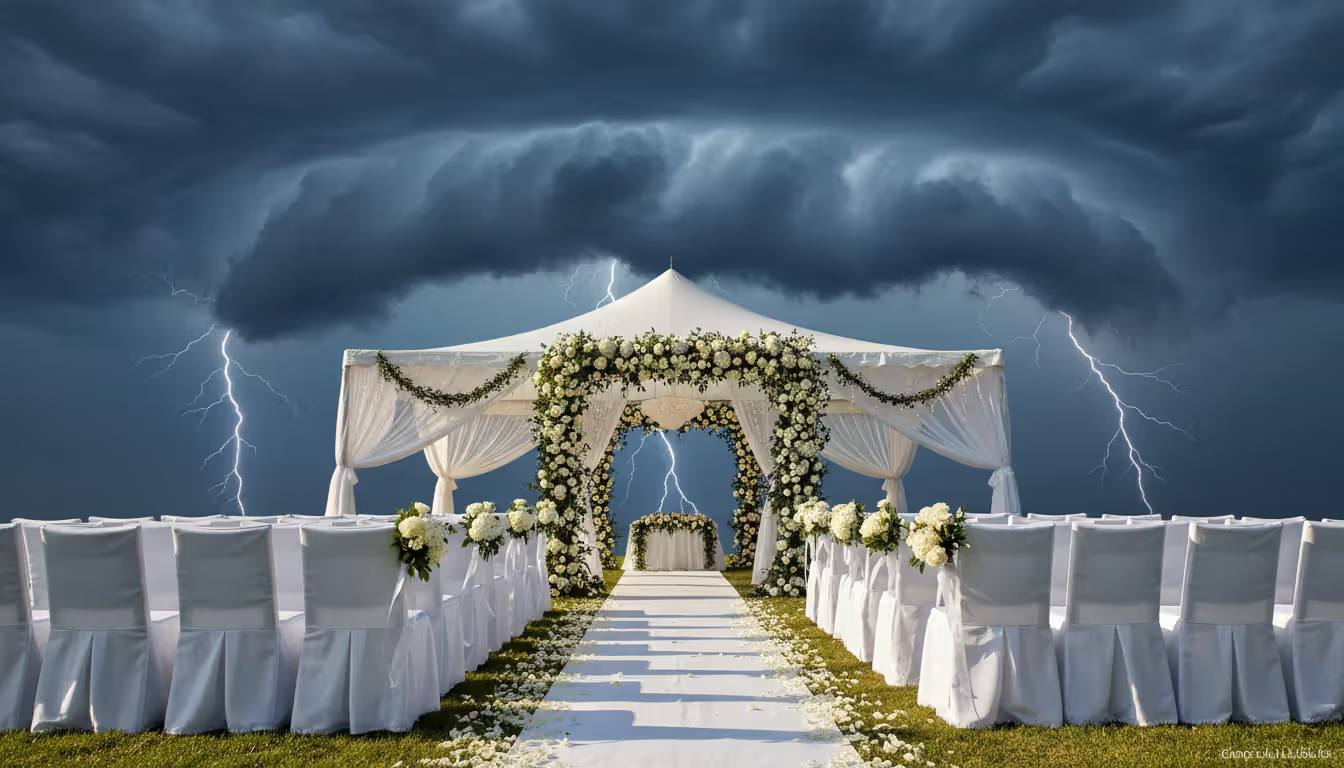
Who actually needs it? Pretty much anyone putting money and reputation on the line for a gathering. Sure, the obvious candidates are professional planners—corporate event coordinators, wedding planners, festival promoters. But I've also seen individuals get burned. One couple spent $40,000 on their daughter's outdoor wedding, only to have a tornado warning force cancellation. No insurance, no refunds from vendors. Ouch.
Venues make this decision easier. Most won't let you through the door without proof of coverage. They'll typically demand $1 million in liability protection minimum, often $2 million. Some historic properties or high-end spaces require even more. You'll need a certificate of insurance naming them as an additional insured before they hand over the keys.
Author: Sophie Langford;
Source: musiconmainstreet.com
Here's something most people miss: standard business policies often exclude or severely cap coverage for organized events, especially once you charge admission or serve alcohol. Read your existing policy's fine print before assuming you're covered. You probably aren't.
Types of Event Insurance Coverages
Event insurance isn't one-size-fits-all. It's more like a buffet where you pick what matches your risks. Some pieces you'll definitely want. Others? Total waste of money for your situation.
General liability forms the base layer. Someone gets hurt at your event, or you accidentally wreck the venue's antique chandelier? This pays for it. We're covering medical bills, legal fees, settlements, judgments—the whole mess. Most policies start at $1 million per incident, with $2 million total for the policy period. Sounds like a lot until you see what surgeries cost these days.
Cancellation and postponement coverage protects your wallet when you have to pull the plug. Covered reasons usually include severe weather (think hurricanes, blizzards, flooding), venue destruction (fire, structural damage), key person illness or death, supplier bankruptcy, and sometimes terrorism. You've got to prove you couldn't have prevented it and show receipts for all your losses.
Property damage protection covers your own stuff and rented equipment. Borrowed that $15,000 sound system? Rented elaborate decorations? If it gets stolen during setup, vandalized overnight, or destroyed during the event, you're reimbursed. Separate from the venue liability piece.
Liquor liability (sometimes called host liquor) matters the second you pop a cork. Guest gets drunk at your event, drives home, causes an accident? You're getting sued. Standard liability policies typically exclude booze-related claims entirely, so you'll need this as an add-on. Non-negotiable if alcohol's involved.
Weather-related coverage zeros in specifically on Mother Nature ruining your plans. Some insurers offer "weather buy-out" options that pay a set amount if rainfall exceeds, say, 0.5 inches, even if you decide to proceed anyway. Popular for outdoor weddings and festivals.
Non-appearance insurance applies when your star attraction bails. Booked a celebrity speaker for your conference? Famous musician for your festival? If they can't show due to illness, injury, or flight cancellations, you get reimbursed for lost ticket revenue and extra expenses finding a replacement. Only matters if someone specific is central to your event's draw.
Event Cancellation and Postponement Coverage
Cancellation coverage costs more than any other piece—usually 1% to 5% of whatever amount you're insuring. For a $100,000 event, expect to pay $1,000 to $5,000 just for this component.
Why so expensive? Because insurers are betting real money that your event happens. They're covering deposits you can't get back, vendor contracts with no refund clauses, printing and marketing costs, permits and licenses—basically everything you've already spent that you'll lose if you cancel.
Author: Sophie Langford;
Source: musiconmainstreet.com
Timing matters enormously. Most insurers require you to buy cancellation coverage within 14 to 30 days of making your first deposit. Once you're two months out and there's already a hurricane forming in the Atlantic? Too late. They won't sell you coverage for a threat that's already visible on the radar.
Exclusions will bite you if you don't read them. Policies almost never cover poor ticket sales, your own financial problems, or just changing your mind. Many now exclude pandemics unless you buy a specific (pricey) add-on—a lesson lots of 2020 wedding couples learned the hard way. Some even exclude "foreseeable" weather events during known rainy seasons or hurricane months.
General Liability and Property Damage Protection
Liability limits typically come in layers. You'll see $1 million per occurrence (per incident) and $2 million aggregate (total for all claims during the policy period). Higher-risk events need bigger limits—a mud run obstacle course race obviously carries more injury risk than a seated dinner.
The property damage portion kicks in when you damage someone else's property. Caterer starts a grease fire that destroys the venue's commercial kitchen? DJ's speaker falls and cracks the marble floor? Your policy covers repairs up to your limit. That's why venues care so much about your coverage amounts—they're protecting their own assets.
Some policies bundle in "hired and non-owned auto" coverage. Basically, if a volunteer drives their personal car to pick up supplies for your event and rear-ends someone, you've got coverage. Small detail, potentially huge claim.
How Event Organizer Liability Works
Here's what catches people off-guard: you can get sued for stuff you didn't directly cause. Courts often view event organizers as having a duty to create a reasonably safe environment. That means inspecting the space, screening vendors, providing adequate security, and anticipating foreseeable risks.
Real example: A company rented a ski lodge for a corporate retreat. During a team-building activity, the lodge's rope course failed and someone suffered a serious back injury. The employee sued both the lodge and the company, arguing the company should have inspected the equipment and ensured proper maintenance. Even though the lodge's negligence was obvious, the company still got dragged into an 18-month lawsuit. Legal defense alone hit $120,000.
Or take this one: Food festival, windy day, vendor's tent collapses and injures four people. Victims sued the vendor, sure—but also named the festival organizer, claiming failure to enforce proper setup requirements and ignoring weather warnings. The organizer's policy ended up covering a $340,000 settlement.
Contractual liability adds another layer. Venue and vendor contracts often include indemnification clauses where you agree to cover their legal costs if someone sues them over something that happened during your event. A guest sues the hotel because they slipped in the bathroom during your conference? The hotel's contract might require you to defend them. Most general liability policies cover contractual liability, but confirm this explicitly.
The most common gap I see is organizers assuming their business general liability or homeowner's policy covers event-specific risks. Those policies often exclude or severely limit coverage for organized gatherings, especially those involving alcohol, physical activities, or paid admission. A dedicated event policy ensures you're not exposed to a six-figure claim with no coverage
— Michael Brennan
When a claim happens, your insurance responds two ways. First, it pays for your defense—lawyers, court costs, expert witnesses, all of it. Second, it covers any settlement or judgment against you. Defense costs usually sit outside policy limits, meaning a $1 million policy might pay $1 million for a verdict plus another $175,000 in legal fees. That's actually a pretty sweet deal when lawyer fees run $400+ per hour.
How to Choose the Right Event Insurance Policy
Shopping for event insurance without a framework? You'll either buy way too much coverage or leave yourself dangerously exposed. Here's how to think through it systematically:
Step 1: Size up your event's profile. A nonprofit luncheon for 50 people faces different risks than a 10,000-person music festival. List the basics: headcount, indoor versus outdoor, owned property versus rented venue, activities planned, duration. Kids present? Physical activities? Alcohol? Each factor shifts your risk profile and coverage needs.
Step 2: Map specific exposures. Grab a sheet of paper and brainstorm everything that could tank your event financially. Dependent on a keynote speaker who might get sick? Outdoor venue vulnerable to storms? Using $20,000 worth of rented AV equipment? Serving alcohol to 500 people? Each risk suggests a coverage type.
Step 3: Audit your contracts. Pull out every agreement you've signed—venue rental, caterers, entertainment, equipment vendors. Highlight insurance requirements. Many will specify exact coverage amounts and require you to name them as additional insureds. Your policy has to meet these requirements or you've breached your contract before the event even starts.
Author: Sophie Langford;
Source: musiconmainstreet.com
Step 4: Match limits to realistic scenarios. For liability, $1 million covers most small to mid-size events. But a serious injury? Those can escalate quickly. Spinal injuries, traumatic brain injuries, wrongful death claims—we're talking multi-million-dollar territory. Balance premium cost against worst-case scenarios. For cancellation, insure the full amount of non-refundable expenses, not just the big-ticket items.
Step 5: Read exclusions like your lawyer wrote them. The exclusions section tells you what's NOT covered—often more important than what is. Look for deal-breakers: Does it exclude communicable diseases? Terrorism? Specific weather types? Are certain activities or demonstrations excluded? Some policies won't cover events involving animals, fireworks, or extreme sports without special endorsements.
Step 6: Find a broker who lives in this niche. Event insurance is specialized enough that your regular insurance agent probably isn't the best resource. Brokers who focus on event coverage know which carriers underwrite specific event types, can negotiate better terms, and help you navigate certificate requirements. For straightforward events under $10,000, online platforms work fine. Anything bigger or more complex? Get a specialist involved.
I've seen people save thousands by working with brokers who knew which underwriter would cover their specific situation at reasonable rates. That expertise pays for itself.
Event Risk Management Best Practices
Buying insurance matters. But preventing claims in the first place? Even better. Smart organizers layer insurance with proactive measures that reduce risk and demonstrate you weren't negligent if something does go wrong.
Vendor contracts and their insurance. Make every vendor and contractor carry their own liability coverage. Require certificates of insurance before they set foot on-site, and verify coverage is actually active on your event date. Have them name you as an additional insured so their policy responds first if their negligence causes a claim. This shifts primary liability away from you.
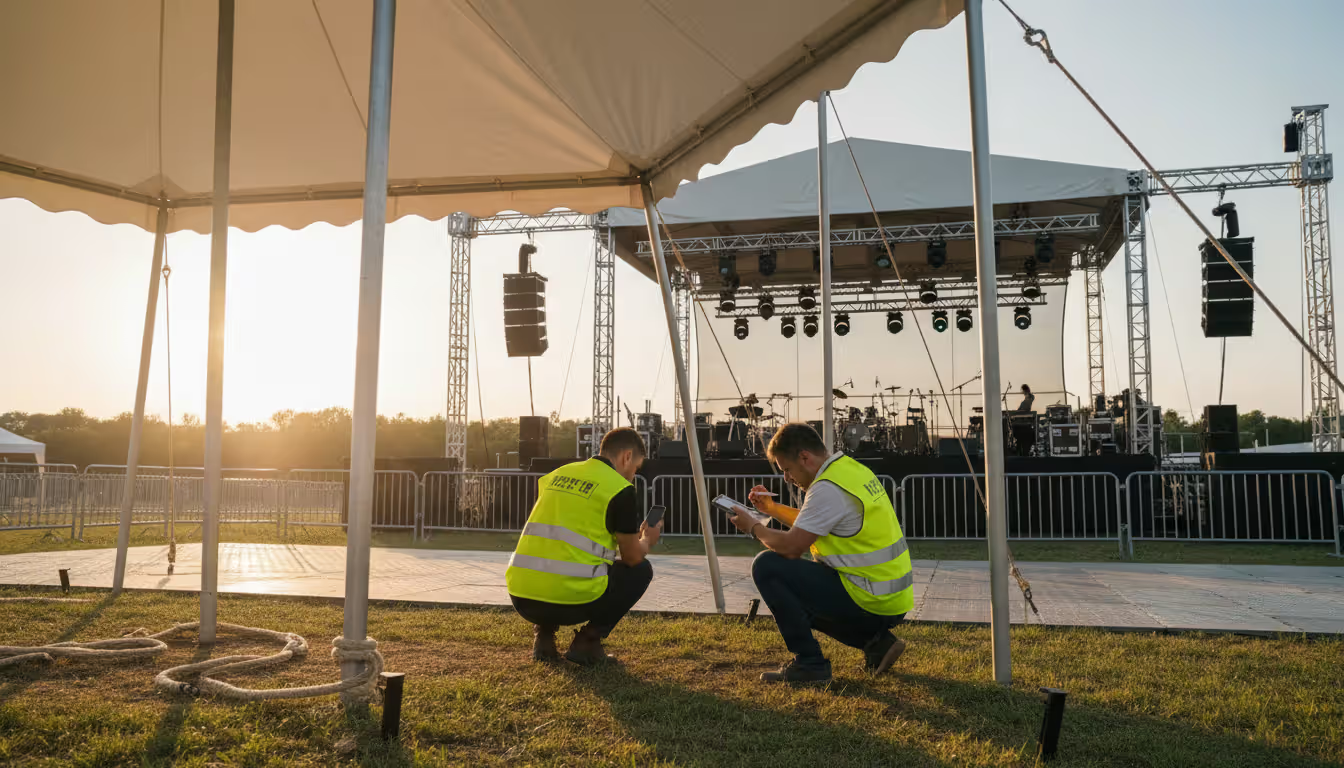
Safety walkthroughs and hazard elimination. Visit your venue days before the event. Look for tripping hazards—loose cables, uneven flooring, poor lighting, obstructed exits. Outdoor events need properly anchored tents, secured staging, and real-time weather monitoring. Physical activities require equipment inspections and participant waivers (though waivers don't eliminate your duty of care—they just might limit damages).
Permits and regulatory boxes to check. Get every required permit—occupancy, liquor service, food handling, fire marshal approval, noise permits. Missing permits can void your insurance coverage entirely, plus expose you to fines and potential shutdown. Verify your insurance actually covers the permitted activities. Some insurers exclude events without proper licensing.
Emergency planning beyond hope. Write down what happens if someone has a medical emergency, severe weather hits, or security issues emerge. Who calls 911? Where's the first aid station? What's the evacuation route? Train staff and volunteers on their roles. For events over 500 people, coordinate with local emergency services beforehand so they know what to expect.
Document everything obsessively. Keep records of safety decisions, vendor communications, inspection reports, contracts, and planning notes. If a claim happens two years later, documentation proves you acted reasonably. Photographs of venue conditions, timestamped emails about safety concerns, signed vendor agreements—it all matters.
Author: Sophie Langford;
Source: musiconmainstreet.com
Some insurers offer premium discounts (usually 5% to 15%) when you demonstrate robust safety programs and risk management documentation. Saves money and reduces claims. Win-win.
Common Event Insurance Mistakes to Avoid
Even experienced organizers screw this up. Here are the mistakes I see repeatedly:
Underinsuring cancellation coverage. People insure the venue deposit and catering, then forget about marketing costs, printing, entertainment deposits, equipment rentals, and staff expenses. Cancel your event and you want reimbursement for everything non-refundable. Calculate total exposure honestly—most people underestimate by 20% to 30%.
Missing purchase windows. Cancellation insurance usually requires purchase within 14 to 30 days of your first deposit. Wait until a month before your outdoor festival to buy weather coverage? Most insurers will laugh and decline. They're not covering imminent, foreseeable threats. Buy early or don't bother.
Ignoring alcohol liability. Serve drinks without liquor liability coverage and you're playing Russian roulette with your finances. Even if your general liability includes some host liquor coverage, limits might be laughably low—like $50,000 when alcohol-related accident claims average $150,000 to $300,000. Verify explicit coverage and consider higher limits for events where alcohol flows freely.
Skipping the exclusions section. Nobody reads insurance policies (boring, I know), but the exclusions section will burn you. Communicable disease exclusions became standard post-COVID. Terrorism, civil unrest, labor strikes, certain weather events—all commonly excluded unless you buy additional endorsements. Ask your broker to explain every exclusion in plain English.
Forgetting additional insureds. Venues and vendors typically require you to name them as additional insureds on your liability policy. This extends your coverage to defend them for claims related to your event. Skip this and you've breached your contract. Most venues won't let you proceed, and even if they do, they'll sue you separately if a claim arises.
Assuming business insurance covers it. Your company's general liability policy probably excludes or sharply limits special events—especially those open to the public, charging admission, or held off your normal premises. Always disclose event details to your insurer and get a separate event policy when needed. Don't assume.
Frequently Asked Questions About Event Insurance
How much does event organizer insurance cost?
Depends entirely on your event's specifics. Small gathering with 100 people, basic liability only, one-day duration? Probably $200 to $500. Mid-size conference with 500 attendees, cancellation coverage, and liquor liability? More like $1,500 to $4,000. Large festival with multiple days, high limits, extensive cancellation coverage, and added endorsements? Easily $5,000 to $15,000+. Cancellation components typically run 1% to 5% of insured expenses. Get quotes from three insurers to compare—pricing varies significantly.
Do I need insurance for a small private event?
Maybe. Hosting 20 friends in your backyard? Your homeowner's policy probably provides some liability coverage, though limits are often capped at $100,000 to $300,000. Renting a venue, serving alcohol, or expecting 50+ guests? You likely need dedicated event coverage. Homeowner's policies frequently exclude large gatherings, commercial activities, or paid events. Plus, rental venues almost always require proof of insurance regardless of event size. Check your existing policy's language and the venue contract.
What's the difference between event liability and cancellation insurance?
Liability insurance protects you from getting sued when someone gets hurt or property gets damaged during your event. Think guest injuries, venue damage, third-party claims. Cancellation insurance reimburses your financial losses if you have to cancel or postpone due to covered reasons beyond your control—severe weather, venue damage, key participant illness. Liability = lawsuits from others. Cancellation = protecting your money when the event can't happen.
When should I purchase event insurance?
For liability coverage, buy it as soon as you sign contracts or put down deposits. You'll need certificates of insurance for vendors and venues, and coverage begins on your policy's effective date. For cancellation insurance, purchase within 14 to 30 days of your first deposit—most insurers have strict deadlines. You must buy before any known threats exist. Can't purchase hurricane coverage once there's already a named storm heading toward your event location. Earlier is always safer.
Does event insurance cover weather-related cancellations?
Many policies cover severe weather that creates legitimate safety concerns or physical impossibility—hurricanes, tornadoes, flooding, blizzards, extreme heat or cold. However, coverage terms vary wildly. Some exclude certain weather types or require specific thresholds (like sustained winds above 50 mph or rainfall exceeding 2 inches). Light rain alone typically won't trigger coverage unless it causes actual venue damage. Review policy language carefully. For outdoor events, consider specialized weather buy-out coverage that pays based on measurable precipitation regardless of whether you proceed.
Can I get event insurance for a one-time occasion?
Absolutely. Most event insurance policies are designed for single events—they cover one specific date or date range and expire when the event concludes. Perfect for weddings, conferences, concerts, galas, festivals, or any standalone gathering. You buy coverage just for that occasion. If you organize multiple events annually, some insurers offer annual policies covering all events within a 12-month period, which can save money compared to buying separate policies each time.
Planning events means accepting that Murphy's Law is always in play. Something will go wrong—hopefully minor, occasionally catastrophic. Insurance won't prevent problems, but it keeps those problems from destroying your finances or tanking your reputation.
Start by honestly assessing what could go sideways at your specific event. Match those risks to coverage types that actually address them. Don't just buy the minimum your venue requires—think through realistic worst-case scenarios.
Combine coverage with solid risk management: tight vendor contracts, thorough safety protocols, proper permits, documented contingency plans. Insurance covers you when prevention fails, but prevention reduces the odds you'll ever file a claim.
Skip the common mistakes—underinsuring cancellation coverage, missing purchase deadlines, overlooking exclusions, forgetting additional insureds. Work with brokers who specialize in event coverage for anything complex or high-value.
Get the right policy in place early, then shift your focus back where it belongs: creating an event people will actually remember for the right reasons.
Venue management software automates reservations, scheduling, payments, and client communications through a centralized platform. Modern systems prevent double-bookings, reduce administrative time by 10-15 hours weekly, and increase booking conversion rates by 15-25% through real-time availability and instant quotes
Event scheduling software builds, organizes, and publishes event agendas and session timetables. This guide covers how it works, essential features like multi-track support and real-time updates, common use cases by event type, and how to choose the right platform for your needs
Discover how event planning templates organize tasks, timelines, and logistics for successful events. Compare template types, tools, and formats. Learn what to include, common mistakes to avoid, and how to build custom templates that improve with each use
Planning an event without a floor plan is like building a house without blueprints. A well-designed layout determines how smoothly everything flows—from guest arrivals to the final toast. Discover how to create professional event floor plans that balance capacity, comfort, and safety
The content on this website is provided for general informational and educational purposes only. It is intended to explain concepts related to event management software, ticketing systems, hybrid event platforms, and operational tools for event organisers.
All information on this website, including articles, guides, and examples, is presented for general educational purposes. Outcomes may vary depending on event size, technology choices, and organisational needs.
This website does not provide professional legal, financial, or software advice, and the information presented should not be used as a substitute for consultation with qualified event tech or IT professionals.
The website and its authors are not responsible for any errors or omissions, or for any outcomes resulting from decisions made based on the information provided on this website.