Choosing the wrong ticketing system costs organizations thousands in lost productivity, frustrated users, and expensive migrations. The right platform transforms support operations from reactive chaos into a streamlined workflow that scales with your business.
This guide walks through the evaluation process step-by-step, comparing leading platforms across features, pricing, and real-world use cases. Whether you're managing IT requests for 50 employees or customer inquiries across multiple channels, understanding what separates adequate from exceptional ticketing systems prevents costly mistakes.
What Is a Ticketing System and Why Compare Options
A ticketing system converts support requests—whether from customers, employees, or stakeholders—into trackable, assignable work items called tickets. Each ticket captures the request details, priority level, assignment history, and resolution timeline in a centralized database.
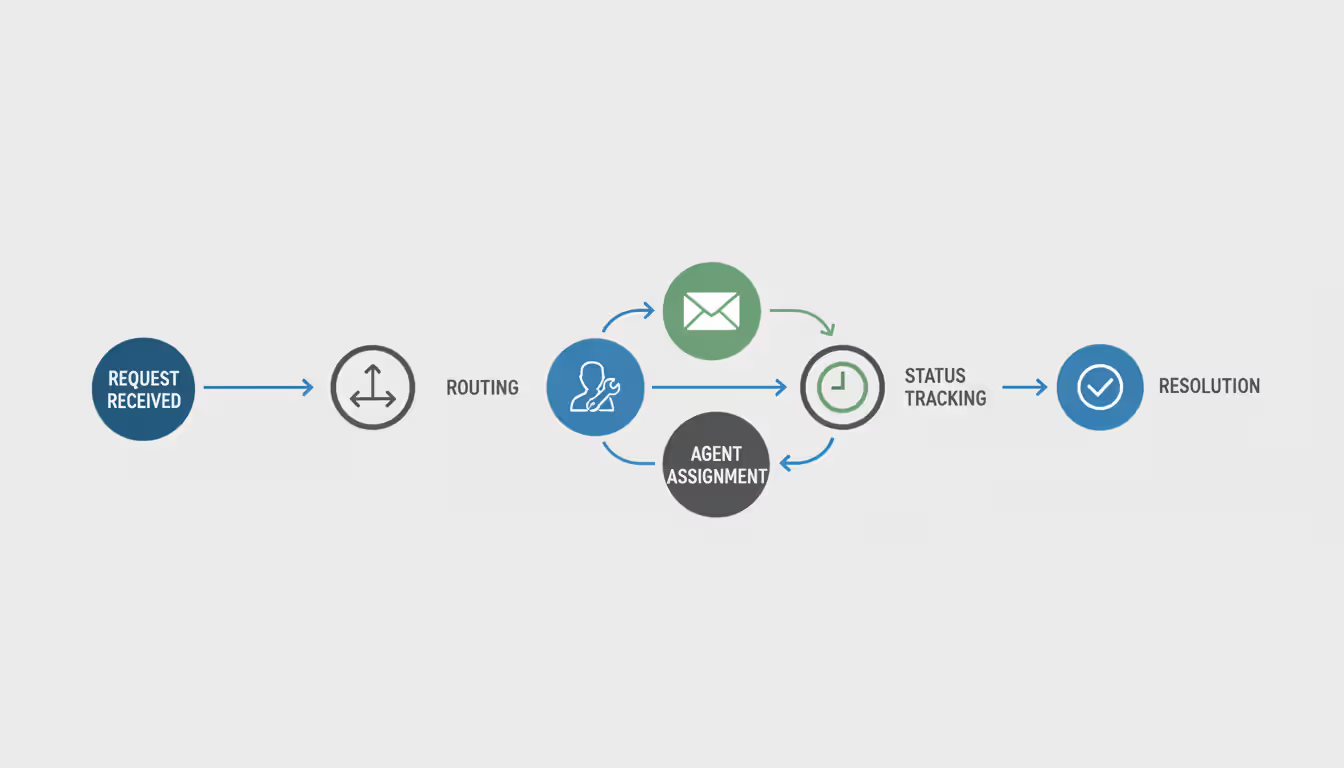
Core functions include automatic ticket creation from email or web forms, routing based on predefined rules, status tracking through resolution, and searchable knowledge bases that reduce repeat inquiries. Advanced platforms add AI-powered categorization, multi-channel support, and workflow automation that handles routine tasks without human intervention.
The business value of selecting the right platform extends beyond basic request tracking. Organizations using properly matched ticketing software report 35-40% faster resolution times and 25-30% reductions in support costs compared to teams using misaligned solutions. The difference stems from features that match actual workflow patterns rather than forcing teams to adapt to rigid systems.
Ticketing software companies have proliferated over the past decade, creating a fragmented market where platforms range from $5 per agent monthly to enterprise contracts exceeding $100,000 annually. This wide variance reflects fundamental differences in architecture, scalability, and target use cases. A ticketing platform comparison reveals that most organizations waste budget on either over-featured enterprise tools or under-powered solutions that require expensive workarounds.
Author: Ethan Marlowe;
Source: musiconmainstreet.com
The comparison process matters because switching costs are high. Migration involves data transfer, workflow reconfiguration, user retraining, and integration rebuilding. Teams that rush the selection process often discover critical gaps only after deployment, when reverting becomes prohibitively expensive.
Key Features to Evaluate When Comparing Ticketing Systems
Ticket Management and Workflow Automation
Ticket lifecycle management determines how efficiently your team processes requests. Basic systems offer manual assignment and status updates, while sophisticated platforms automate routing based on content analysis, agent availability, and historical performance data.
Look for customizable ticket fields that capture information specific to your workflows. An IT helpdesk needs asset tags and software version fields; customer service teams require order numbers and product categories. Generic systems force this data into comment fields, making reporting impossible.
Automation rules should handle conditional logic without requiring developer intervention. For example: "If ticket contains 'password reset' and requester is in Finance department, assign to John Smith and set priority to High." The best ticketing software lets non-technical managers build these rules through visual interfaces rather than requiring scripting knowledge.
SLA management capabilities vary dramatically across platforms. Entry-level tools offer basic countdown timers, while enterprise solutions calculate business hours across time zones, pause timers during requester delays, and escalate approaching breaches through multiple notification channels. Organizations with strict compliance requirements need audit trails showing exactly when SLA calculations occurred and which rules applied.
Integration Capabilities and API Access
No ticketing system operates in isolation. The platform must exchange data with your existing tools—communication platforms, CRM systems, monitoring software, HR databases, and business intelligence tools.
Pre-built integrations reduce implementation time but limit flexibility. A platform offering 500 native integrations sounds impressive until you discover your specific tools aren't included. Robust API access matters more than integration quantity. RESTful APIs with comprehensive documentation, webhook support for real-time updates, and reasonable rate limits enable custom connections that match your exact requirements.
Authentication methods affect security and user experience. Modern platforms support single sign-on through SAML or OAuth, eliminating separate password management. Legacy systems requiring username-password combinations create security vulnerabilities and friction during adoption.
Data synchronization direction matters more than most buyers realize. Some integrations only pull data into the ticketing system without writing updates back to source systems. This creates data silos where ticket resolutions don't update CRM records or asset management databases, forcing manual duplicate entry.
Reporting and Analytics Tools
Standard reports covering ticket volume, resolution time, and agent performance appear in virtually every platform. The differentiator lies in customization capabilities and data granularity.
Canned reports work initially but become limiting as operations mature. Organizations need to slice data by custom fields, filter by complex criteria combinations, and trend metrics over arbitrary time periods. Platforms with drag-and-drop report builders and calculated field support enable this without requiring database queries.
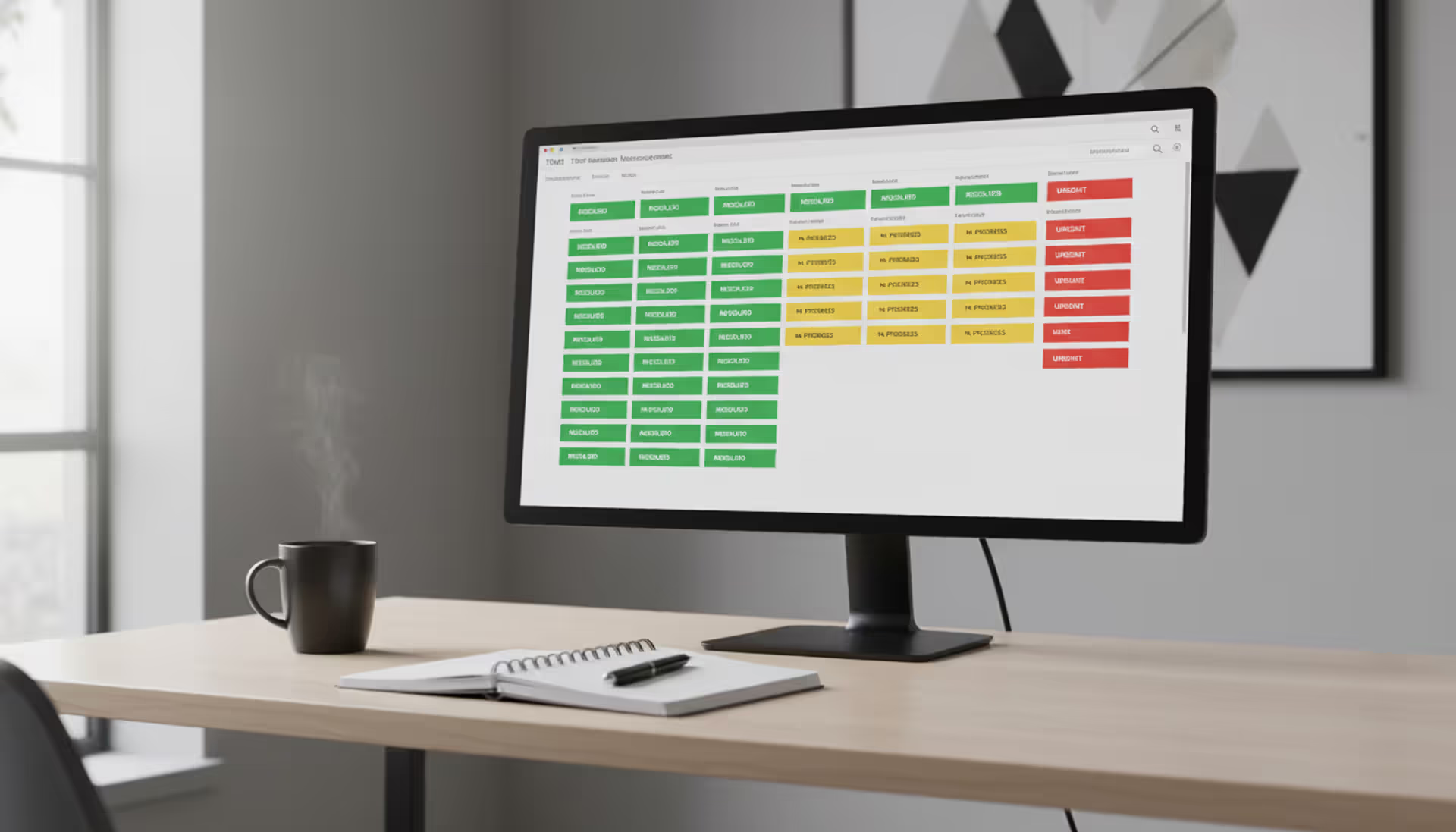
Real-time dashboards versus scheduled reports represent different operational philosophies. Call centers monitoring service levels minute-by-minute need live dashboards with automatic refresh. Back-office IT teams managing project-based work function effectively with daily or weekly report emails.
Data export options determine whether you can analyze ticketing data alongside other business metrics. CSV export is universal but requires manual combination. Platforms offering direct connections to business intelligence tools like Tableau or Power BI enable automated dashboards combining ticketing, financial, and operational data.
Organizations consistently underestimate the importance of user adoption in ticketing system success. I've watched companies select feature-rich platforms that agents actively avoid using, while simpler systems with intuitive interfaces drive 95%+ adoption within weeks. The best ticketing system evaluation guide is watching your actual users complete real tasks during trials—their frustration or ease tells you everything about long-term success
— Sarah Mitchell
User Experience and Interface Design
Agent productivity correlates directly with interface efficiency. Support staff spending 8 hours daily in the system notice every extra click required to complete routine tasks. Interfaces requiring three screens to update a ticket status versus one-click updates create measurable productivity differences across hundreds of daily tickets.
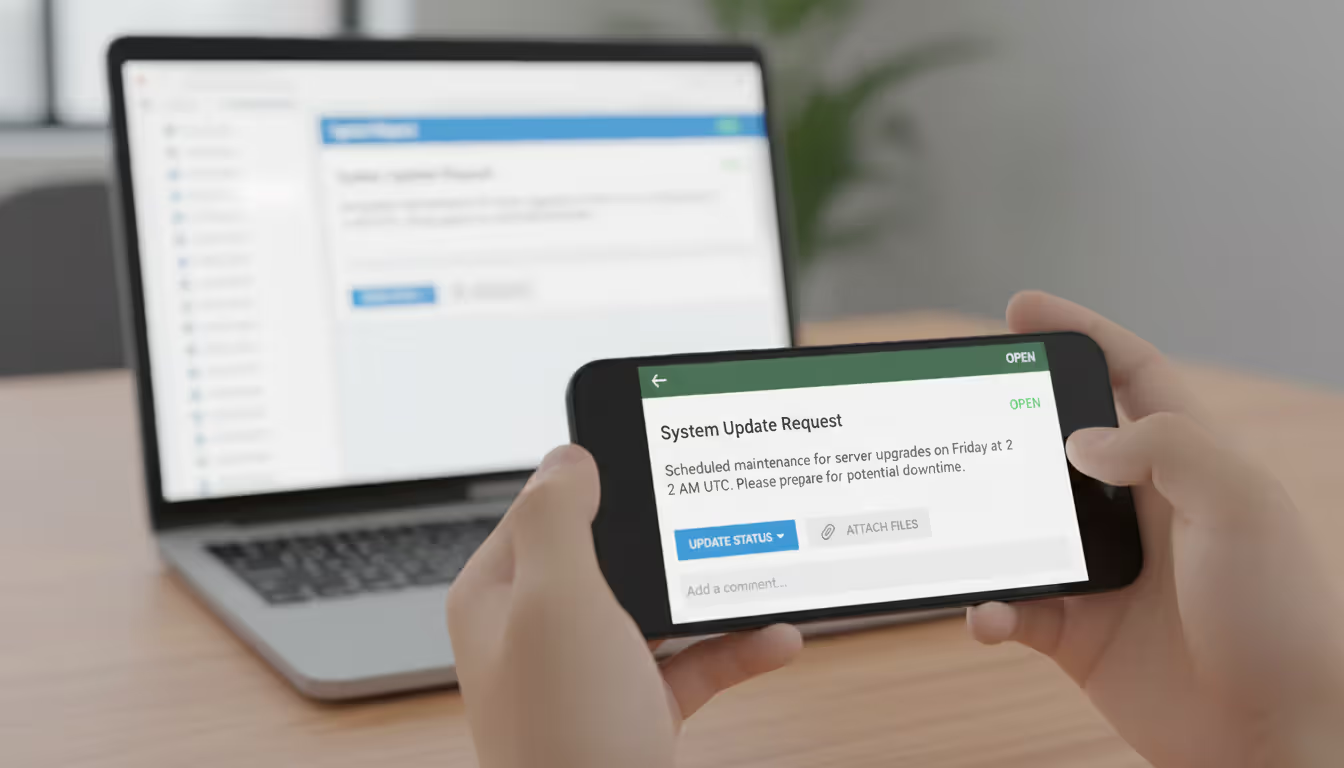
Mobile responsiveness matters beyond marketing claims. Test whether agents can actually perform common tasks on smartphones, not just view ticket lists. Field technicians resolving on-site issues need full update capabilities from mobile devices, including photo attachments and signature capture.
Requester portals affect ticket quality and deflection rates. Self-service portals with intelligent search, guided request forms, and status tracking reduce low-value tickets. Poorly designed portals frustrate users into calling or emailing, defeating the automation purpose.
Accessibility compliance often gets overlooked until it becomes a legal requirement. WCAG 2.1 AA compliance ensures users with disabilities can submit and track tickets independently, while also improving usability for all users through clearer navigation and better keyboard support.
Author: Ethan Marlowe;
Source: musiconmainstreet.com
How to Choose a Ticketing System for Your Organization
Start by documenting current pain points rather than creating wish lists. Interview actual users—both agents and requesters—about specific frustrations. "Tickets get lost" translates to requirements around assignment rules and escalation. "We can't track hardware requests separately from software issues" points to custom field and reporting needs.
Quantify baseline metrics before evaluation begins. Measure current average resolution time, first-response time, ticket volume by category, and agent utilization rates. These numbers establish the performance bar new systems must exceed and provide ROI calculation foundations.
Identify must-have versus nice-to-have features through forced ranking. Budget constraints mean trade-offs are inevitable. A feature that's "really important" competes with ten other "really important" capabilities. Ranking forces clarity about what actually drives value versus what sounds appealing in vendor demos.
Budget considerations extend beyond license costs. Calculate total cost of ownership including implementation services, data migration, integration development, training time, and ongoing administration. A platform with $30 per agent monthly pricing but requiring $50,000 in implementation services costs more over three years than a $50 per agent solution with self-service setup.
Scalability requirements prevent expensive future migrations. A system supporting 10 agents today needs capacity for growth scenarios. If you might acquire another company or expand internationally, evaluate whether the platform handles multiple brands, languages, and time zones without architectural changes.
Trial testing reveals what vendor demos conceal. Allocate 2-3 weeks for hands-on evaluation with real data and actual workflows. Configure automation rules, build reports, test integrations, and have end users complete typical tasks. Sales demonstrations show optimized scenarios; trials expose real-world friction.
E-commerce and SaaS companies prioritizing customer experience
4.0/5
The best ticketing systems for IT support differ fundamentally from customer service platforms. IT-focused tools emphasize asset tracking, change management, and integration with monitoring systems. Customer service platforms prioritize multi-channel communication, customer history tracking, and satisfaction measurement.
Hybrid use cases—organizations supporting both internal IT and external customers—face the build-versus-buy decision. Running separate systems creates data silos but optimizes each workflow. Unified platforms simplify administration but force compromises in specialized features.
The best it ticketing system for a 50-person startup differs entirely from enterprise requirements. Startups need rapid deployment, intuitive interfaces, and monthly pricing flexibility. Enterprises require customization depth, advanced security controls, and dedicated support even if implementation takes months.
This top ticketing systems review intentionally excludes niche platforms serving specific industries. Healthcare organizations need HIPAA-compliant systems with patient privacy controls. Educational institutions require integration with student information systems. Evaluating these specialized needs demands industry-specific comparison criteria beyond general-purpose platforms.
Pricing Models and Total Cost of Ownership
Per-agent pricing charges based on support staff using the system, while per-user models count everyone with access including requesters. For customer-facing support, per-agent pricing makes sense since requester counts are unlimited. Internal IT teams might face per-user pricing where every employee counts as a user, dramatically increasing costs.
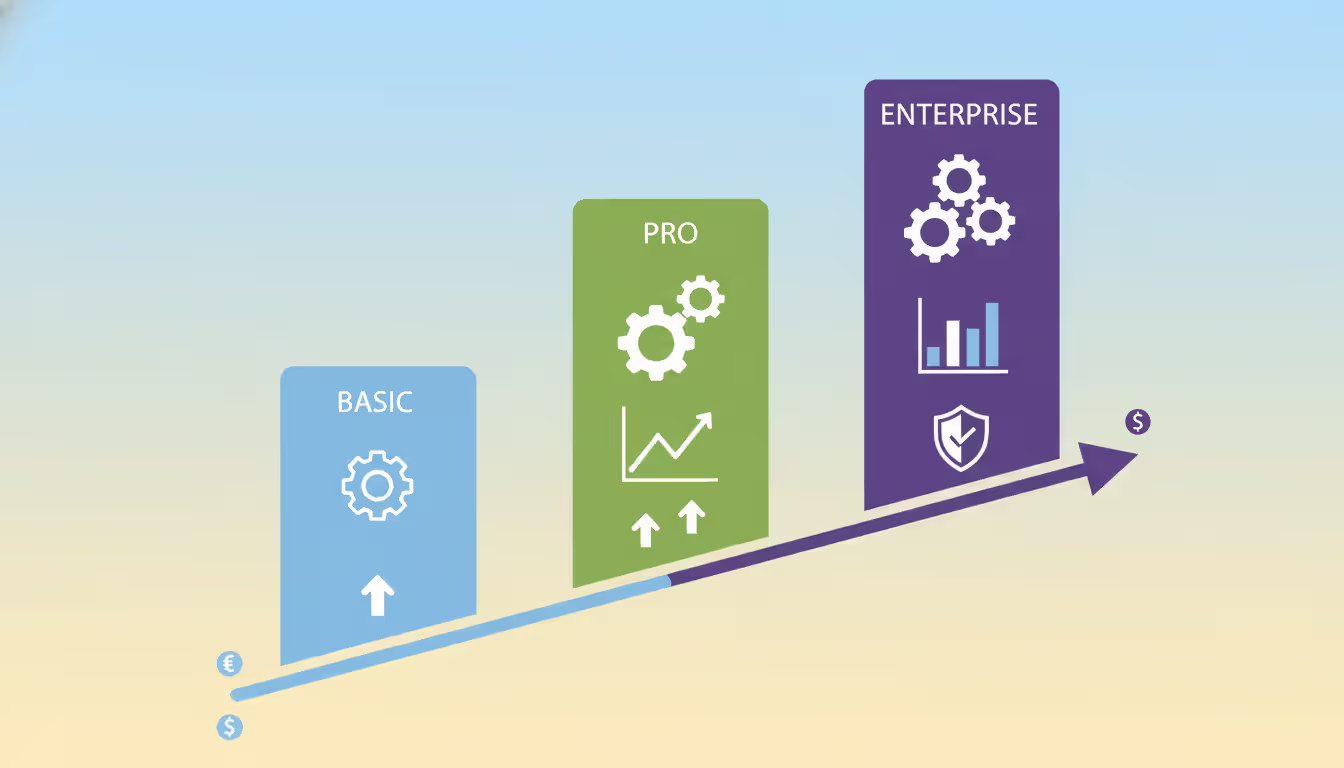
Tiered pricing creates upgrade pressure as you outgrow entry levels. A platform starting at $15 per agent monthly might jump to $49 per agent for automation features or $99 for advanced reporting. Calculate costs at the tier matching your required features, not the advertised starting price.
Author: Ethan Marlowe;
Source: musiconmainstreet.com
Hidden costs emerge during implementation. Data migration from legacy systems ranges from simple CSV imports to complex API-based transfers requiring consultant assistance at $150-250 per hour. Integration development for non-standard tools adds thousands to upfront costs. Training expenses multiply when platforms require extensive configuration knowledge versus intuitive interfaces.
Contract terms affect flexibility and total expenditure. Annual contracts offer 10-20% discounts versus monthly billing but lock you into platforms that might not meet evolving needs. Multi-year agreements provide deeper discounts—sometimes 30-40% off list prices—but create expensive exit barriers if requirements change.
ROI considerations should factor productivity gains, not just cost differences. A platform costing $20 more per agent monthly but reducing average resolution time by 15 minutes per ticket saves money when calculated across hundreds of monthly tickets. The cheapest option rarely delivers the lowest total cost of ownership.
Freemium models work for very small teams but hit limitations quickly. Free tiers typically cap agents at 3-5, restrict integrations, and limit data retention. Organizations outgrow these constraints within months, making paid tiers inevitable. Evaluate freemium platforms based on paid tier pricing, treating free access as an extended trial rather than long-term solution.
Common Mistakes When Evaluating Ticketing Software
Overlooking integration needs until after purchase creates expensive problems. Organizations discover their CRM, monitoring tools, or communication platforms don't connect to the selected ticketing system, forcing manual data entry or costly custom development. Map integration requirements before shortlisting platforms, eliminating options lacking necessary connections.
Ignoring user adoption factors dooms technically superior platforms. If agents find the interface confusing or requesters struggle with the portal, they'll route around the system through email and calls. This creates shadow IT where the official ticketing system contains incomplete data, making reporting meaningless and workflow automation impossible.
Focusing only on price optimization leads to under-featured selections that require workarounds costing more than price savings. A platform lacking workflow automation forces manual routing and updates, consuming agent time worth far more than license cost differences. Calculate fully loaded costs including workaround time, not just subscription fees.
Author: Ethan Marlowe;
Source: musiconmainstreet.com
Skipping trial periods because vendor demos looked convincing results in post-purchase disappointment. Demos showcase optimized scenarios with clean data and simple workflows. Trials reveal how the platform handles your messy real-world data, complex routing rules, and edge cases that occur daily in actual operations.
Underestimating training requirements creates adoption resistance and underutilization. Complex platforms offering extensive customization require administrator training to configure effectively. User training ensures agents leverage features rather than finding workarounds. Budget 5-10 hours per administrator and 2-3 hours per agent for proper training, not the 30-minute overview vendors suggest.
Neglecting to involve end users in evaluation produces solutions that work on paper but fail in practice. IT directors select systems based on technical capabilities without consulting the agents who'll use them daily. Include representatives from actual user groups in trials and decision-making to surface usability issues before commitment.
Frequently Asked Questions About Ticketing Systems
What is the difference between IT ticketing systems and customer service platforms?
IT ticketing systems emphasize asset management, change control, and integration with network monitoring tools. They track hardware inventory, software licenses, and infrastructure dependencies. Customer service platforms focus on multi-channel communication, customer history tracking, and satisfaction measurement. They integrate with CRM systems, e-commerce platforms, and marketing tools. Some platforms serve both purposes adequately, while specialized tools optimize for specific use cases. Organizations supporting internal IT and external customers must decide between running separate optimized systems or accepting compromises in a unified platform.
How long does it take to implement a new ticketing system?
Implementation timelines range from one week for simple cloud platforms to 6-12 months for enterprise deployments. Small teams using out-of-box configurations can go live within days after data migration and basic training. Mid-sized organizations customizing workflows, building integrations, and migrating historical data typically need 4-8 weeks. Enterprise implementations involving multiple departments, complex approval workflows, and extensive integrations require several months. The critical path usually involves data migration quality, integration testing, and user training rather than platform configuration itself.
Can ticketing systems integrate with existing business tools?
Modern ticketing platforms offer integration through three mechanisms: pre-built native integrations, marketplace apps, and API connections. Native integrations with popular tools like Slack, Microsoft Teams, Salesforce, and monitoring platforms work out-of-box with minimal configuration. Marketplace apps extend integration options through third-party developers. API access enables custom integrations with proprietary or niche tools. Evaluate integration capabilities by listing your specific tools and verifying connection methods during trials. Generic claims about "thousands of integrations" matter less than whether your exact tools connect reliably.
What are the most important features in a ticketing system?
Priority depends on use case, but universally important features include reliable email-to-ticket conversion, customizable automation rules, searchable knowledge bases, and mobile access. IT teams need asset tracking and change management. Customer service requires multi-channel support and satisfaction surveys. All organizations benefit from robust reporting, intuitive interfaces, and strong security controls. The most important feature is the one solving your specific pain point—whether that's reducing response times, improving first-contact resolution, or providing visibility into support operations.
Should small businesses use the same ticketing systems as enterprises?
Small businesses benefit from different platform characteristics than enterprises. Small teams need quick deployment, intuitive interfaces, and monthly pricing flexibility. Enterprise platforms offering extensive customization and advanced security controls require implementation resources and ongoing administration that small teams can't support. However, rapidly growing small businesses should consider whether platforms scale to future needs, avoiding expensive migrations as headcount increases. The best approach involves selecting platforms matching current size while verifying they support reasonable growth scenarios.
How do you migrate data from an old ticketing system to a new one?
Data migration involves exporting tickets, attachments, and user data from the old system and importing into the new platform. Simple migrations use CSV exports and imports, transferring basic ticket information but losing attachments and comment formatting. Complex migrations require API-based transfers preserving full ticket history, attachments, and relationships. Key decisions include whether to migrate closed tickets or only active ones, how far back to transfer historical data, and whether to preserve original timestamps versus migration dates. Most organizations run old and new systems in parallel for 2-4 weeks, creating new tickets in the new system while maintaining old tickets for reference until teams adapt.
Selecting the right ticketing system requires balancing feature requirements, budget constraints, and user adoption factors. The platforms compared here represent different optimization points—some prioritize ease of use, others offer enterprise-grade customization, and several target specific use cases like IT support or customer service.
The evaluation framework outlined in this guide—documenting pain points, quantifying baseline metrics, ranking must-have features, calculating total ownership costs, and conducting hands-on trials—prevents the common mistakes that lead to expensive migrations and underutilized systems.
No single platform suits every organization. The best ticketing system for your needs matches your specific workflow patterns, integrates with your existing tools, fits within your budget constraints, and most importantly, gets adopted enthusiastically by the people who use it daily. Invest the time in thorough evaluation now to avoid the far greater costs of selecting the wrong platform.
Running a small business means wearing multiple hats. When support requests pile up in email inboxes, Slack threads, and sticky notes, tracking who's handling what becomes impossible. A ticketing system transforms chaos into clarity by centralizing every request, assigning ownership, and creating workflows your team can follow
A ticketing system converts requests into structured records called tickets, preventing customer questions and IT issues from falling through the cracks. Learn how ticketing platforms work, what features matter, and how to choose the right solution for your business needs
Managing support requests without breaking the budget is possible with open source ticketing systems. This guide compares popular platforms like osTicket, Zammad, and OTRS, covering essential features, implementation considerations, and hidden costs to help you choose the right solution
Learn everything about MSP ticketing systems—from core functionality and must-have features to pricing models and implementation best practices. Compare MSP vs service desk platforms and discover how to choose the right solution for your managed service provider business
The content on this website is provided for general informational and educational purposes only. It is intended to explain concepts related to event management software, ticketing systems, hybrid event platforms, and operational tools for event organisers.
All information on this website, including articles, guides, and examples, is presented for general educational purposes. Outcomes may vary depending on event size, technology choices, and organisational needs.
This website does not provide professional legal, financial, or software advice, and the information presented should not be used as a substitute for consultation with qualified event tech or IT professionals.
The website and its authors are not responsible for any errors or omissions, or for any outcomes resulting from decisions made based on the information provided on this website.