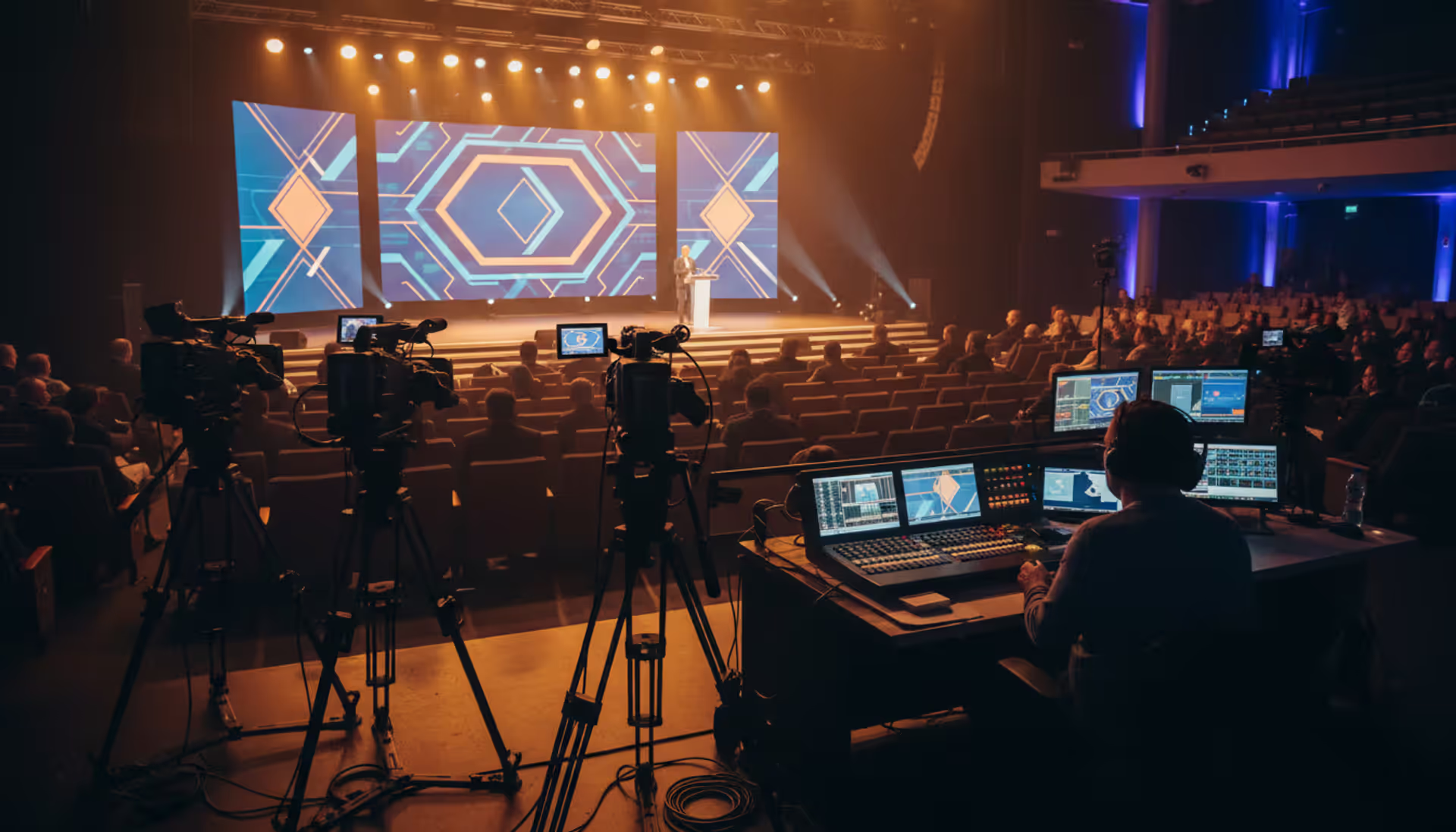
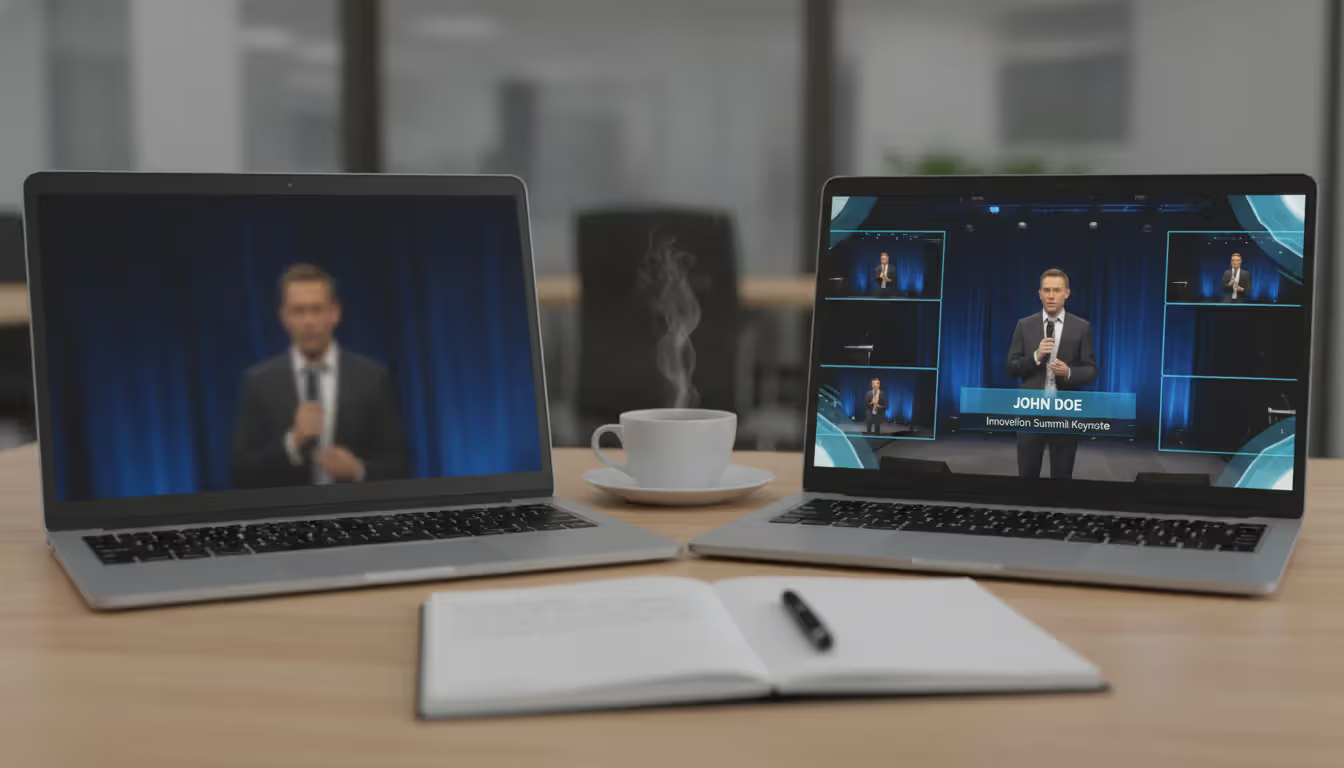
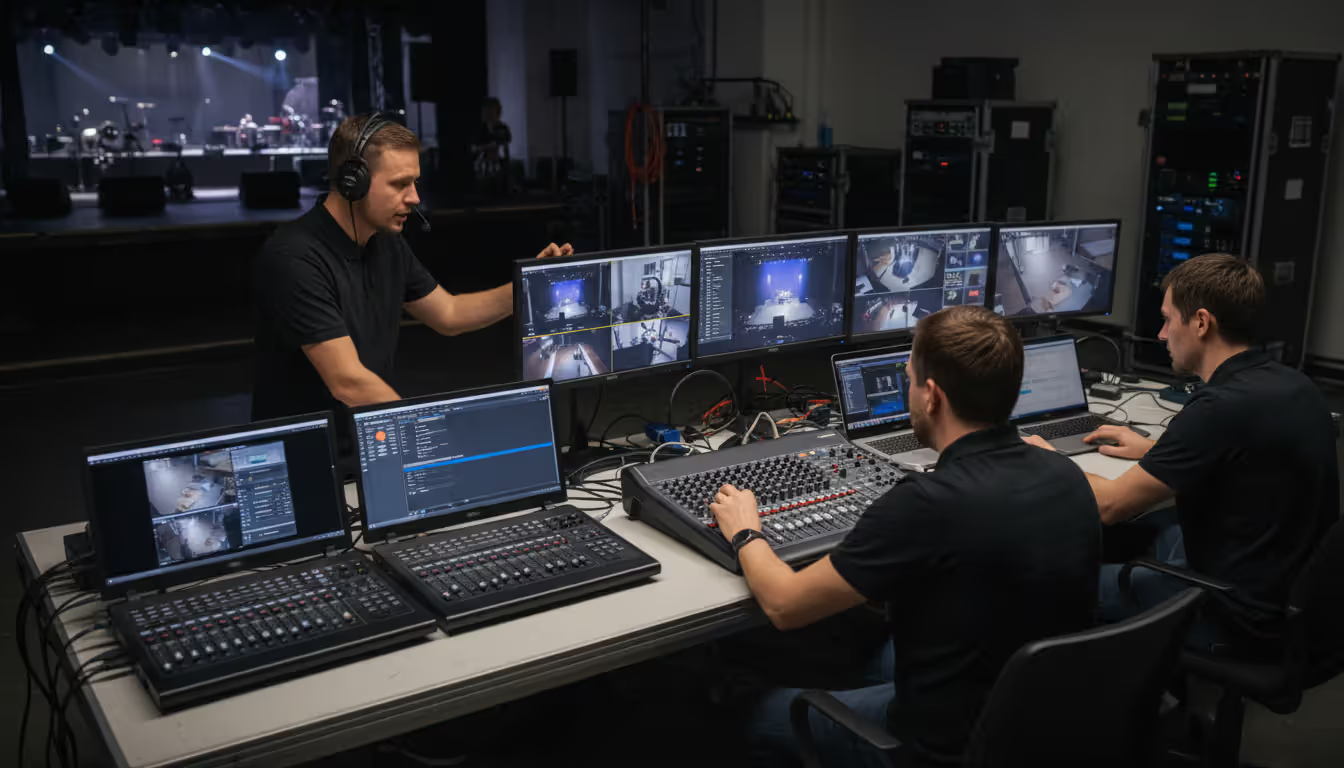
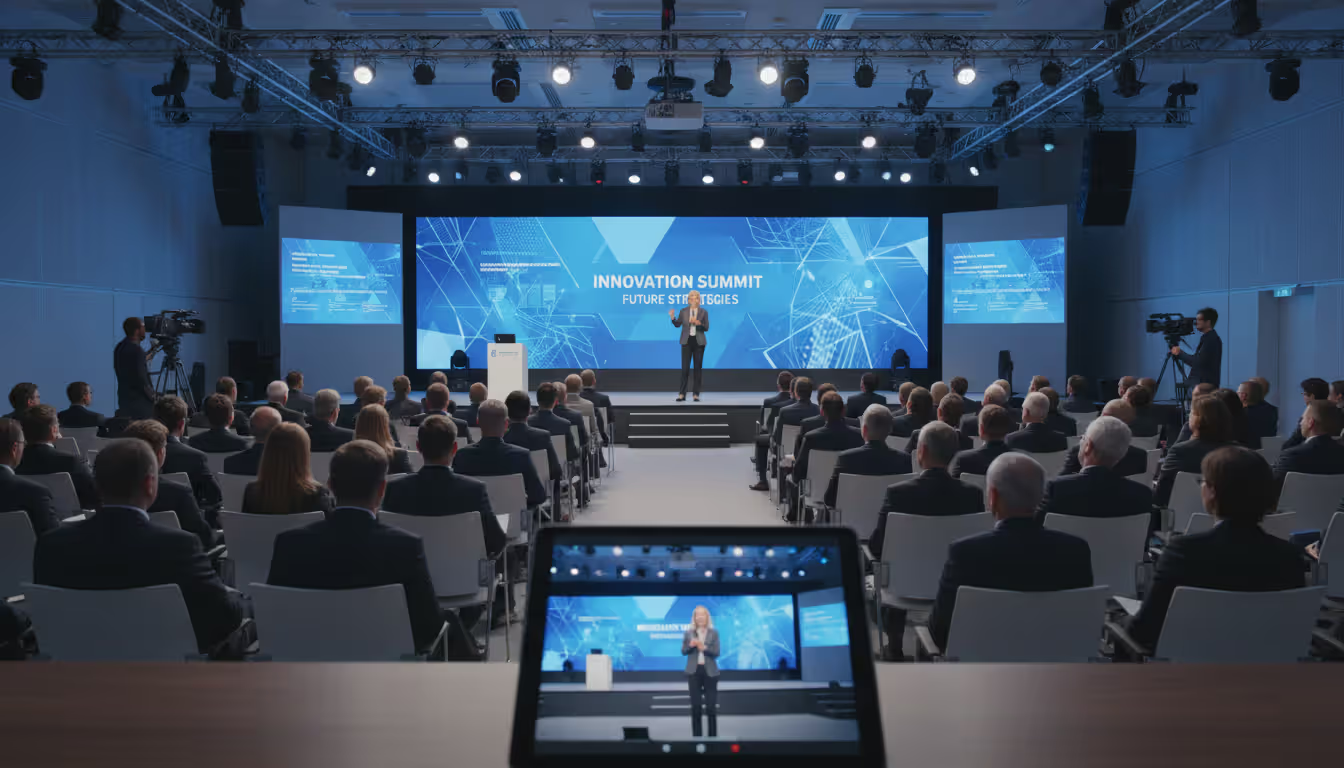
Professional hybrid event production setup with multiple video cameras on tripods aimed at a brightly lit corporate stage with LED screen, operator at mixing console with monitors in background, audience seated in venue
Your last virtual conference probably didn't go as planned. Maybe the audio cut out during your CEO's keynote. Perhaps remote attendees couldn't see the slide deck clearly. Or the chat exploded with complaints while your internal team scrambled to fix streaming issues.
Here's the thing: pulling off a hybrid event—where some people sit in a ballroom while others watch from home—requires equipment and skills your team doesn't have. Unless someone on staff knows how to configure streaming encoders or troubleshoot RTMP protocols, you're setting up for failure.
A specialized production company handles this complexity. They bring the cameras, manage the platforms, and keep both audiences engaged. But choosing the wrong vendor wastes money just as surely as hosting a terrible event.
Let's break down what these companies actually do and how to pick one that won't let you down.
What Is a Hybrid Event Production Company?
Think of these companies as the technical layer between your content and your two different audiences. One group sits in your venue. The other watches from laptops scattered across time zones. Making both groups feel like they're at the same event? That's the challenge.
Regular event planners book venues, arrange catering, and coordinate schedules. They're great at physical logistics. But they typically can't handle broadcast-quality video streaming, multi-platform content delivery, or real-time engagement tools that keep remote viewers from checking email.
That's where specialized production firms come in. They deploy camera operators, manage streaming equipment, configure virtual platforms, and monitor chat channels. More importantly, they design the remote experience intentionally rather than just pointing a webcam at the stage.
Most hybrid failures happen when organizations treat these events like webinars with a few people in a conference room. Remote audiences get a shaky camera angle, muffled audio, and slides they can't read. After 15 minutes, they tune out.
Professional hybrid event organizers understand that remote participants need different content strategies. They position multiple cameras for variety. They light speakers for video clarity. They create graphics specifically formatted for screens. They build interactivity that gives virtual attendees something to do besides passively watch.
Author: Ethan Marlowe;
Source: musiconmainstreet.com
The coordination gets complex fast. You're juggling the venue's existing AV system, your streaming platform, audience engagement apps, analytics dashboards, and backup systems. A hybrid event agency manages these moving parts while your team focuses on content and speakers.
Core Services Offered by Hybrid Event Providers
Virtual Event Production and Streaming Technology
Anyone can stream video—just open Zoom and share your screen. But professional streaming looks completely different from DIY attempts.
Virtual event production services start with multi-camera setups. Wide shots establish the room. Close-ups capture speaker expressions. Audience reaction shots build energy. Switching between these angles every 20-30 seconds keeps remote viewers engaged instead of watching the same static frame for hours.
The technology stack includes encoding hardware that compresses your 1080p video without making it look pixelated. Content delivery networks distribute that feed to 5,000 simultaneous viewers without buffering. Redundant internet connections kick in when your primary line slows down. (Venues always promise great WiFi. It rarely delivers during your actual event.)
Graphics packages add polish. Lower-third overlays display speaker names and titles. Branded backgrounds maintain your visual identity. Slide integration shows presentation content clearly rather than forcing viewers to squint at tiny text captured by a room camera.
Audio quality separates amateur productions from professional ones immediately. Companies provide wireless lapel mics for speakers, handheld mics for audience Q&A, and mixing boards that balance all sources. No echo. No feedback. No hollow sound that screams "we're trying but don't really know what we're doing."
On-Site AV and Technical Support
An av event production company sends technicians who arrive four to six hours before your event starts. They're testing connections, adjusting lighting for cameras, and rehearsing every transition before anyone walks through the door.
These crews bring backup equipment for every critical component. Spare cameras. Extra microphones. Redundant encoders. Alternative internet connections through cellular bonding devices. When (not if) something fails, they swap it out in seconds rather than troubleshooting for 20 minutes while your audience watches dead air.
Having someone physically present saves events constantly. Speakers forget to unmute. Laptops won't connect to HDMI adapters. Wireless mics pick up interference. The venue's internet suddenly drops to 1 Mbps because 200 attendees all connected to WiFi. On-site technicians fix these problems in real-time.
Technical directors make split-second decisions during your event. Which camera angle works best right now? Should we show slides or the speaker's face? How do we handle this fire alarm gracefully? Their experience prevents awkward silences and confused audiences when plans change unexpectedly.
Author: Ethan Marlowe;
Source: musiconmainstreet.com
Event Platform Integration and Management
You've probably licensed an event platform—Hopin, vFairs, Zoom Events, something similar. The platform vendor promised it would handle everything. Then you discovered it doesn't actually talk to your registration system, and nobody knows how to configure the networking features.
Event technology providers connect these systems so they actually work together. Single sign-on means attendees use one login instead of juggling credentials. Streams embed within your branded environment rather than opening in separate windows. Networking tools let virtual and in-person attendees interact instead of existing in separate worlds.
During your event, platform administrators moderate chat channels, launch polls at scripted times, manage breakout room assignments, and troubleshoot access issues. Someone reports they can't connect? The admin investigates their firewall settings instead of your speakers stopping mid-presentation to play tech support.
After everything wraps, they extract analytics showing which sessions attracted viewers, when attention dropped, which polls got responses, and how engagement patterns differed between audiences. These insights shape your next event instead of guessing what worked.
When Your Organization Needs Hybrid Event Production Services
Running an annual conference with 200+ registered attendees? Technical failures don't just frustrate people—they damage your reputation and waste registration revenue. When tickets cost $500 each, attendees expect production quality matching their investment. A live event production company ensures you deliver.
Product launches demand flawless execution. You can't reschedule when streaming dies during your CEO's big announcement. Professional production includes rehearsals, backup systems, and teams who've managed high-pressure launches before. They've seen things go wrong and know how to recover.
Author: Ethan Marlowe;
Source: musiconmainstreet.com
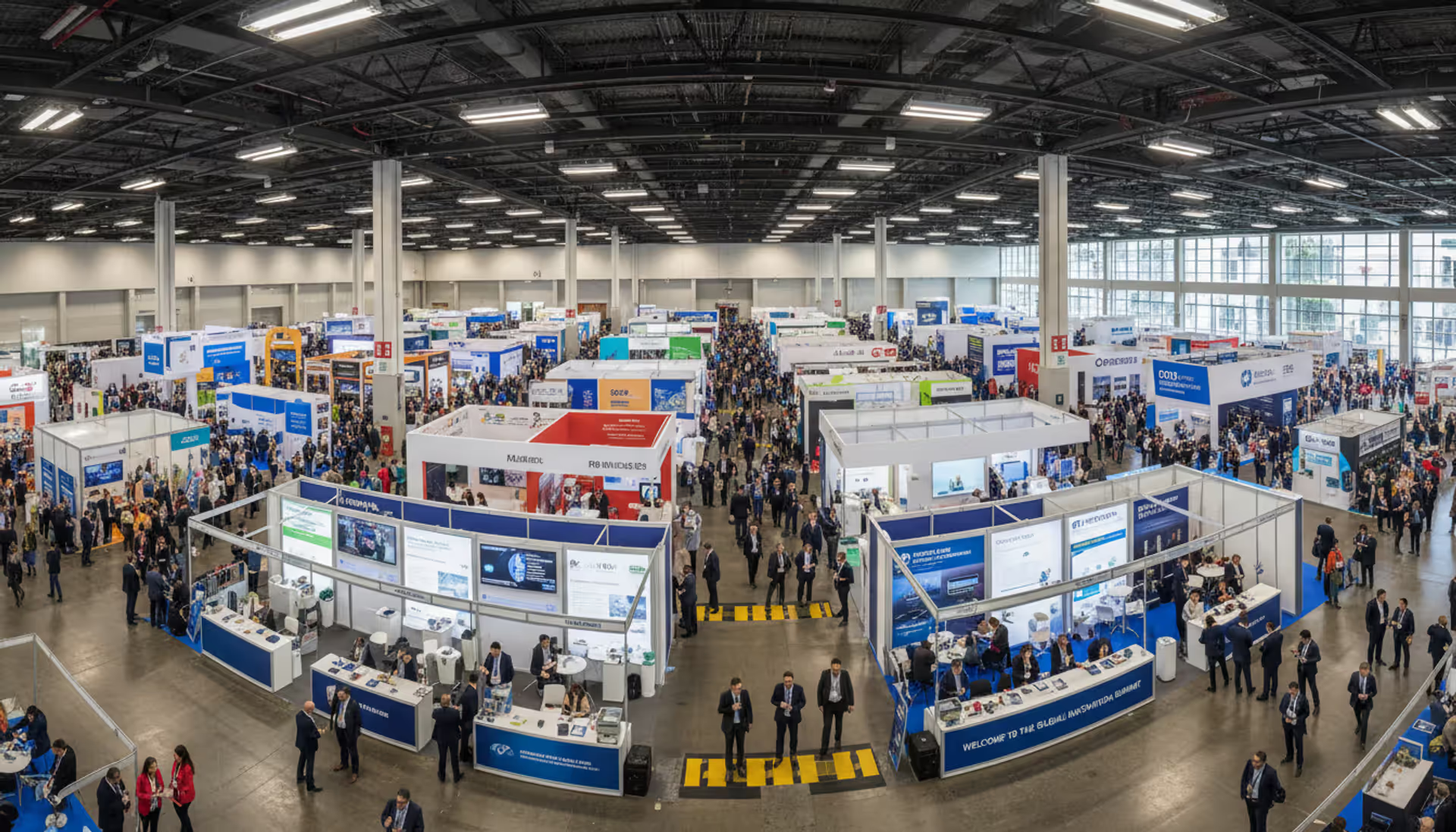
Trade shows increasingly add virtual components to reach beyond physical booth visitors. A hybrid event supplier provides booth streaming setups, virtual demo capabilities, and lead capture that connects in-person and remote prospects to your sales pipeline.
Internal all-hands meetings spanning multiple offices need consistent messaging everywhere. Rather than repeating presentations or settling for low-quality recordings, professional production delivers live experiences to all employees simultaneously. Everyone hears the same message at the same time.
Training sessions requiring certification need reliable recording and clear visibility of demonstrations. Event production services ensure every participant—regardless of location—sees detailed content clearly enough to actually learn.
Should you handle production internally or hire professionals? Three factors matter: technical complexity, audience size, and risk tolerance.
Simple town halls with 50 people might work with internal resources. Multi-track conferences with 1,000 attendees across time zones? You need professional expertise.
Calculate the cost of failure. Lost registration revenue. Damaged reputation. Wasted speaker fees. Marketing budget thrown away. Compare that against production company fees. Usually, professional production costs less than a failed event.
How Hybrid Event Technology Companies Execute Events
The process kicks off 6-8 weeks before your event with a discovery call where everyone stops pretending they know what they're talking about. Event technology companies ask about your goals, audience size, content format, venue constraints, and budget. They propose equipment packages and staffing levels tailored to your actual needs rather than their most expensive offering.
Three weeks out, they conduct a venue site survey. This isn't a casual walk-through. They test actual upload speeds (not the WiFi speed the venue advertises). They identify power outlet locations. They measure ambient noise levels. They plan camera positions based on room layout and lighting conditions. They coordinate with venue AV teams to either integrate with existing systems or bypass inadequate equipment entirely.
Two weeks before, the production rundown gets finalized—a minute-by-minute schedule detailing every transition, video playback, speaker change, and audience interaction. This document aligns your content team, speakers, and production crew so everyone knows what's happening when.
One week prior, technical rehearsals test everything. Speaker presentations. Video playback. Live polls. Q&A workflows. Platform integrations. Speakers practice with actual equipment instead of imagining how it works. They learn where to stand, how to advance slides, and when to pause for remote audience questions.
Event day means crews arrive 4-6 hours early for setup and testing. Internet connectivity verified. Cameras positioned. Lighting set. Audio checks completed. Streaming tested to the platform. A final rehearsal confirms everything actually works before doors open.
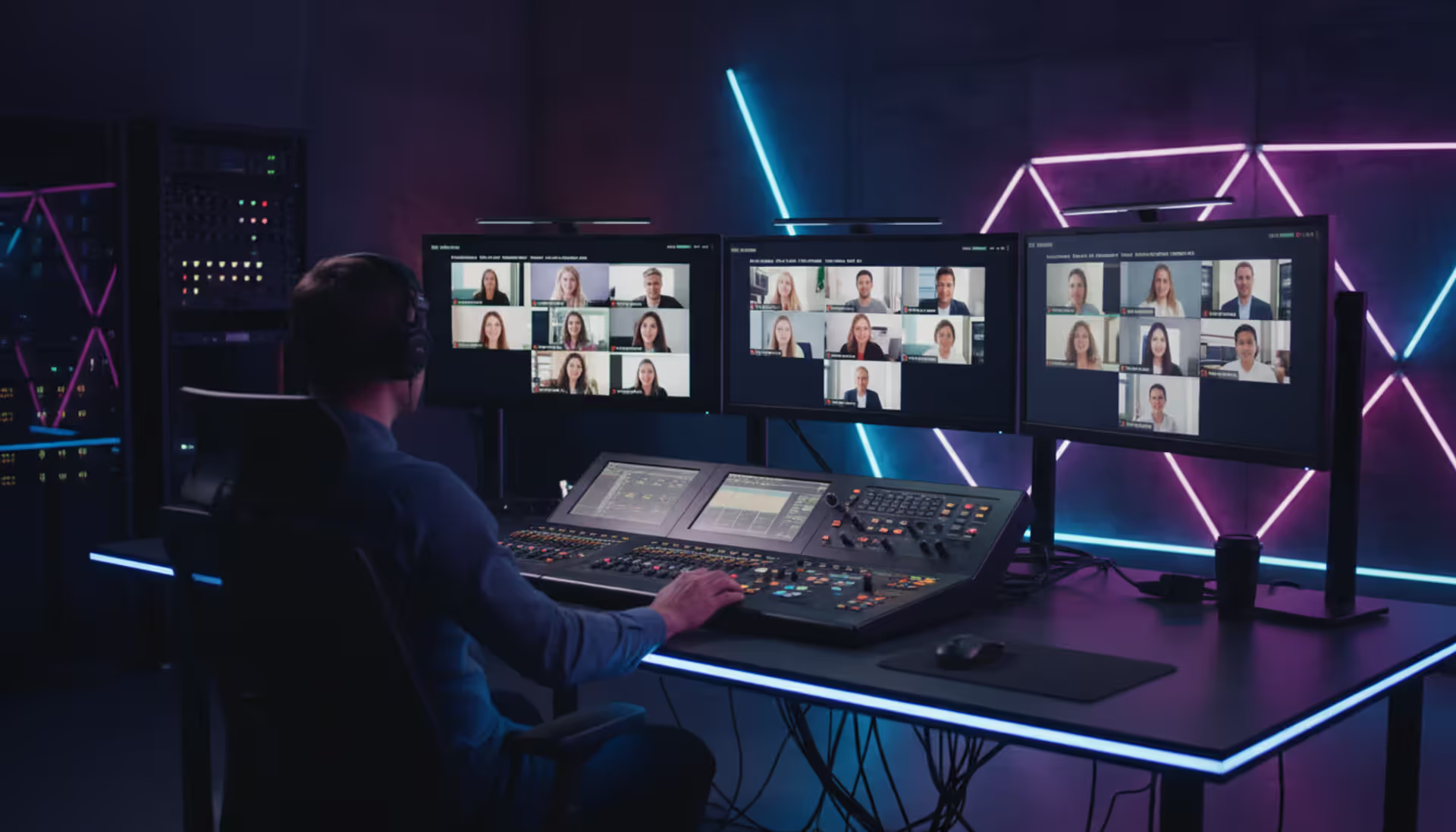
During the event itself, the technical director manages live switching between cameras. The audio engineer balances sound levels in real-time. Platform administrators moderate virtual engagement. On-site technicians handle equipment issues. A producer coordinates timing, communicates with speakers, and adjusts the rundown when reality diverges from plans.
After everything ends, the team provides edited recordings, attendance analytics, engagement metrics, and technical performance reports. They archive raw footage for future content repurposing and conduct debrief calls identifying what worked and what didn't.
Key Factors to Evaluate Before Hiring an Event Production Company
Experience with your specific event type matters more than years in business. A company that excels at concerts may completely fumble a multi-track conference requiring breakout room coordination. Ask for case studies matching your event format, audience size, and technical complexity.
Review their technology stack for compatibility with tools you already use. If your organization runs on Microsoft Teams, a production company experienced with Teams integration saves countless headaches. If you've already invested in a specific event platform, confirm they've worked with it extensively rather than learning on your dime.
Scalability determines whether they can handle your growth. A provider perfect for 200-person events may lack infrastructure for 2,000 attendees. Ask about their largest successful event, backup capacity during peak demand, and how they handle unexpected attendance surges. Get specific numbers, not vague assurances.
Support team composition reveals capability depth. A two-person operation might offer lower prices but lacks redundancy when someone gets sick. Larger teams provide specialized roles—dedicated audio engineers, lighting designers, platform administrators—that improve quality and reliability.
Pricing models vary between flat fees, hourly rates, and tiered packages. Flat fees provide budget certainty but may include services you don't need. Hourly rates offer flexibility but risk cost overruns. Tiered packages simplify comparisons but sometimes force you into higher tiers for single features. Request itemized quotes showing exactly what each fee covers and which elements are optional add-ons.
Client references from similar organizations provide reality checks. Don't just ask if they liked working with the company. Ask whether final costs matched initial quotes. How did they handle unexpected issues? Would you hire them again for your next event? A provider hesitant to share recent references is hiding something.
Insurance and liability coverage protect you when equipment fails or causes venue damage. Verify they carry general liability insurance and professional indemnity coverage. Confirm their policy limits exceed your event's potential exposure. This isn't paranoia—it's basic risk management.
Hybrid Event Production Costs and Budget Considerations
Basic production packages for 100-person events start around $8,000-$12,000. You get single-camera streaming, basic audio, and platform setup. These work for straightforward presentations without complex transitions or high production value expectations. Think quarterly company updates, not product launches.
Standard packages run $15,000-$30,000 and include multi-camera switching, professional lighting, advanced audio mixing, on-site technical staff, rehearsal time, and basic graphics. This tier suits most corporate conferences and product launches requiring professional quality without broadcast-level polish.
Premium production starts at $40,000 and climbs past $100,000 for complex events. You get broadcast-quality output with multiple camera operators, advanced graphics packages, dedicated content producers, extensive rehearsal time, backup systems for every component, and post-event editing. Large conferences, high-stakes launches, and events with significant media coverage justify this investment.
Several factors push costs upward quickly. Multi-day events multiply daily rates. Simultaneous sessions each require separate production teams. Challenging venues need extra equipment. Larger audiences demand more robust infrastructure. Content complexity—pre-produced videos, live demonstrations, interactive segments—increases production requirements.
Geography affects pricing substantially. Production in New York or San Francisco runs 20-30% higher than secondary cities due to labor rates and equipment rental costs. However, hiring unfamiliar local providers in cheaper markets introduces risk when you can't easily verify their capabilities.
Hidden costs catch people off guard. Rehearsal time beyond basic tech checks. Last-minute content changes requiring graphics updates. Extended support hours when events run long. Rush fees for bookings inside 30-day windows. Clarify what your quote includes and which scenarios trigger additional charges.
Budget 15-20% of total event costs for professional production. A $100,000 conference should allocate $15,000-$20,000 for production services. Skimping on production to save 5% of budget risks destroying 100% of your event's value through technical failures that could've been prevented.
Service Level
Basic Package
Standard Package
Premium Package
Streaming Quality
720p HD
1080p Full HD
1080p/4K broadcast quality
Camera Count
1 fixed camera
2-3 cameras with switching
4+ cameras with operators
Platform Support
Basic setup
Full integration & management
Custom development & white-label
Tech Support Hours
Setup + event hours only
Setup, rehearsal, event, buffer
Advance prep, multiple rehearsals, extended support
Rehearsal Included
None
1 technical rehearsal
Multiple rehearsals + speaker coaching
Post-Event Analytics
Basic attendance data
Engagement metrics & recordings
Comprehensive analytics + edited highlight reels
Typical Pricing
$8,000-$12,000
$15,000-$30,000
$40,000-$100,000+
Common Mistakes When Selecting an Event Technology Provider
Choosing based solely on price ignores what happens when things go wrong. The cheapest bid usually comes from inexperienced providers who underestimate requirements, lack backup equipment, or cut corners on staffing. That $5,000 savings evaporates when technical failures force you to issue refunds or damage relationships with key attendees.
Skipping rehearsals to save money almost guarantees problems. Speakers unfamiliar with equipment make mistakes. Content that looks fine on laptops becomes unreadable on stream. Timing assumptions prove wrong. The $2,000 rehearsal fee prevents $20,000 worth of event-day chaos and embarrassment.
Professional hybrid event production isn't about fancy equipment—it's about eliminating every point of failure between your content and your audience. The best production is invisible; attendees remember your message, not your technology
— Jennifer Martinez
Underestimating internet requirements causes more hybrid event failures than any other single issue. Venues advertise "high-speed WiFi" that collapses under streaming load. You need to test actual upload speeds during similar occupancy levels because bandwidth degrades when hundreds of people connect simultaneously. Professional production companies test in advance, bring cellular bonding devices as backup, and sometimes arrange dedicated fiber connections for critical events. Assuming venue internet will work is planning to fail.
Ignoring backup plans reflects dangerous optimism. Equipment fails. Internet cuts out. Speakers miss flights. Venues lose power. These aren't hypothetical scenarios—they happen regularly. Professional providers bring redundant systems, but only if you discuss contingencies during planning. Ask specifically: "What happens if venue internet fails completely?" and "What's your backup if the primary camera stops working?" Vague assurances like "we'll figure it out" aren't acceptable answers.
Failing to align production capabilities with content ambitions creates disappointment. Your vision of dynamic camera movements, complex graphics, and seamless transitions may require premium production, but your budget only covers basic services. Discuss your creative goals early so providers can explain what's achievable at your budget level or help you prioritize elements that matter most.
Booking too late forces compromises. Quality production companies book 8-12 weeks ahead for major events. Calling four weeks out means settling for whoever has availability—often less experienced providers. Plan event dates knowing you need adequate lead time for production arrangements, not just venue booking.
Factor
In-House Production
Professional Hybrid Event Production Company
Upfront Costs
Lower (assuming existing equipment)
Higher initial investment
Technical Expertise Required
Significant learning curve for staff
Experienced teams included
Equipment Investment
$15,000-$50,000+ for adequate gear
No equipment purchase needed
Scalability
Limited by owned equipment
Easily scales to event size
Risk Management
Your team troubleshoots during event
Backup systems & experienced problem-solvers
Time Commitment
Diverts staff from primary responsibilities
Your team focuses on content & strategy
Frequently Asked Questions About Hybrid Event Production
What's the difference between a hybrid event agency and a traditional event planner?
Traditional event planners handle physical logistics: venue contracts, catering, room setup, signage, registration desks. They're excellent at coordinating details that make in-person events run smoothly. A hybrid event agency adds technical production for virtual audiences: streaming infrastructure, platform management, remote engagement tools, content delivery systems. Many events need both—a planner handling physical logistics and a production company managing technical elements. Some full-service agencies claim they offer both capabilities, but verify their technical expertise rather than assuming event planning skills transfer to broadcast production. They're fundamentally different skill sets.
How far in advance should I book a hybrid event production company?
Book 8-12 weeks before your event if you want decent options and adequate planning time. This timeline allows proper site surveys, rehearsals, and equipment reservation. Quality providers often book even further ahead during peak seasons—September through November and March through May see heavy demand. Planning a major conference 6-9 months out? Engage production companies early to secure dates and lock pricing before rates increase. Last-minute bookings under 4 weeks limit your options significantly, increase costs through rush fees, and reduce rehearsal time that prevents problems. You'll get whoever's available, not necessarily who's good.
Can a hybrid event production company work with my existing event platform?
Most professional production companies integrate with popular platforms like Zoom Events, Hopin, vFairs, RingCentral Events, and Microsoft Teams. However, integration complexity varies significantly. Standard platforms with documented APIs integrate easily. Custom platforms or obscure software may require additional development time and cost extra. Discuss your platform during initial conversations, asking for specific examples of their previous work with it. Don't just ask if they can work with it—ask how many times they've done it successfully. If you haven't selected a platform yet, experienced providers can recommend options matching your needs and simplifying their production workflow.
What internet speed do I need for professional hybrid event production?
Professional streaming requires minimum 10 Mbps upload speed per stream, but 25-50 Mbps provides comfortable margin for HD quality with backup capacity. Multi-camera productions streaming to multiple platforms simultaneously need 50-100+ Mbps upload. Download speed matters less unless you're pulling in remote speakers via video feeds. Here's the critical part: these speeds must be dedicated to streaming, not shared with attendee WiFi that everyone's using to check email and post Instagram stories. Conduct speed tests at your venue during similar occupancy levels because bandwidth often degrades dramatically when hundreds of people connect simultaneously. Professional production companies typically bring cellular bonding devices or arrange dedicated connections rather than relying solely on venue internet promises.
Do hybrid event suppliers provide on-site technical staff?
Yes, professional packages include on-site technicians—typically one person for basic productions and 3-5 for complex events. Basic packages might include a single technical director managing cameras, audio, and streaming simultaneously. Standard packages add dedicated audio engineers and platform administrators. Premium productions include camera operators, lighting designers, content producers, and backup technicians. Verify exact staffing levels in your quote because some low-cost providers drop off equipment expecting your team to operate it, which rarely works well. Ask specifically: "How many people will be on-site during my event?" and "What are their specific roles?" Don't accept vague answers.
How do I measure the ROI of hiring professional event production services?
Calculate ROI by comparing production costs against the value of successful outcomes. For revenue-generating events, track registration income that would be lost if technical failures forced refunds or damaged your reputation for future events. For internal events, estimate the cost of employee time wasted if production problems require rescheduling—hundreds of employees blocking calendar time twice costs real money. For marketing events, measure lead quality and conversion rates from professional production versus previous DIY attempts. Track engagement metrics: professional production typically doubles remote audience retention compared to basic setups. Survey attendees specifically about production quality—poor technical experiences damage your brand value beyond immediate event costs and reduce attendance at future events.
Selecting a hybrid event production company determines whether your event achieves its goals or becomes a cautionary tale your team references for years. The right partner brings specialized expertise, professional equipment, experienced teams, and contingency planning that internal resources simply can't match.
Start your selection process by clearly defining event goals, audience expectations, and budget constraints. Use these parameters to evaluate providers based on relevant experience, technical capabilities, support team depth, and transparent pricing. Avoid choosing based solely on cost—the cheapest option frequently becomes the most expensive when failures force damage control and reputation repair.
Book early enough to secure quality providers and allow adequate planning time. Invest in rehearsals that prevent event-day surprises. Verify backup plans exist for every critical system. Align your creative vision with budget reality before signing contracts.
Professional hybrid event production isn't an unnecessary luxury for perfectionist event managers. It's infrastructure investment protecting everything else you've spent on content development, speaker fees, marketing campaigns, and venue deposits. When technical elements work invisibly, your audience focuses on your message and objectives. When production fails, nothing else matters—all anyone remembers is the technical disaster.
Hybrid events will continue evolving as technology improves and audience expectations rise. Partnering with experienced production companies keeps your events current with technical standards while freeing your team to focus on content strategy and audience experience rather than troubleshooting streaming protocols at 2 AM.
Selecting the right webinar platform impacts attendee experience, engagement rates, and ROI. This guide covers essential features, pricing models, use cases, and evaluation criteria to help you choose webinar software that aligns with your goals without overpaying for unused features
Virtual event production has evolved from emergency solution to strategic business tool. This comprehensive guide covers planning essentials, technical setup, engagement strategies, when to hire production companies, common mistakes to avoid, and the tools you need for successful virtual events that deliver measurable ROI
Managing trade shows requires coordinating exhibitors, attendees, and complex logistics. This guide breaks down trade show software categories, core features like lead capture and booth management, pricing models, and selection criteria to help event planners choose the right platform
The content on this website is provided for general informational and educational purposes only. It is intended to explain concepts related to event management software, ticketing systems, hybrid event platforms, and operational tools for event organisers.
All information on this website, including articles, guides, and examples, is presented for general educational purposes. Outcomes may vary depending on event size, technology choices, and organisational needs.
This website does not provide professional legal, financial, or software advice, and the information presented should not be used as a substitute for consultation with qualified event tech or IT professionals.
The website and its authors are not responsible for any errors or omissions, or for any outcomes resulting from decisions made based on the information provided on this website.